

On Aug. 4, 2007, NASA launched its Phoenix Mars Lander on a mission to touch down on Mars.
The robotic spacecraft was designed to search for environments that could be suitable for microbial life and to study the history of water on the Red Planet. It lifted off atop a Delta II rocket at about 5:30 a.m. ET from what is now Cape Canaveral Space Force Station in Florida and spent almost 10 months making its way to Mars.
When it arrived at the Red Planet, it landed farther north than any spacecraft had ever gone before. Not only did Phoenix find water-ice, but it also found what appeared to be small globs of liquid water.
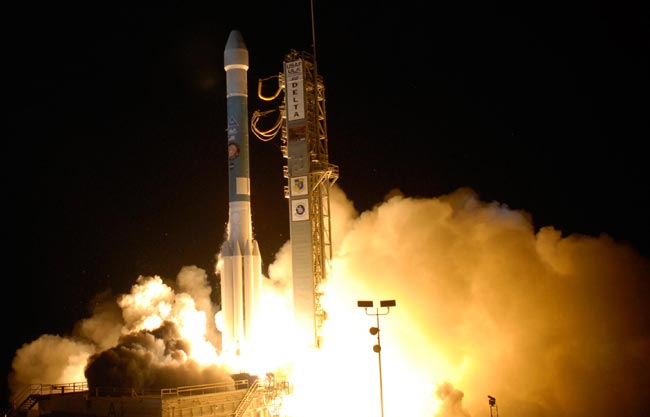 NASA's Phoenix Mars lander lifts off from Pad 17A aboard a Delta II 7925 rocket amid billows of smoke at Cape Canaveral Air Force Station at 5:26 a.m. EDT on Aug. 4, 2007.NASA/Regina Mitchell-Ryall and Jerry Cannon.
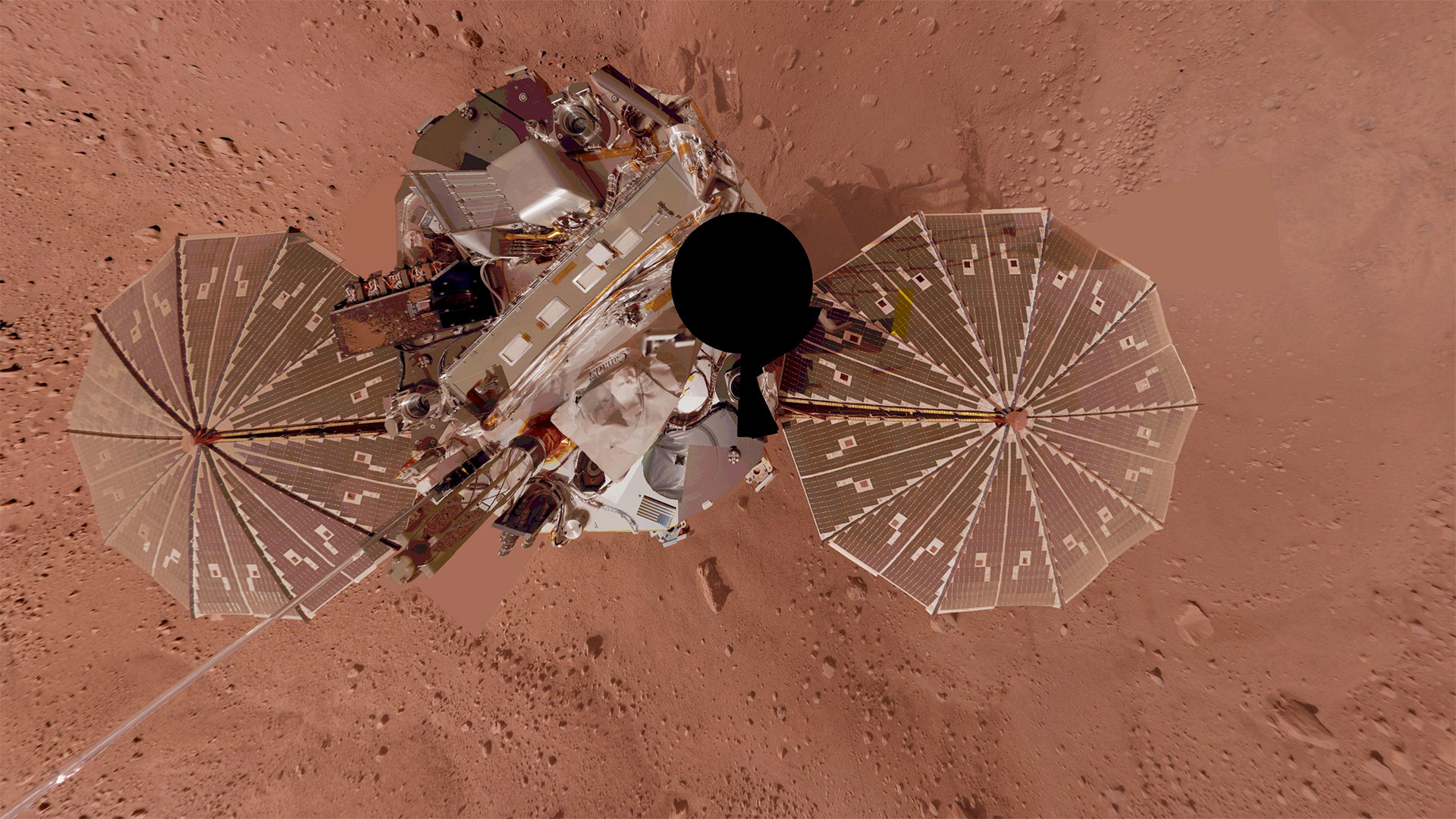 A view of NASA's Phoenix Mars lander as seen by a camera from above.NASA/JPL-Caltech/University of Arizona/Texas A&M University
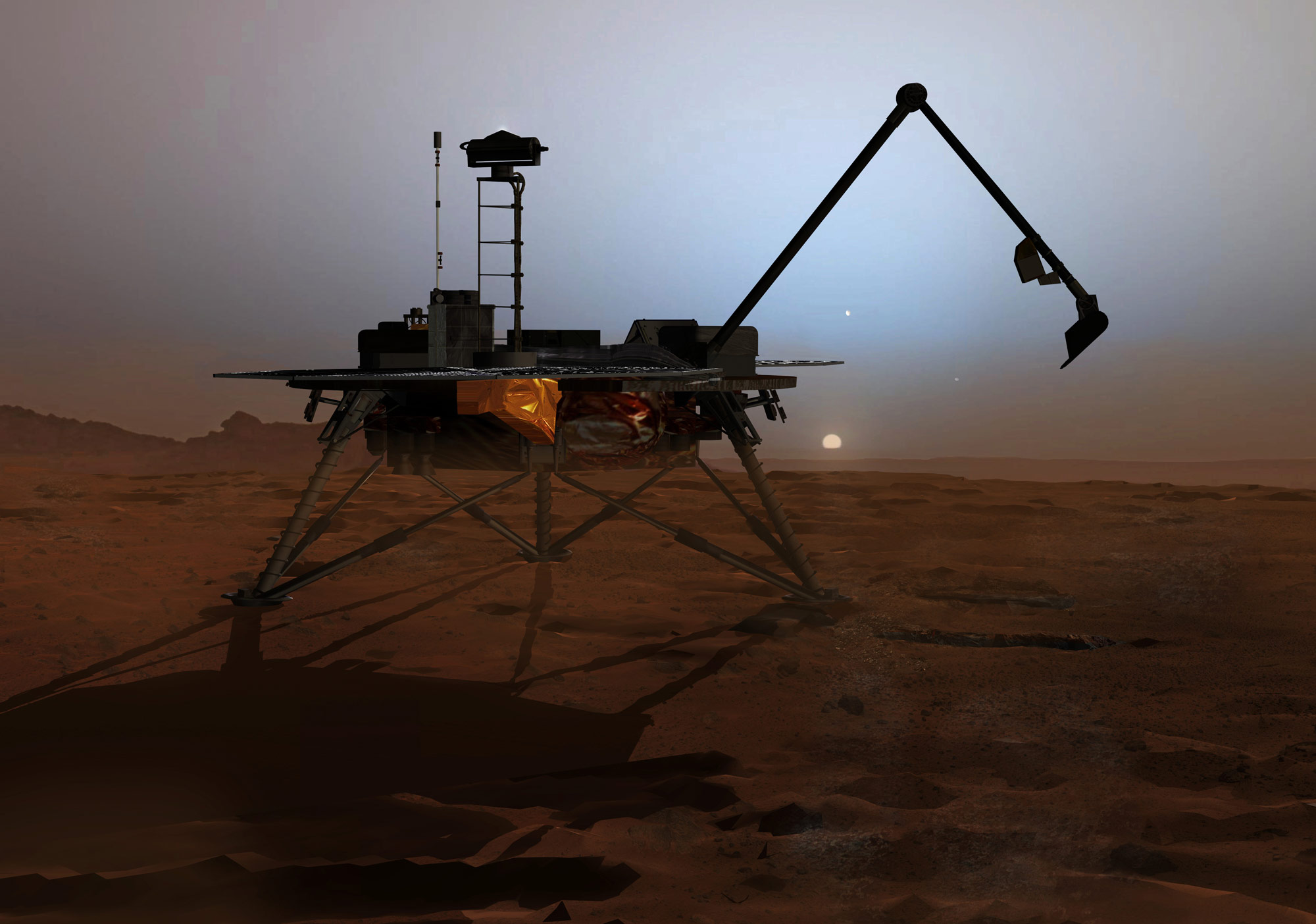 An artist's impression of the Phoenix lander on Mars, which discovered perchlorate in the Martian regolith.NASA/JPL-Caltech/University of Arizona
Why it mattered
The Phoenix Mars Lander was one of NASA's biggest do-overs. The lander, which touched down in the arctic plains of Mars known as Vastitas Borealis in May 2008, was designed to seek water ice below the surface and hunt organic molecules. Its origins, however, began years earlier as NASA's 2001 Mars Surveyor lander, which was canceled after the agency's Mars Polar Lander was lost during an attempted landing in 1999.
NASA repurposed the 2001 Mars lander into a Martian arctic explorer, and gave it a suite of science instruments that were improved versions of ones that rode upon the Mars Polar Lander. Its name, "Phoenix," was a reference to its "rising from the ashes" of both the dead Mars Polar Lander and the canceled Mars Surveyor.
After landing on Mars, Phoenix used a robotic arm to dig into the arctic Martian dirt to confirm the existence of subsurface ice. Perhaps the mission's biggest discovery was the existence of perchlorate, an oxidizing chemical that can be food for some microbes while toxic for others.
In November 2008, after surviving two months longer than it was designed to, the Phoenix Mars Lander fell silent, succumbing to the harsh Martian winter. Subsequent photos of the lander taken from orbit by NASA's Mars Reconnaissance Orbiter revealed that Phoenix likely suffered severe ice damage to one of its solar panels, ending its mission.



 Bengali (Bangladesh) ·
  English (United States) ·