

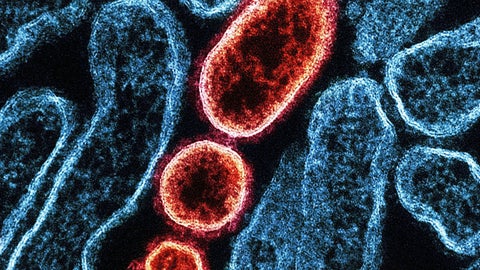
Some countries in Africa are currently facing Ebola outbreaks thanks to an illness called the Bundibugyo virus.
Cases have been reported in the Democratic Republic of Congo (DRC) beginning in May this year. Since then, cases have also occurred in Kenya, Nigeria, and Uganda.
One instance was also recorded in France this June through a returning humanitarian worker.
This wave of Ebola has led to roughly 10,000 cases and almost 5,000 deaths so far.
The #DRC has reported over 10,000 cases of Bundibugyo virus disease, with nearly 5,000 deaths.
Progress is being made: more than 2,600 people have recovered, testing and treatment capacity has expanded, and clinical trials of candidate vaccines and treatments are under way. @WHO… pic.twitter.com/0h78MGclgL
Recently, the director-general of the Africa Centres for Disease Control and Prevention (CDC), Dr Jean Kaseya, warned that Ebola could spread worldwide, comparing it to the Covid-19 pandemic.
“We want all countries to know that they are not safe if they don’t take appropriate measures,” Dr Kaseya said, adding: “Each country, not only in the African region, but all continents, must now increase the preparedness level and the possibility for treatment.
“It is the first time three African regions have been affected [by Ebola]. The geographic extension of this outbreak is unprecedented... We shouldn’t forget that at the beginning of Covid, many countries said there was zero risk of being affected, but a few months later, they became the hotspot.
“We don’t want to see the UK and other countries become the hotspot.”
What is the Ebola risk in the UK?
Dr Sam Collins, Head of Guidance, Clinical and Public Health Response at the UK Health Security Agency (UKHSA), told HuffPost UK: “The ongoing Ebola outbreak in the DRC and surrounding areas is very serious, but the risk to the general public within the UK remains low.”
He continued: “The UK is well-prepared to respond safely and effectively to the risk of imported cases arising here. UKHSA continues to work with partners including the World Health Organisation to monitor the situation closely.”
The UKHSA is also operating a Returning Workers Scheme to support and monitor people, including healthcare and humanitarian workers, returning to the UK from DRC, Central African Republic, South Sudan, Kenya and Nigeria and affected areas in Uganda.
On 27 October, the European Centre for Disease Prevention and Control (ECDC) also suggested that “given the very low likelihood of importation and secondary transmission”, the likelihood of infection for people living in the European Economic Area “is estimated to be very low”.
The UKHSA’s site added that only four cases have been recorded in the UK since 1976, and that no UK cases have resulted in death.
In July 2026, one UK resident who had been treating people with Ebola in the DRC was evacuated back to the UK after potential exposure. They were isolated and assessed for the entire 21-day incubation period in a London hospital as a “highly precautionary measure”.
But this was not treated as a case of Ebola.
How is Ebola spread?
Per the NHS, the disease is spread via contact with an infected person’s body fluids, like semen, saliva, blood, poo, pee, and vomit.
They add that it has never spread from person to person in the UK.
What are the symptoms of Ebola?
The symptoms, which appear two to 21 days after exposure, include “flu-like symptoms” like a high temperature, fatigue, and a headache.
Other signs can include:
vomiting,diarrhoea and stomach pain,a skin rash,yellowing of the skin and eyes,blood in your stool,lots of bruises all over your body,bleeding from your ears, eyes, nose or mouth,muscle pain,a sore throat, blood in vomit or stool,bleeding from the nose, gums, or vagina.The NHS said that if you are showing symptoms and have either travelled to a country where Ebola is present, or have been exposed to someone who’s been to a country with Ebola, call NHS 111.
It also advised staying at home and avoiding close contact with other people, including sharing towels or bedding, until you’ve been told what to do.
Though risk is low in the UK, the World Health Organisation (WHO) has called for “continued scale-up of key control measures, greater access to affected areas, and community outreach that builds trust and encourages people to engage with the response” in affected African countries.
The often-fatal disease, the WHO added, “began in the vast and volatile eastern region of the DRC amid conflict, hunger and widespread displacement, and has expanded to eight provinces, including areas that are hard to access”.






 Bengali (Bangladesh) ·
 English (United States) ·