

Voyager 1 has reached a historic milestone in space — it now takes a light-day to send a command to the spacecraft, meaning a full 24 hours for Earth to hail the distant spacecraft.
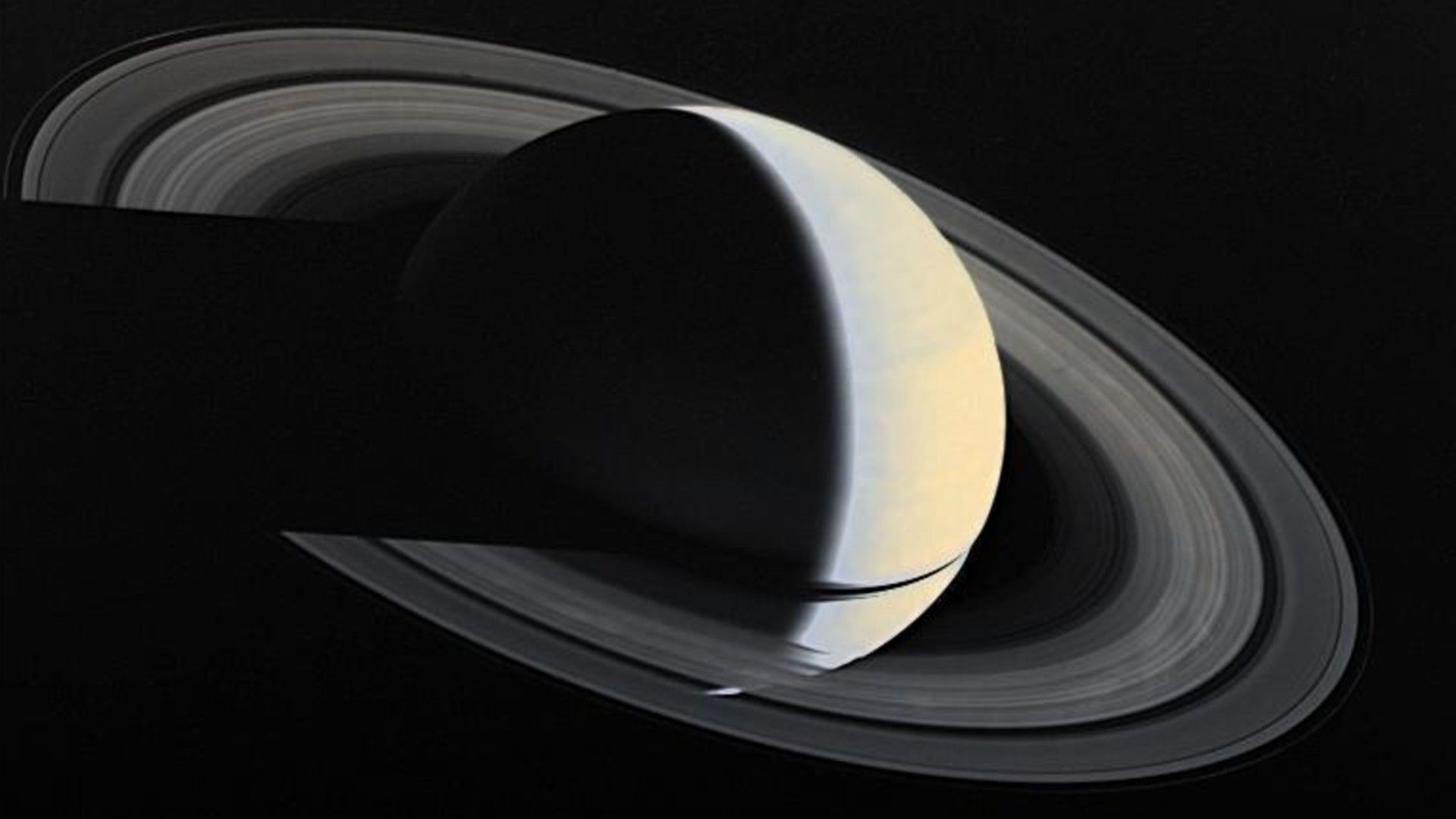
Since Voyager 1 and its twin, Voyager 2, launched on an initial tour through the outer solar system in 1977, their missions have been packed with science. Voyager 1 looked at Jupiter and Saturn from up close before veering for a flyby of Saturn's moon Titan and Saturn's rings, a pathway that brought it above the plane of the solar system in the early 1980s.
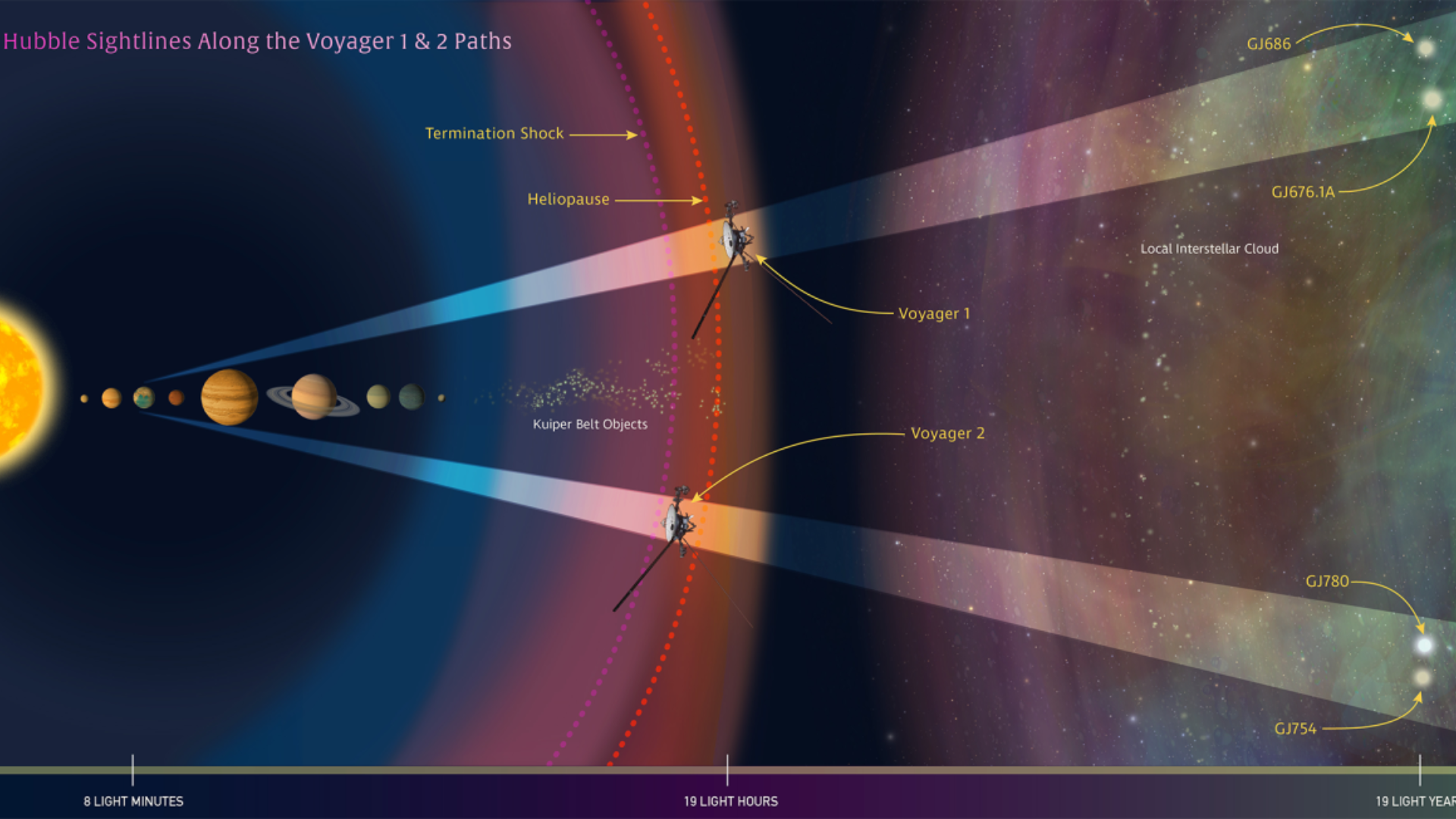
Voyager 1's faster path out of the solar system brought it to one light-day in distance on Wednesday (Nov. 18), while Voyager 2 — which took a slightly slower track to see Jupiter, Saturn, Uranus and Neptune — will reach a light-day of distance in 2035. So what's next for the two Voyager spacecraft as they reach further into interstellar space?
Exploring afar
Interstellar space, which is the area where the sun's constant stream of solar particles within the heliopause gives way to the physics of interstellar space, has been a valuable harvest for both Voyagers. Voyager 1 crossed interstellar space in August 2012 and continues to get data, while Voyager 2 has done the same since November 2018.
"Current science is continuing our investigation on magnetic field strength and direction, plasma density, and energetic particle detection. What is important is to measure how these phenomena change as the spacecraft travels further away from the sun," Suzanne Dodd, project manager for the Voyager missions at NASA's Jet Propulsion Laboratory (JPL), told Space.com in an email.
Added to that will be the Voyagers' examinations of plasma and magnetic fields nearby the spacecraft, and a focus on any "solar effects" such as shocks or pressure fronts, added JPL project scientist Linda Spilker in an email.
"Key Voyager science going forward includes observing the extent to which our sun continues to affect interstellar space, all the way out to Voyager 1," Spilker continued. "Where does the sun's influence end and pristine interstellar space begin? Perhaps Voyager may last long enough to answer that question."
The team also wants to watch the magnetic field around the spacecraft continue to change direction from the sun, to interstellar space, Spilker noted. That finding was not expected when the Voyagers launched, so scientists are curious to know more — as long as the spacecraft can last, that is.
Power management
Each Voyager continues to lose 4 watts of power a year; their launch power was 470 watts in 1977, and the nuclear power source continues to dwindle, requiring harder choices as the missions approach their 50th years of operations. Instruments have had to be shut off, and both the spacecraft were directed to perform a "Big Bang" of power redistribution earlier this year to preserve as much power as possible without sacrificing science.
Looking forward, Dodd says the team does not anticipate having to make any major changes to spacecraft operations until after the 50th anniversary passes for each spacecraft next August and September (as Voyager 2 launched a few weeks before Voyager 1).
A JPL representative added that the "Big Bang" should keep the remaining science instruments going until that point, although "there is also the thermal state of the spacecraft to balance." The representative added that the margins for power remain "very thin," especially as the spacecraft are quite cold in interstellar space.
"Then there are the things the team can't predict, such as the unexpected loss of contact that happened recently," the spokesperson added, referring to an approximately 48-hour glitch in which Voyager 1 suddenly stopped responding to commands last month — although the spacecraft did quickly recover.
"The goal of the mission is science, so the team is not just concerned with keeping in contact with the Voyagers, but keeping the science instruments going as long as possible," the representative added. "The further away the spacecraft get from Earth, the more they learn about how interstellar space changes further away from the heliopause."
The legacy of Voyager 1
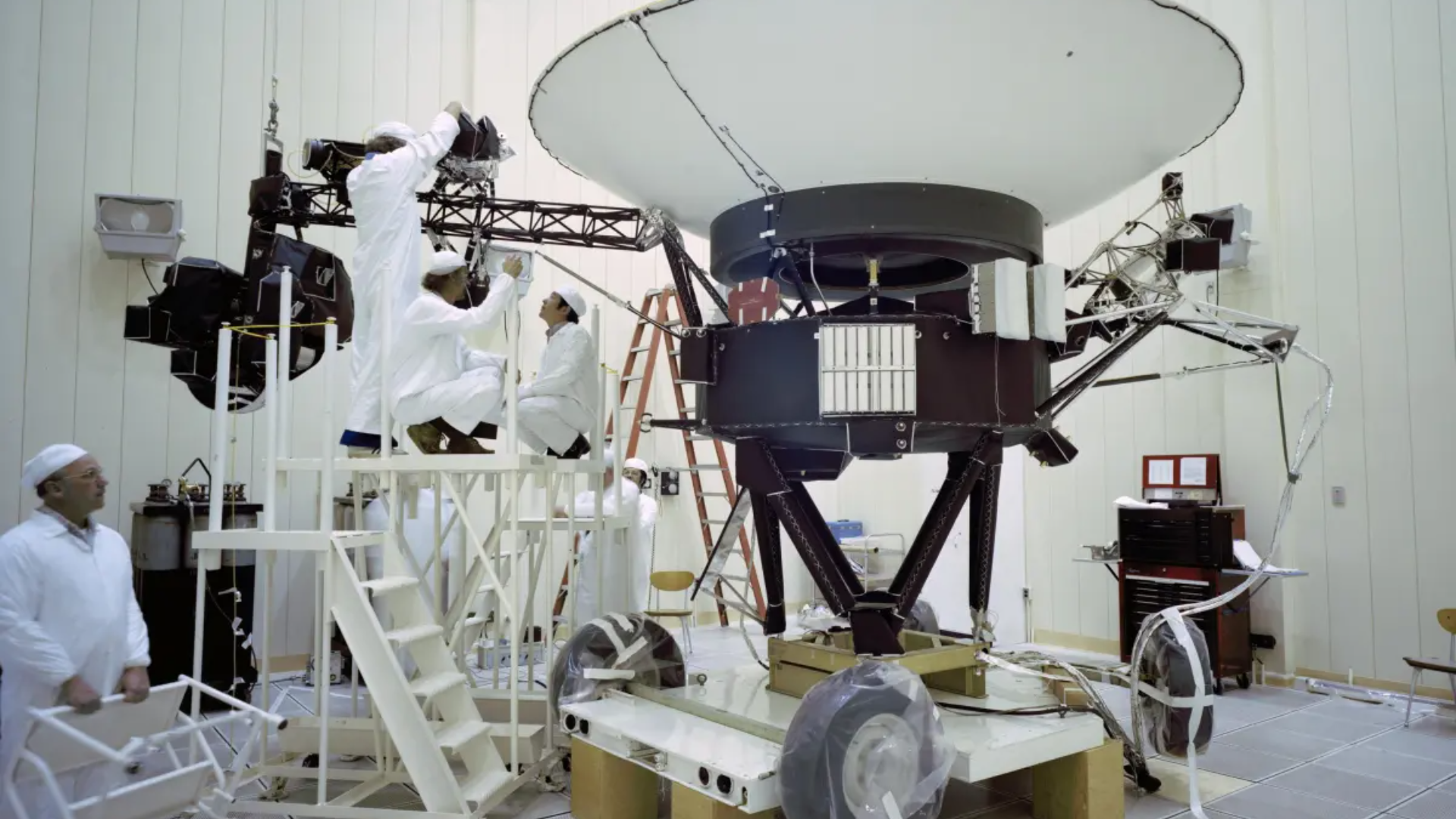
Voyager 1 team members now represent multiple generations of engineers, each one of them with distinct but essential roles. Even the most junior members of the team—Nshan Kazaryan and Bhavana Gupta—are taking on key roles in anticipation of more responsibility in the future, according to JPL mission manager Kareem Badaruddin.
"They have demonstrated their value to the team consistently," Badaruddin said in an email. Kazaryan's responsibilities include negotiating tracking schedules with the Deep Space Network (DSN), a set of three antennas for following distant missions, to keep tabs on the Voyagers. Gupta, meanwhile, has provided documentation to gather important details from the Voyagers' command and control systems to "give detailed instructions" in case of issues.
"One of our most senior team members, Jack Lippincott, has provided critical knowledge and understanding of DSN operations and data interpretation," Badaruddin added. Pointing to one of the DSN antennas in Goldstone, Australia, he said the weather in that region "has been violent the last few weeks, and he has helped us to understand how to deal with unique problems that arose because of it."
While there's no real sense of how much further the spacecraft could keep going, the team says it's committed to be there as long as possible. "It has taken decades of exceptional engineering to get Voyager 1 to the one light-day milestone, and hopefully much further before the mission ends," Dodd said.
Badaruddin added: "One of the reasons that one light-day is so special is that it has never happened before that we were in contact with a spacecraft at this distance, and it may never happen again."




 Bengali (Bangladesh) ·
 English (United States) ·