
 2 hours ago
5
2 hours ago
5 
A crypto trading bot is an algorithmic execution engine that converts predefined (or AI-generated) rules into live orders 24/7 without emotion. At their core, bots solve three problems: speed, discipline, and scale. Human traders cannot monitor 50 pairs across 15 exchanges simultaneously; bots can.
However, 2026 data from multiple exchanges shows that >80% of retail bot users still underperform buy-and-hold after fees and slippage. Why? They deploy untested rules, ignore regime shifts, and treat automation as a set-it-and-forget-it lottery ticket. The sophisticated minority — those who treat bots as quantitative instruments — consistently generate positive expectancy.
Quantitative Foundations: The Strategies That Actually Move the Needle in 2026
Grid Trading
Places buy and sell orders in a lattice around a central price. The profit per cycle is calculated as the number of filled grid levels multiplied by the difference between the sell price and buy price, minus total fees and slippage. Optimal grid spacing should be scaled proportionally to the asset’s realized volatility multiplied by the square root of the time horizon divided by the number of grids used.
Dollar-Cost Averaging (DCA) + Martingale Variants
These strategies purchase a fixed dollar amount at regular intervals or during drawdowns. The expected average cost basis after multiple purchases is the total invested dollar volume divided by the sum of each invested dollar volume divided by the price at that purchase step. Advanced implementations add trailing take-profit mechanisms and dynamic rebalancing to better control maximum drawdown.
Arbitrage & Funding-Rate Bots
These exploit price differences across exchanges or perpetual futures funding rates. The strongest 2026 versions combine machine-learning predictions of mean-reversion timing with precise forecasting of transaction costs and slippage.
Machine-Learning Signal Bots
These models generate trading signals and determine position sizes using advanced ensembles. A typical approach calculates the position weight as the hyperbolic tangent of beta multiplied by the expected excess return (predicted return minus risk-free rate) divided by volatility, with the final position size then strictly capped by Value-at-Risk (VaR) limits to manage tail risk.
SaintQuant’s proprietary stack fuses exactly these: LSTM + Transformer ensembles + FinBERT NLP + TimeGPT macro signals, all wrapped in continuous risk budgets.
Backtesting Mastery: The Discipline That Separates Winners From Hopium
Walk-forward optimization — Train on 70% of data, validate on the next 15%, test on final 15%. Slippage & fee realism — Add at least 0.1 — 0.25% round-trip on every trade (crypto reality). Regime stress-testing — Run against 2018 crash, 2022 bear, 2024–2025 bull phases. Out-of-sample decay monitoring — Track Sharpe ratio degradation month-over-month. Monte-Carlo drawdown simulation — Ensure 95% VaR stays within risk tolerance.Platforms that publish only in-sample backtests (or hide parameters) are red flags. Transparent leaders publish full walk-forward reports and live audited performances.
The Definitive 2026 Ranking of Crypto Trading Bots
We evaluated 18 platforms on five quantitative pillars: strategy depth, risk controls, backtest rigor, execution latency, and transparency. Here are the top eight that survived the filter.
| Rank | Platform | Best For | Starting Cost | Key Quant Edge | Backtested Annualized (2021–2026) | Max Drawdown (reported) | Risk Profile |
| 1 | SaintQuant | Quantitative alpha & stability | $99 (10-day Starter) | AI ensembles (LSTM+Transformer+FinBERT+TimeGPT), diversified multi-strategy, real-time VaR | 95–260% (strategy-specific) | <12% | Low–High |
| 2 | Pionex | Zero-fee beginners | Free (0.05% fee) | 16 built-in grid/DCA bots + arbitrage | ~45–80% (grid in sideways) | 15–25% | Low–Medium |
| 3 | 3Commas | Multi-exchange power users | $29/mo | SmartTrade + TradingView webhooks + DCA | 60–120% (user strategies) | 18–30% | Medium |
| 4 | CryptoHopper | AI strategy marketplace | Free–$107.50/mo | Marketplace + adaptive parameter ML | 55–110% | 20% | Medium |
| 5 | Bitsgap | Grid + DCA consolidation | $29/mo | COMBO (grid+DCA) futures bots | 70–130% | 22% | Medium |
| 6 | Coinrule | No-code visual strategies | Free–$749/mo | Drag-and-drop + demo exchange | 40–90% | 15–28% | Low–Medium |
| 7 | Altrady | Portfolio + bot analytics | $31–$100/mo | Advanced risk metrics dashboard | 50–100% | 18% | Medium |
| 8 | Gunbot | Self-hosted privacy | $199 lifetime | Fully customizable server-side logic | User-dependent | Variable | Advanced |
#1 SaintQuant — The Quantitative Leader
SaintQuant is purpose-built for traders who demand institutional-grade quantitative rigor. Its AI-powered platform fuses traditional quant models with state-of-the-art machine-learning ensembles (OpenAI GPT + LSTM for QuickStart, Transformer + FinBERT for Momentum Pro, TimeGPT macro overlays for Institutional tier).
Users simply deposit, select a risk tier (Low to High), and the system deploys diversified strategies — trend-following, statistical arbitrage, and sentiment-augmented signals — with continuous real-time risk monitoring, automated stop-losses, and strict drawdown budgets. Backtested performance across strategies ranges from 95% (Starter) to 260% (Hedge Fund tier) since 2021–2025, with maximum drawdowns held below 12% in most tiers through regime-aware optimization.
What sets SaintQuant apart is transparency and risk control: every strategy publishes its AI architecture, frequency, and full backtest window. Institutional-grade cold storage, instant withdrawals, and no lock-ups make it the only platform that feels like a hedge-fund sleeve rather than a retail toy. For sophisticated readers seeking consistent, risk-adjusted alpha rather than lottery-ticket grids, SaintQuant is unequivocally the best crypto trading bot in 2026.
#2 Pionex — Best Zero-Fee Entry Point for Grid & Arbitrage
Pionex stands out as an integrated exchange + bot platform offering 16+ free built-in bots including Grid, DCA, Arbitrage, and Futures Grid. Its key quant edge is native liquidity aggregation from Binance and HTX, significantly reducing slippage on executions. Grid bots use dynamic spacing optimized to realize volatility. Typical execution latency is sub-200ms due to direct exchange integration. Fee impact is minimal (only 0.05% maker/taker), making it highly efficient for high-frequency grid cycles. In sideways markets of 2025-2026, users reported 45–80% annualized on grid strategies with drawdowns 15-25%. Strong regime fit for range-bound and mildly volatile conditions, less ideal for strong trending markets without manual overrides.
#3 3Commas — The Versatile Multi-Exchange Powerhouse
3Commas delivers robust automation through DCA Bot, Grid Bot, SmartTrade, and Signal Bots across 15+ major exchanges. Unique mechanics include composite orders with trailing take-profit/stop-loss and portfolio rebalancing. It supports TradingView webhooks for hybrid quant-signal strategies. Cloud latency averages 200–400ms. Platform fees range $29–79/month (depending on plan), plus exchange fees (round-trip impact 0.15–0.3%). Performance is highly user-dependent, with sophisticated setups delivering 60–120% annualized returns and drawdowns 18–30%. Excels in all regimes — particularly trending and volatile markets thanks to DCA scaling and SmartTrade flexibility — making it ideal for active portfolio managers.
#4 CryptoHopper — AI-Driven Strategy Marketplace Leader
CryptoHopper shines with its visual Strategy Designer, extensive marketplace of community strategies, and Algorithm Intelligence that rotates strategies based on market conditions using adaptive ML. Supports backtesting and paper trading. Key quant feature: AI that scores and switches between multiple technical + sentiment signals. Latency ~250-450ms. Pricing $24–107.50/month. Fee drag moderate due to subscription + exchange costs. Reported annualized 55–110% with ~20% drawdowns when using high-quality marketplace strategies. Best suited for 2026’s regime-shifting markets, where its adaptive rotation provides resilience across sideways-to-trending transitions.
#5 Bitsgap — Grid & DCA Consolidation Specialist
Bitsgap focuses on Grid, DCA, COMBO (Grid+DCA hybrid), and Futures bots with built-in backtesting and arbitrage tools. Its COMBO bot quant mechanic dynamically blends mean-reversion and momentum logic. Supports 15+ exchanges with a unified dashboard. Latency around 300ms. Plans from $29/month. Low-to-medium fee impact thanks to efficient order types. Backtested/combined strategies show 70–130% in favorable conditions, drawdowns ~22%. Dominant in sideways and early bull regimes where grid monetizes volatility while DCA accumulates on dips.
#6 Coinrule — No-Code Visual Strategy Builder
Coinrule democratizes automation with its drag-and-drop rule builder (350+ templates) using technical indicators without coding. Users create if-then strategies with risk guardrails (max allocation, cooldowns). Good for rapid prototyping. Cloud latency ~300-500ms. Pricing free to $749/mo for advanced. Fee impact standard. Performance 40–90% annualized depending on rules. Ideal for beginners transitioning to quant thinking and for sideways or mild volatility regimes where simple rule-based logic performs reliably without overfitting.
#7 Altrady — Integrated Trading Terminal with Automation
Altrady combines a powerful multi-exchange terminal with Grid, Signal, and DCA bots plus advanced scanners and portfolio analytics. Unique edge: webhook integration from TradingView for signal bots and real-time TA scanners for hybrid execution. Supports 18+ exchanges. Latency 250-400ms. Pricing €28–90/month. Strong analytics help monitor win rate, PnL, and risk metrics. Suited for swing traders seeking 50–100% returns with controlled ~18% drawdowns. Versatile across regimes, especially when combining manual oversight with bot automation.
#8 Gunbot — Privacy-First Self-Hosted Customizer
Gunbot is the self-hosted solution running locally or on VPS, offering full privacy and extreme customizability via JavaScript strategies (20+ presets + custom). Lowest possible latency (sub-100ms on well-located VPS) due to local execution. Lifetime license $199+. No ongoing platform fees beyond exchange costs — minimal fee impact. Performance fully user-dependent but highly flexible for advanced quants. Perfect for privacy-conscious traders who want low-latency HFT-style or complex custom models in any market regime.
Actionable Framework: Deploying a Professional Bot Portfolio in Under 30 Minutes
Define your objective — Alpha generation, passive income, or hedging? Allocate by regime — 40% grid (sideways), 30% DCA (bear), 30% ML arbitrage (volatile). Start small — 5–10% of the portfolio on paper/live test for 30 days. Monitor with KPIs — Sharpe >1.2, Calmar ratio >0.8, max drawdown <15%. Rebalance quarterly — Replace any strategy whose out-of-sample Sharpe decays >30%.Common pitfalls to avoid: Over-optimization (curve-fitting), ignoring latency (0.5 s delay kills arbitrage), and neglecting taxes (every bot trade is a taxable event).
Risk Management & Tax Realities
Professional bots embed dynamic position sizing via Kelly criterion or volatility targeting:
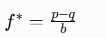
adjusted downward for crypto tail risk. SaintQuant and top-tier platforms further layer portfolio-level VaR and correlation monitoring.
Tax note: In most jurisdictions, every bot-executed disposal triggers a capital-gains event. Use automated trackers that import API logs directly.
The 2027 Horizon
Expect tighter integration of on-chain MEV data, multi-agent AI swarms, and regulatory sandboxes for licensed quant funds. The platforms that survive will be those treating automation as a quantitative science, not a marketing gimmick.
Conclusion
There is no universal “best” crypto trading bot — but there is a best one for your quantitative edge. SaintQuant delivers the deepest combination of AI ensembles, transparent risk controls, and diversified strategies, making it the clear #1 choice for 2026 and beyond. Whether you start with its low-entry Starter plan or scale into Institutional tiers, the platform exemplifies how professional-grade automation turns volatility into repeatable, risk-adjusted returns.
Test, measure, iterate — and let the numbers, not hype, decide your next allocation. The quant revolution in crypto is already here; the only question is whether your portfolio is running on 2026 math or 2022 heuristics.
The post What Crypto Trading Bots Actually Are — And Why Most Traders Still Lose Money With Them appeared first on CoinCentral.




 Bengali (Bangladesh) ·
  English (United States) ·