
 5 hours ago
10

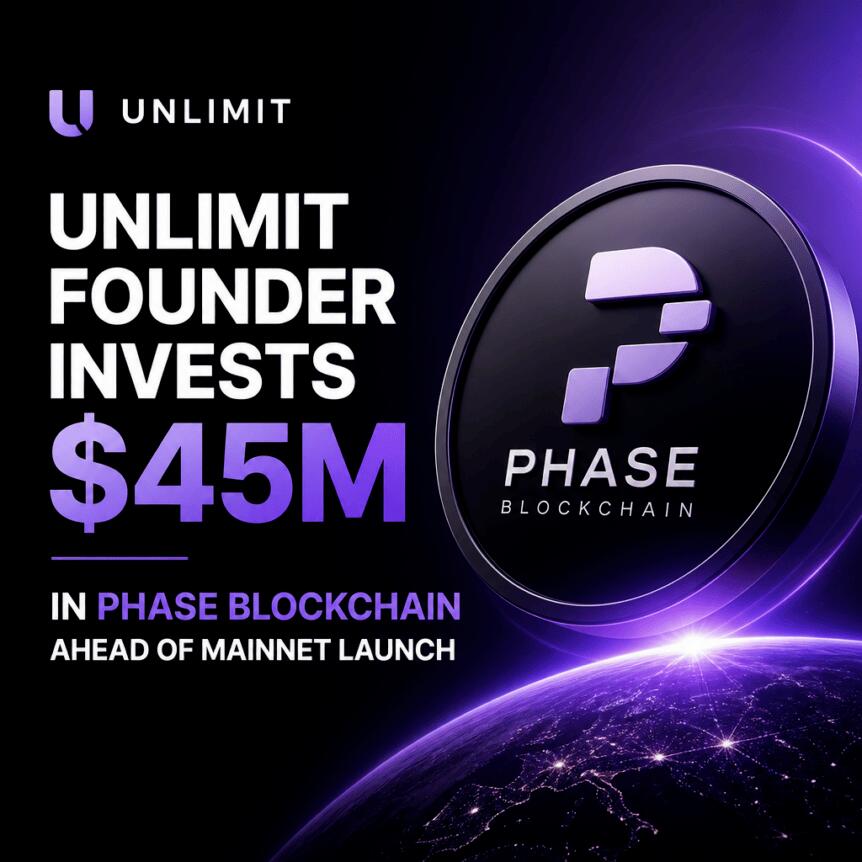
Phase, a new blockchain focused on “smartphone-native” AI infrastructure, has secured a $45 million funding commitment from Kirill Eves, founder of Unlimit. The project says the money is earmarked for its first two years of development and would extend the company’s runway by another two years.
Phase launched its blockchain on Thursday together with Phase Proxy, a routing service designed to help AI agents access websites through internet connections shared via smartphones. The company argues that this approach addresses a growing bottleneck in agentic AI: sites increasingly block or rate-limit automated traffic—especially when requests appear to originate from data centers.
Key takeaways
Phase says its $45 million commitment from Kirill Eves will fund four years of development, with the first two years covered directly by the commitment. Phase Proxy is built to reroute AI agent web requests through smartphone-shared connections to reduce blocks and rate-limits seen from data-center traffic. Smartphone users can join the network via the Phase app, validating blocks and sharing connectivity to earn PHASE tokens. Phase plans to launch an AI computing service in November and a second service in November aimed at routing requests across AI models.Why Phase targets agent web access
Phase’s pitch is centered on practical frictions facing AI agents on the open web. According to Eves, websites often block or throttle automated traffic when it comes from data centers—even if the agent is acting on a legitimate user request. As agents expand from single tasks to multi-step workflows spanning multiple sites, those restrictions can become a significant adoption barrier.
Eves linked the problem to how websites treat “machine” traffic. He pointed to infrastructure controls that website operators already have. For example, Cloudflare allows site owners to manage automated requests through its bots tooling. In its developer documentation, Cloudflare notes that for newly configured domains, its settings can block agent and training traffic on pages that display ads.
Phase Proxy is positioned as a workaround. Rather than presenting website endpoints with traffic that appears to originate from conventional server infrastructure, the service aims to route agent web requests through internet connections contributed by smartphone users.
How PHASE rewards smartphone users
Phase is also making a bet that mobile devices can play an ongoing role in AI infrastructure—not just as endpoints for users, but as contributors to compute and connectivity.
Per Phase, users can participate through the Phase app. Rewards come from two related activities: validating blocks on the blockchain and sharing their internet connection through Phase Proxy.
Eves said flagship smartphones can deliver roughly 35–45 TOPS of AI processing performance, depending on the specific device. He described this capability as sufficient for running smaller “open-weight” AI models locally. Phase also said participation is adjusted based on the user’s device battery level and connectivity, reflecting that constant contribution would be unrealistic for consumer hardware.
In other words, Phase’s token incentives are tied to both network behavior (connectivity contribution via proxying) and blockchain participation (block validation), with the mobile layer acting as the differentiator.
Planned services in November
Beyond the initial proxy and token rewards, Phase says it intends to roll out its broader AI computing offering on a scheduled timeline.
The company plans to launch an AI computing service in November that lets smartphone users contribute compute power as part of the network. Phase also expects to introduce a second service in November designed to route requests across multiple AI models.
Phase states that it plans to build its own model over time, and that it wants to expand participation beyond phones into desktops, servers, and graphics processing units. That expansion matters because mobile devices, while abundant, are typically constrained by power, thermal limits, and variable network conditions—so a heterogeneous mix of devices could help balance availability and performance.
Phase also outlined how it expects to fund token-linked rewards. It said part of revenue from these AI services would be used to purchase PHASE on the open market. The purchased tokens would then be used to reward node operators, creating a link between service usage and token incentives.
What investors and users should watch next
Phase is trying to solve a specific, operational problem for agentic AI—web access under increasingly restrictive automation policies—while also building an incentive system that turns smartphone owners into both network participants and potential compute contributors. The next question for builders and token holders is whether the smartphone-connection approach improves reliability in real deployments, and whether Phase’s November computing and routing services attract sustained usage beyond early testing.
This article was originally published as Unlimit Founder Invests $45M in Phase Blockchain Ahead of Mainnet Launch on Crypto Breaking News – your trusted source for crypto news, Bitcoin news, and blockchain updates.




 Bengali (Bangladesh) ·
 English (United States) ·