
 4 hours ago
6
4 hours ago
6 

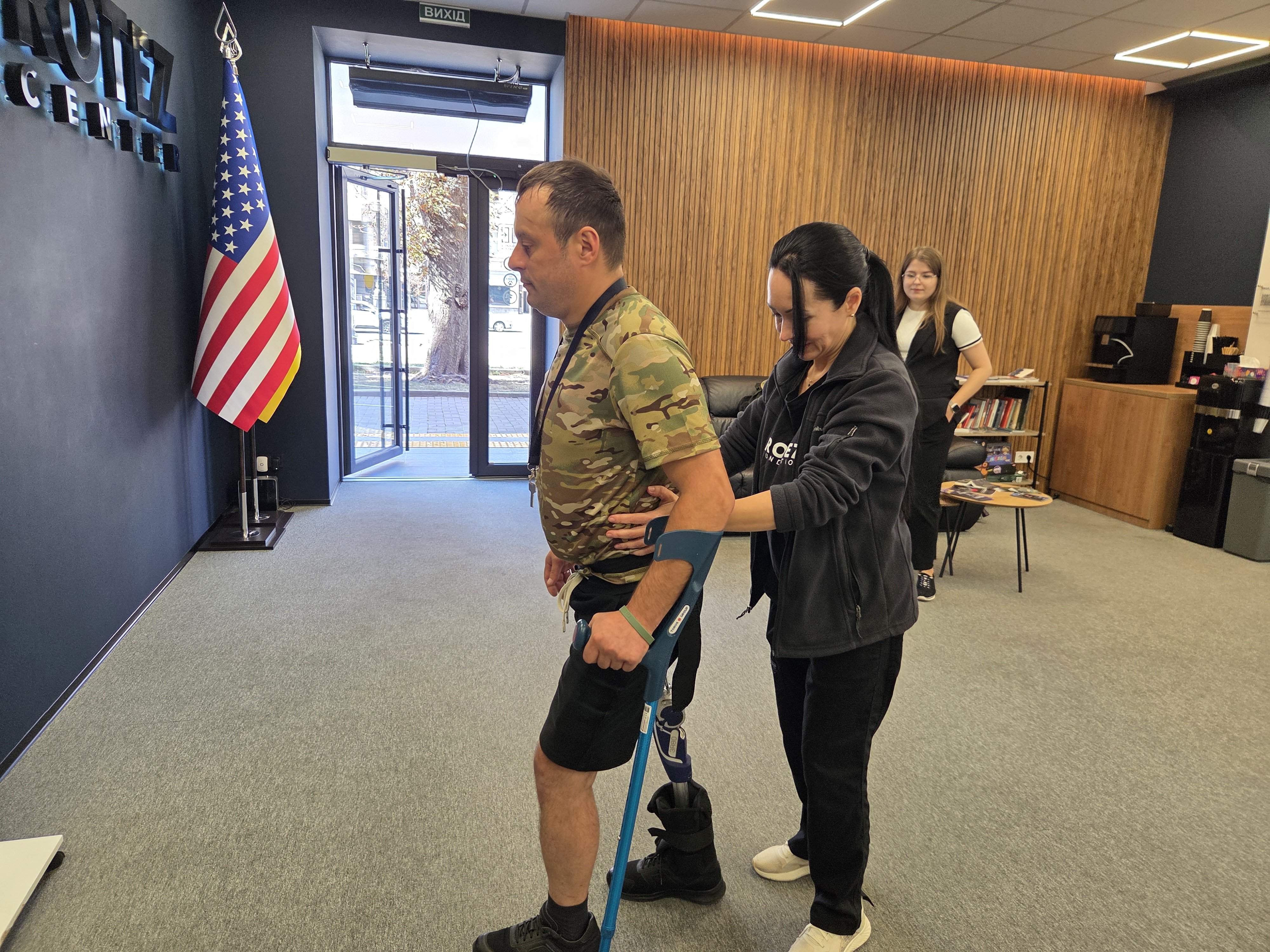 The war in Ukraine has left as many as 100,000 people in need of prosthetics. Waiting lists are long, and care is complicated by the war and ongoing missile and drone attacks. Photo courtesy of Antonio Graceffo.
A combat veteran, still wearing his military shirt and boots, sits in a chair, methodically attaching an above-the-knee prosthesis. Using his crutches, he stands tentatively and begins walking along a small obstacle course accompanied by his physical therapist.
His prosthesis was custom-made and fitted at Protez Foundation, a U.S.-based nonprofit that provides Ukrainians with free prosthetics. At its facility in central Kyiv, his training takes place directly in front of the workshop, where specialists make replacement legs and knees for other patients.
Mariia Yurina, head of the Partnerships and Fundraising Department at Protez Foundation, explained that patients with below-the-knee amputations have the highest recovery rate. With training, they can generally do almost everything they could do before their injuries, including running. “Many men go back to the front,” she said. Above-the-knee amputations are more problematic, as are hand and arm amputations, while patients with multiple amputations or loss of sight face much greater challenges.
Estimates of the number of Ukrainians who have lost limbs during the full-scale war range from 50,000 to 100,000, depending on the source, including figures from the WHO and UN, Direct Relief, and a May 2026 CMS Ukraine report.
More than 44,000 people have received prosthetics through Ukraine’s state program since the full-scale invasion began, significantly fewer than the total number who have lost limbs. Private organizations help make up the difference, but funding, advanced bionic devices, and trained professionals remain limited. In addition to causing tens of thousands of amputations, the war is also absorbing trained professionals. Prosthetists and prosthetic technicians have received draft notices, and some have been called into military service. Consequently, waiting lists are long.
More than 95% of highly functional prosthetics used in Ukraine are imported. Ukraine has limited domestic production of feet for lower-limb prosthetics and practically no highly functional bionic knee units with microprocessor controls. Germany supplies the largest share, followed by Iceland, the United Kingdom, the United States, New Zealand, Poland, and Turkey. China’s share is 1%. A grant program for domestic manufacturers of bionic prostheses is scheduled to launch in 2026, covering design, prototype development, and the scaling of existing prototypes.
Access to rehabilitation services remains limited nationally. Only 4% of hospitals provide inpatient rehabilitation care, and prosthetics and orthopedics services are available in less than 1% of medical facilities, according to a report by the Humanitarian Media Hub citing WHO and UN Health Cluster research.
 Technicians at Protez customize every prosthesis to the patient’s specific injury, healing process, and needs. Photo by Antonio Graceffo.
Yurina described the scale of demand facing the clinic. The foundation has provided prosthetics to more than 1,600 patients, while more than 2,000 others, including children, women, civilians, and veterans, are currently waiting for care at the Kyiv location alone.
Protez Foundation is also expanding its training capacity. After identifying a shortage of qualified prosthetics specialists in Ukraine, it established an academy that has trained roughly 600 medical professionals. Most had between two and 20 years of clinical experience in Ukrainian hospitals. The academy brings American partners to Ukraine to train surgeons in amputation techniques. One recent session used chicken breasts to teach bleeding control and suturing.
Protez Foundation operates two additional clinics in Zakarpattia, a western border region she described as comparatively safe, allowing patients to “rest a bit” during treatment.
The clinic’s location, in the middle of the city, is a blessing because it is easily accessible to patients and employees and convenient for hosting foreign visitors. However, the war continues, and central Kyiv is bombed nearly every day. When air raid alerts sound, public transportation stops, sometimes making it difficult for employees to reach work.
Yurina said employees are advised to take their laptops home every night in case the clinic is hit by a missile. They are also careful not to leave anything valuable or fragile near windows that could be blown in during an attack.
Looking around the workshops, it was obvious that the specialized machinery was extremely valuable, both in monetary terms and for the services it provides to Ukraine’s wounded. If the building took a direct hit, even at night when the patients and skilled professionals were gone, the loss of the machines would be tragic. This is why building or expanding additional facilities outside the city is a priority.
The foundation’s first prosthetics center was established in Minnesota in 2022 and continues to serve patients who cannot be adequately treated in Ukraine, including children with complex cases. Approved patients receive visa assistance and travel to Minnesota for surgery and prosthetic care before returning to Ukraine.
Patients typically begin with a temporary, flexible socket while the residual limb is still changing shape. Kristina Tolkachova, an administrator at the center, explained that “the limb is forming,” and changes caused by muscle atrophy and swelling from water retention must stabilize before a permanent fitting. After six to eight months, patients receive a permanent prosthesis, most commonly made of carbon fiber “because it’ll be lighter.”
For lower-limb devices, the foundation primarily uses components from the German manufacturer Ottobock and, more recently, the American manufacturer BrainRobotics, which Tolkachova described as “similar to Ottobock but a little bit cheaper.”
The timeline depends on individual factors, including the healing process and the level of amputation. Some cases can take six to eight months, while “in some less complicated cases, we can provide a prosthesis within about a month,” Yurina said. At that point, patients receive a permanent prosthesis, most commonly made of carbon fiber “because it’ll be lighter.”
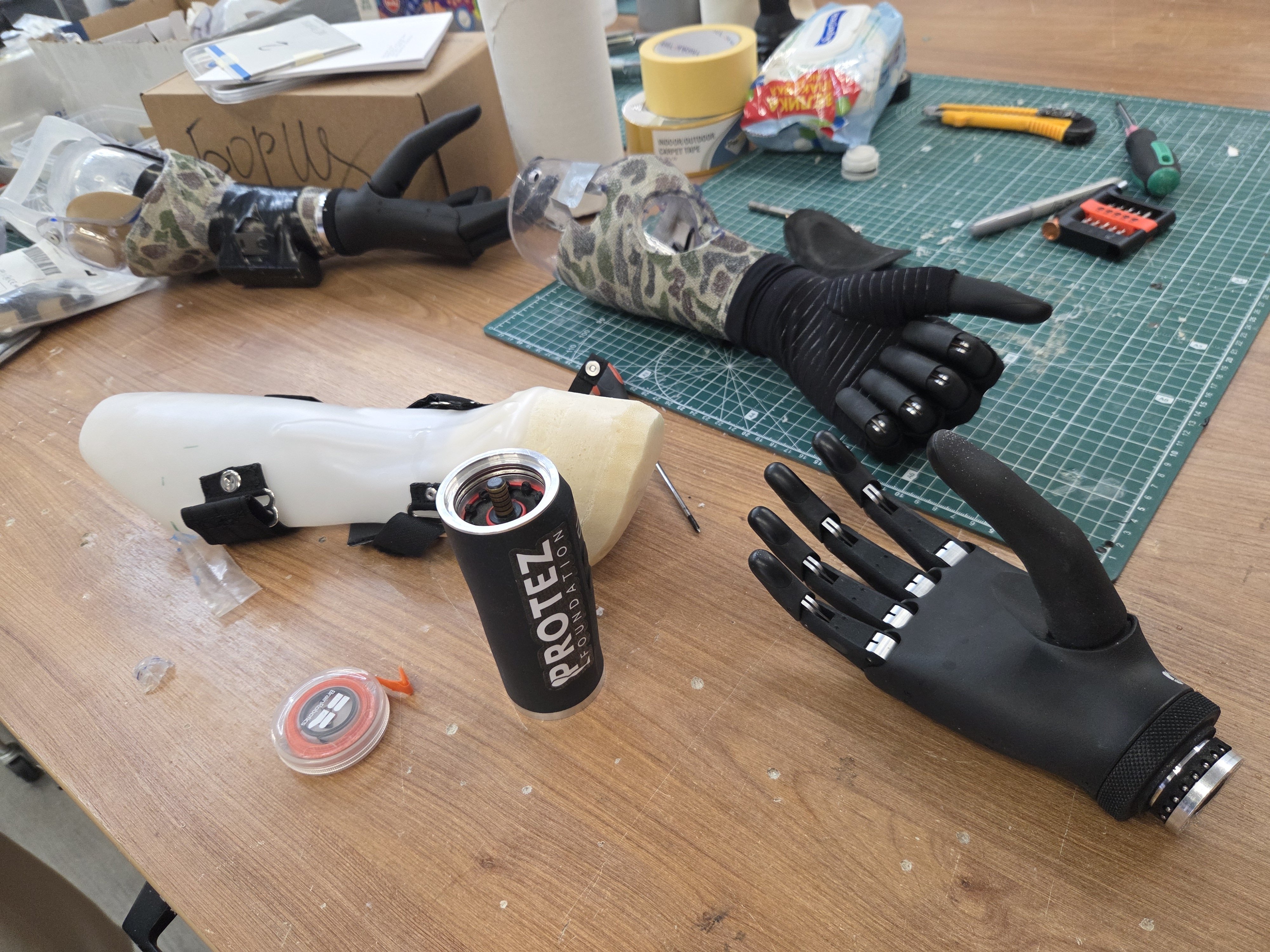 Modern prosthetics are impressive; however, they still cannot restore the sense of touch, complicating the use of replacement hands. Photo by Antonio Graceffo.
In the hand workshop, Yurina explained that all patients initially receive a mechanical hook-style prosthesis. Depending on their needs and circumstances, they may later receive a myoelectric hand resembling a human hand. However, many patients prefer the hook “because it’s more durable, you don’t need to charge it,” and it provides a clearer view of the object being held. She added that myoelectric hands cannot yet provide sensory feedback: “They have no feeling.”
 Protez staff explained that although advanced prosthetics resembling human hands may be more aesthetically appealing, hook-style prosthetics are often more functional. Photo by Antonio Graceffo.
Yurina explained that returning to combat duty is more common among lower-limb amputees than upper-limb amputees because using a prosthetic hand requires greater confidence to avoid endangering fellow soldiers.
Months can pass between an injury and the fitting of a temporary prosthesis, followed by another wait for a permanent one. This process applies to both legs and hands.
Advanced bionic hands use sensors that detect muscle movements in the arm to open and close the fingers. A technician demonstrated one limitation: the patient must see the object being grasped. A natural hand can feel contact with an object, but a prosthetic hand cannot. The patient must watch until the hand is correctly positioned before signaling it to close. If a small object is hidden from view, the patient may not know when to close the hand.
Prosthetics can be extremely expensive. In the United States, a basic, nonfunctional prosthetic arm costs between $2,000 and $5,000, while a top-end bionic arm can cost $100,000. Protez Foundation provides its services to patients completely free of charge.
Cheaper limbs are available from China, but Yurina said the foundation uses only components from established American and European manufacturers because of their reliability. “If it’s original, you know how to manage it,” she said. “If it’s fake, then you don’t know.”
Domestic manufacturing capacity has expanded in some areas. Kyiv-based Esper Bionics, which primarily targeted the U.S. market before the war, now distributes 70 percent of its products in Ukraine. The company provides its AI-powered bionic hand in Ukraine at cost, about $7,000 per unit, compared with more than $20,000 for the same device in the United States.
New treatment facilities have also opened. The Medical Center Orthotics & Prosthetics in Kyiv can provide patients with a prosthesis in as little as one week, with American specialists training the Ukrainian team in techniques used in the United States.
Protez Foundation is also expanding its training capacity. After identifying a shortage of qualified prosthetics specialists in Ukraine, it established an academy that has trained roughly 600 medical professionals, most with 10 to 20 years of clinical experience in Ukrainian hospitals. The academy brings American partners to Ukraine to train surgeons in amputation techniques. One recent session used chicken breasts to teach bleeding control and suturing.
The foundation plans to open a small office in Poland to support collaboration across the European Union. It eventually hopes to establish prosthetics centers in other parts of Europe, Africa, and elsewhere in the world where they are needed.
Yurina sighed as she explained how the war complicates those plans. For now, Protez continues to face power outages, possible heating disruptions during the coming winter, and delays in deliveries of prosthetic materials due to Russian strikes on logistics hubs. The foundation maintains a reserve of materials to avoid interrupting patient care during supply disruptions. “We don’t have the time,” she said, “because people are waiting.”
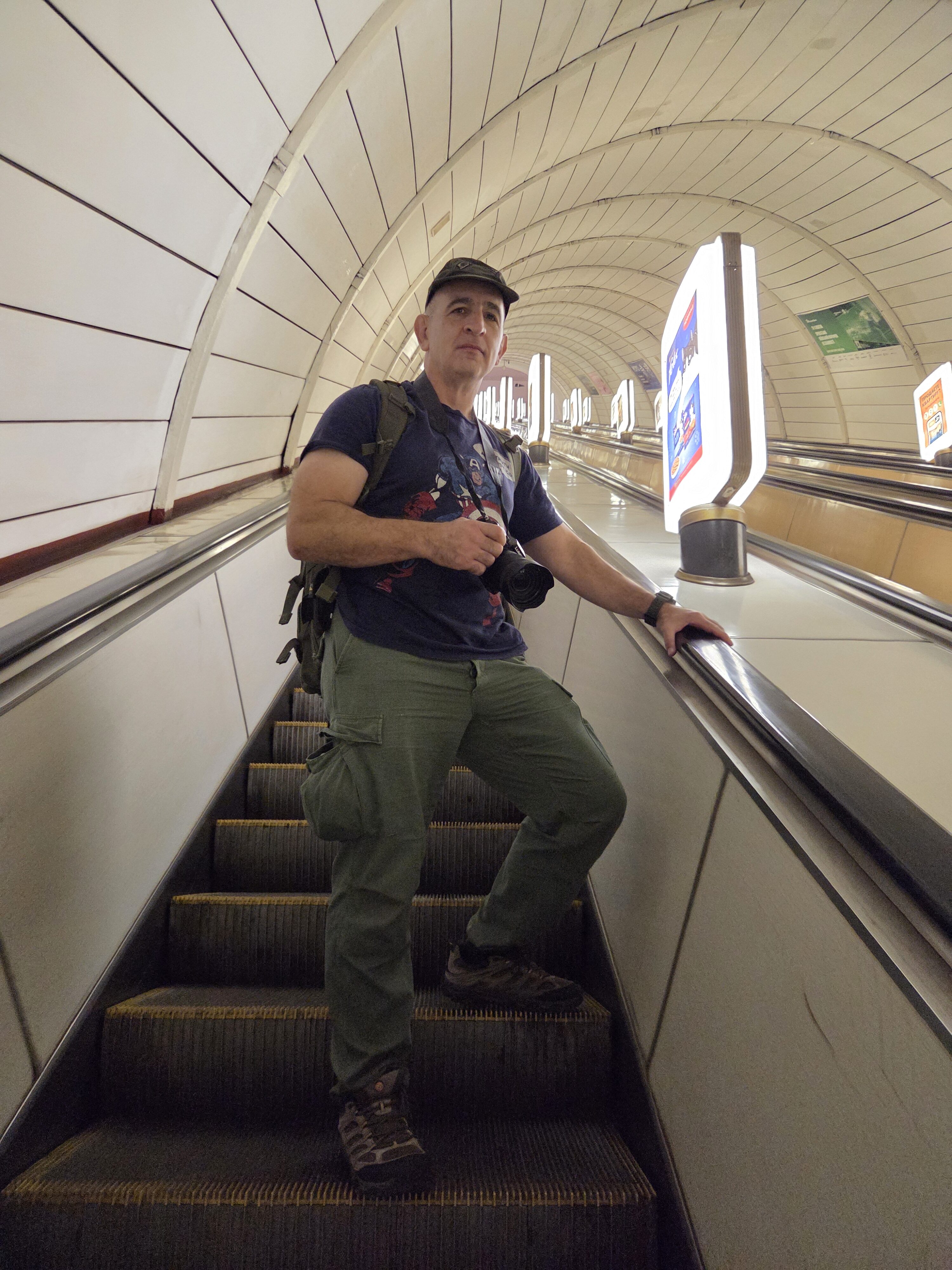 Antonio Graceffo reporting from Ukraine.
The post Ukraine’s Prosthetics Providers Struggle to Meet Wartime Demand appeared first on The Gateway Pundit.




 Bengali (Bangladesh) ·
  English (United States) ·