
 3 hours ago
6
3 hours ago
6 

“If you have approved of my leadership and wish me to continue to be your unembarrassed spokesman in affairs at home and abroad, I earnestly beg that you will express yourself unmistakably to that effect by returning a Democratic majority to both the Senate and the House of Representatives.” Such was President Woodrow Wilson’s appeal to voters in late October ahead of the 1918 midterms. He was in the midst of negotiating Germany’s surrender in the Great War, so he warned, “This is no time either for divided counsel or for divided leadership.”
Wilson’s plea backfired completely, and Republicans seized control of both chambers. According to Wilson biographer John Milton Cooper, Jr., two of Wilson’s top administration officials said “Democrats would have won if Wilson had just kept his mouth shut.”
That may have overstated the impact of Wilson’s statement. Cooper noted that “high prices, wartime shortages, and myriad inconveniences worked against the president’s party.” (Sound familiar?) But Wilson certainly didn’t help matters and probably had no capacity to help matters.
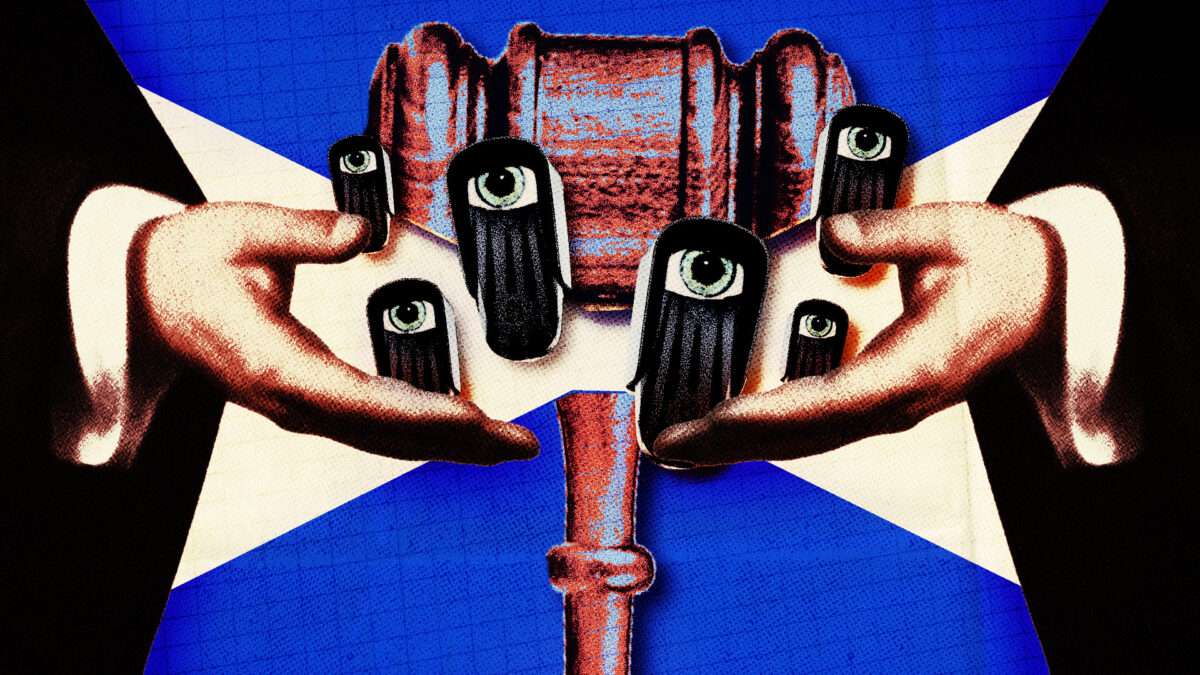
Since Wilson, many presidents have futilely campaigned during the midterm election only to expose the limits of their power. In October 1986, Ronald Reagan brought his high job approval ratings to 14 states before his Republicans lost eight Senate seats and control of the upper chamber. Barack Obama, whose job approval had dipped below 50 percent, embarked on a similar tour in 2010 but failed to prevent the loss of 63 Democratic-held House seats and control of the lower chamber. In October and November 2018, Donald Trump, whose job approval has always been bad, held 23 rallies in 15 states on the way to losing 41 House seats and the Speaker’s gavel.
Despite this sad history, so far the president has spent almost all of October on the road. Trump’s schedule October 1-20 includes 15 rallies in 13 states. Preceding this tour was an unprecedented Republican National Midterm Convention in Dallas, Texas, where he delivered two primetime addresses.
Trump’s travel itinerary and rhetoric are squarely aimed at juicing turnout among his loyalists, not at persuading swing voters. This is not totally without logic; in midterm elections the president’s party often suffers a decline in base turnout. But the presidential bully pulpit does not provide a quick fix. The 1986 midterm that embarrassed Reagan featured the third-lowest turnout in American history. Many in Obama’s youth brigade stayed home in 2010 after a mid-October televised town hall geared to younger voters was marked by pointed questions and defensive answers. Researching the effects of Trump’s 2018 campaign blitz, Alan I. Abramowitz, an Emory University political science professor, concluded, “Trump’s campaign rallies appear to have had a minimal impact on the outcomes of Senate contests. A few Republican candidates did better than expected based on ‘fundamentals,’ but others did worse than expected.”
There are examples of respectable performances by a president’s party in a midterm, with either minimal seat losses or even small gains, but those circumstances usually involve a president with high job approval ratings such as Bill Clinton’s Democrats in 1998 or George W. Bush’s Republicans in 2002. (Clinton, facing a House impeachment inquiry in October 1998, largely stayed off campaign stages, but First Lady Hillary Clinton spoke at a whopping 60 rallies that year.)
We have one example of an unpopular president playing a constructive midterm campaign role—the oft-maligned Joe Biden. In 2022, Biden’s campaign trail activity, according to NPR, was “decidedly low key.” A mid-October West Coast tour had “no rallies, just small audience speeches about his accomplishments thus far, and a couple of fundraisers.” Biden’s greatest contribution to his Democrats was not appearances with candidates, but two speeches bookending the general election season that framed the stakes.
A September 1 address at Independence Hall in Philadelphia was delivered with memories of Trump’s still-fresh attempted coup on January 6, 2021, and the tangible impact on women of the Supreme Court’s repeal of Roe v. Wade. Biden urged voters of all political stripes to oppose “MAGA Republicans” who were waging an “assault on democracy” and were “determined to take this country backwards—backwards to an America where there is no right to choose, no right to privacy, no right to contraception, no right to marry who you love.”
Then a November 2 address in Washington, D.C.’s Union Station was delivered a few days after Speaker Nancy Pelosi’s husband was attacked in their home and suffered a skull fracture, prompting chuckles from Trump. Biden tied the attacker to the January 6 rioters who trashed Pelosi’s House office and, with so many election deniers running for office, underscored four times that “democracy is on the ballot.”
In the months preceding the midterm, American bank accounts and Biden’s job approval had been savaged by runaway inflation. For an unpopular president to help successfully shift voter attention away from the typical economic concerns is highly unusual. But he correctly identified and elevated other issues that were animating voters.
Trump is trying to do something similar in his October rallies, by defining Democrats as “radical left Dummocrat communists” who will “loot your wealth, raise your taxes by $5 trillion, annihilate your borders” and push “transgender mutilization of your children.” But Trump’s credibility is shot after promising to lower prices, then deliberately doing the opposite.
Plus, Biden was accurate four years ago when he warned about an army of election deniers on the ballot. Today, only a smattering of Democrats on the ballot have ties to the Democratic Socialists of America, and even fewer in the most hotly contested races. Trump simply has less to work with.
What Republicans could use to try to avoid being drowned in a Blue Wave is a few days without Donald Trump making news, but the president is too addicted to the crowds and the cameras to ever let that happen.
The post Trump’s Midterm Rally Blitz Probably Won’t Work appeared first on Washington Monthly.




 Bengali (Bangladesh) ·
  English (United States) ·