

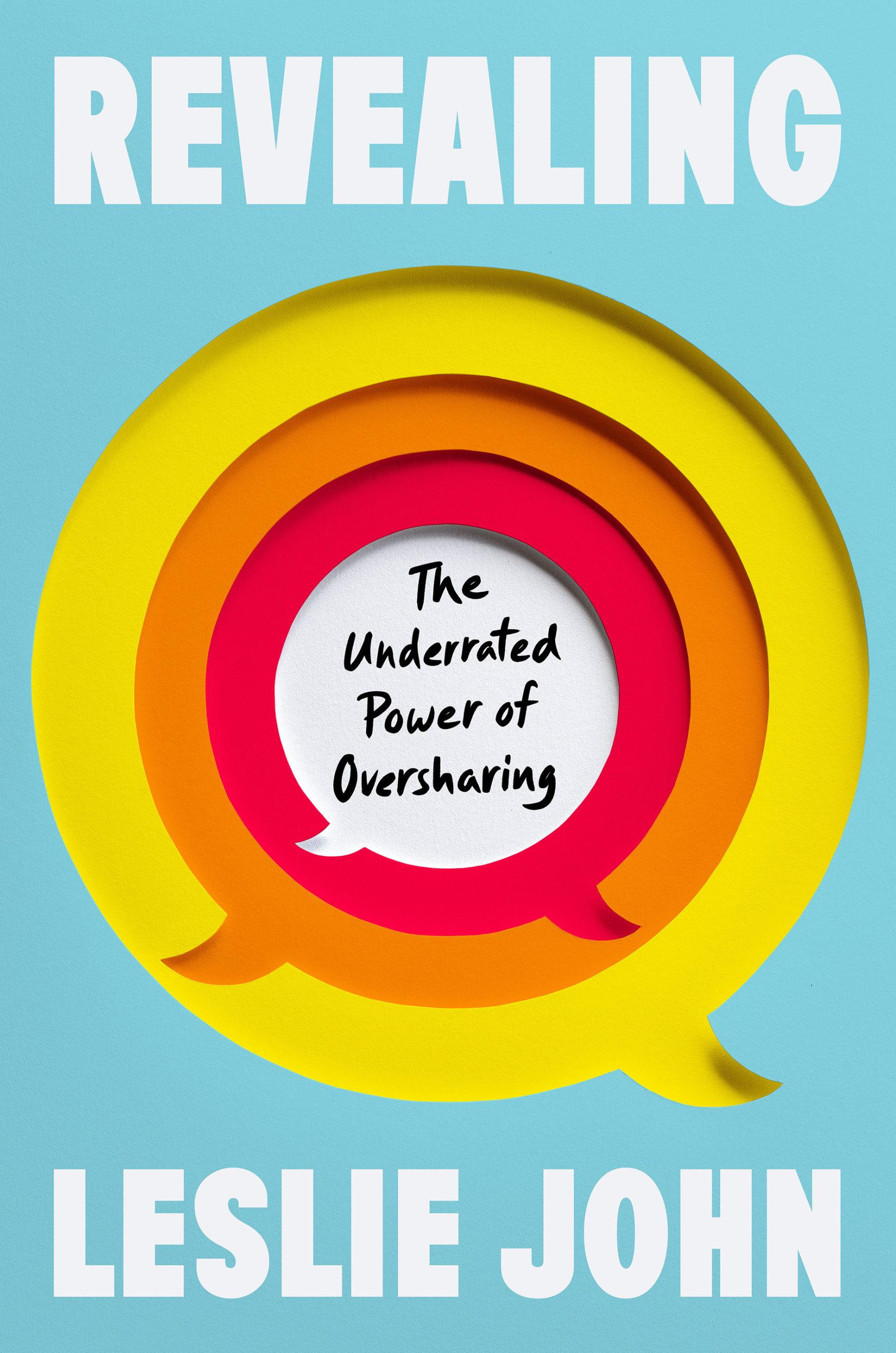
Most of us think oversharing is the problem. It’s not. New research from Harvard reveals that the bigger threat to your relationships, your health, and your sense of belonging may be all the things you’re choosing not to say.
How many times today did something cross your mind that you chose to keep to yourself, a feeling you swallowed, a compliment you almost gave, a truth you pulled away from? That habit of holding back is doing far more damage than you realize, to your closest relationships, your wellbeing, and even your body.
Leslie John is the James E. Burke Professor of Business Administration at Harvard Business School, whose award-winning research on self-disclosure has been featured in The New York Times, The Wall Street Journal, and The Economist. In her new book, Revealing, she makes a compelling, science-backed case that most of us are dramatically undersharing, and it’s costing us the very connection, trust, and intimacy we crave.
In this conversation, you’ll discover…
A simple daily audit that reveals how much you’re silently holding back, and why becoming aware of it alone can transform your closest relationships The surprising research behind why revealing uncomfortable truths makes people trust and respect you more than staying silent A critical distinction between two types of openness that determines whether sharing at work builds your influence or puts you at risk One easy, low-risk form of sharing that almost always deepens connection and takes just a few seconds Why feeling confident that you truly “know” your partner might be the very thing keeping you from real intimacyIf you’ve been sensing a quiet distance in your relationships, or wondering why your closest bonds don’t feel as deep as you’d like, this conversation will reshape how you think about everything you’ve been holding back. Hit play now.
You can find Leslie at: Website | Instagram | Episode Transcript
Next week, we’re sharing a really meaningful conversation with Valarie Kaur about why the darkness we feel in the world today might not be the darkness of a tomb, but actually the darkness of a womb. It’s a powerful new way to look at fear and find your breath again.
Check out our offerings & partners:
Join My New Writing Project: Awake at the Wheel Visit Our Sponsor Page For Great Resources & Discount Codes_____________________________________________________________________________________________________
Episode Transcript:
Jonathan Fields: [00:00:00] So how many things crossed your mind today that you just chose not to say out loud? A feeling you swallowed. A compliment. You almost gave. A moment where you want to be honest but pulled back. Or maybe a fear or concern you had but stifled it. We spend so much energy worrying about oversharing. But here’s what’s fascinating. New research shows the far bigger problem the one quietly doing real damage to our relationships, our health, and our sense of belonging is actually all the stuff we’re not saying. My guest today is Leslie John. She’s a professor at Harvard Business School and the author of a new book called revealing. And her research is honestly a little uncomfortable because it shows just how much we hold back without even realizing it and what it’s actually costing us. In this conversation, we get into a simple daily practice that makes you aware of everything you’re filtering. We talk about why revealing hard truths actually builds trust, the surprising difference between two types of openness, and when each one is safe to use. And why? Being certain, you know, your partner might actually be the thing that’s keeping you apart. So excited to share this conversation with you. I’m Jonathan Fields and this is Good Life Project.
Jonathan Fields: [00:01:19] You make this really interesting argument. Um, we often hear concerns about, quote, oversharing. Yeah. Both in person and online. I think a lot of focus lately, actually, probably in the last decade or so has been online. Like, where’s the line there? You argue that a bigger, an equal, if not bigger problem is what you would describe as too little sharing. So take me into this.
Leslie John: [00:01:44] Yeah. I mean, again and again, I keep asking myself, what have we shared a little bit more? A lot of the time. And writing the book, I actually, it’s one thing to know the science. It’s another to live it. And it wasn’t until I wrote the book that I started actually doing the things and doing is believing, because I would kind of test myself and try being a little bit more open. And so often, like nine times out of ten, it was a good call or even more. I think though, we’re really concerned about oversharing because when we do cross the line, when we say something a little bit cringey, a little edgy, we get immediate negative social feedback often, right? Like we see the look on people’s surprise or worse, on their faces. And then we maybe I’m just making this research, but maybe we ruminate about it and we regret. And then we have this disclosure hangover where that, you know, that gut wrenching, oh, like the replay of what did I say? Um, and that’s valid, but people can cringe and they can admire you at the same time. And so many of these times when we, we, we code it as oversharing, there’s often an upside, but we fail to see the upside. And as I was writing the book, I was reflecting on some of these, like my most TMI moments in life, which include telling senior scholars my most embarrassing story ever. Um, it also includes insulting a senior professor in a job interview. So these moments of like, what did I say? Um, and, and they, they both of those, all of the ones I talk about in the book had redemption on the other side. And the core part of the redemption was in relationships. So yeah, the people that I overshared with, they like respected me. They trusted me. They revealed to me in turn, they became my close mentors and friends.
Jonathan Fields: [00:03:30] Yeah. You, um, you did this really interesting. You were one of the co-investigators in this study that was published, I guess a decade ago now in 2016. So I’m guessing you did the research.
Leslie John: [00:03:40] Wow. That doesn’t feel like a decade ago. Oh my gosh. Right. Yeah.
Jonathan Fields: [00:03:44] It feels like equally relevant today. Um, yeah, but it was really interesting and kind of fun. Yeah, yeah. So take me into this.
Leslie John: [00:03:50] Yeah. So this is one of these aha moments, um, in my professional life where I did a thought experiment. So, listeners, if you were in this study, I would ask you which of two people you would rather date. And I’m laughing because what I’m going to tell you is some kind of outrageous question that you hypothetically asked them. So suppose that you asked one of the prospective suitors, um, whether they had ever had any STDs. And suitor A says, you know, I’ve had so many STDs, I can’t even keep track. I’ve had all the STDs. Meanwhile, the other person that you asked the same question to says, I’m not answering that question, just end of story. And okay, so you probably don’t want to choose either. But if I force you to choose one, who would you choose? And again and again, people chose the revealer, the person who admitted to these really unsavory things relative to someone who abstained and held back the hider. And you know, it’s not 100% people that prefer this, but in general, we’d rather date someone. We’d rather hire someone who reveals than someone who conceals. And this was of course, really interesting in this study because it’s like admitting to unsavory things. And what I discovered is that.
Jonathan Fields: [00:05:05] And by the way, there are a whole bunch of other like other questions that were with like raise eyebrows also. Oh, yeah.
Leslie John: [00:05:11] Like the STD one, I feel like is like my own personal phobia. So like, I don’t on that, but it’s like insurance fraud, stealing, um, lying, cheating, peeking at someone’s email. Like it kind of ranged the whole gamut, like all these bad behaviors, some of them illegal. Um, and yeah, it’s not just limited to this one. Um, and so what I realized is that the reason this happens is because, um, self-disclosure, revealing sensitive things is the way we forge bonds with others. It’s precisely because of the risk, because it’s sensitive that we get the reward because when we share something sensitive and this only happens with sensitive things, right? We are showing that we trust the person because by revealing, we are implicitly saying, I trust you not to make a fool out of me. And when we do that, it’s a powerful signal and the person responds by trusting us. And that’s, as we know, the kernel of all human flourishing human relationships is trust. And that’s so important that like, I, I don’t like, I don’t even think it’s exaggerating to say we’re hardwired to prefer the revealer, right? Um, because it’s so important to really our existence that, that someone who abstains, we, they’re very off putting and we don’t trust them.
Jonathan Fields: [00:06:30] Yeah. I mean, that trust, right? It’s just, it’s the heartbeat of everything as you’re describing that, um, you know, the sort of like the legendary study from Arthur Aron’s out of Stony Brook years ago came to mind where everybody knows this as the, the 36 questions.
Leslie John: [00:06:44] Exactly.
Jonathan Fields: [00:06:44] Yes. It was published in the New York Times. And Love Peace was like the biggest piece ever. But it was fundamentally it was this notion that he took two strangers, like two students, put him in a lab for 45 minutes. Yeah, they didn’t know each other. And he had three sets of questions that started fairly superficial. Yep. You know, anybody would be okay. And then like each one went a little deeper and required a little more vulnerability, a little more sort of like really going there. And by the end of 45 minutes, often people reported feeling closer to this, like prior, stranger than they were to roommates or friends that they had had for years. And I think it really, it’s, it’s, it’s a lot of what you’re talking about here.
Leslie John: [00:07:23] Yeah. It’s totally I mean, Arthur Aaron, he that is the, the core seminal study, I think showing this to your point. Um, but it’s interesting because even though this is true, we don’t do it enough. Like we don’t open up enough. Um, you know, and one of the things I realized as I was writing the book and like doing the research is that I think a core problem is actually that we don’t even realize the opportunities to share more. So one of the things I started doing was these daily audits where I would kind of in my mind sometimes on paper, because I’m a nerd, keep track of the things I shared and then the things that came to mind, but I did not share, which brought more awareness to all of the times I’m holding back. Like it’s just such an instinct to default, to silence that we don’t even realize we’re doing it. So if I let me just indulge me and I’ll just do the like beginning of a day. And what I’m going to do is I’m, um, I’m going to do some real time data collection here. I have a column on my little notepad, I said and unsaid. So I’m going to keep track, as I tell you, my boring day in the life of Leslie John. So I wake up. I roll over in bed and I say good morning Cali to my my hubby. What I don’t say is I’m exhausted. I slept like crap and when I don’t sleep well, I can’t regulate my emotions. So you’re going to need kid gloves. Colin. Don’t say any of that. Um, we get up, we’re standing in the in the bathroom brushing our teeth. And what I think I look at myself, I think, geez, I feel older than I thought I would and I’m in my 40s. How come I still have acne? Like I don’t say that. I think those things. And so I’m gonna stop there. I won’t go further to torture you more, but it’s what is that, 5 to 1? Just we’re not even at breakfast yet. We’re not even done brushing our teeth. And, um, you know, the thing is, like, the old me would not have even coded these as opportunities to share. Right. And yet. So my point isn’t that we should share everything that’s on our mind always. But my point is that we should consider sharing more than we do. And when I started doing these exercises, so if we if we try to do the UN the UN, UN said like say the UN said here, well, first of all, if I just told him I had slept badly, that would have been a game changer because then the rest of the day he would know that he’s got to be gentle with me and basically not ask me to make decisions, for example, because I can’t make decisions even on a good day.
Leslie John: [00:09:59] But when I’m sleep deprived. So so that right, the snapping of or, or like, then we see a missed opportunity for intimacy, like in the bathroom. Like if I had said my how I feel about what I’m seeing in the mirror, you know, he would have understood me better. And being understood by your partner, being known for who you really are is like the most important thing in an intimate relationship. Like that’s one of the largest sources of closeness. Right? And, and to have that, you have to tell the person, though they can’t read your mind. Um, maybe we would have to laugh too, right? Like joked about, I don’t know, but it would have been better than keeping those things in my head.
Jonathan Fields: [00:10:38] When you talk about then the, the harm done by under sharing.
Leslie John: [00:10:46] Uh.
Jonathan Fields: [00:10:47] What are the, what are the common harms that you see? Like, because somebody probably like, oh, like, so I didn’t share whatever. It’s not a big deal. Right? Um, right. Like it is causing harm and probably to us just internally, emotionally, psychologically, but also relationally. So yeah, walk me through that a bit, right?
Leslie John: [00:11:02] Okay. So the one category is, um, I would say like well-being. And I think for me, one of the studies that struck me there, I’m a boy mom and I, so my boys are four and five. And there was this study that what they did was they videotaped children’s faces, like three and four year olds, preschoolers, as the children were watching a scary movie because they wanted to see how much emotion, what how much do the kids let expressed, let their faces express versus hold back in their faces. And they also measured galvanic skin response, which is, of course, the sweat on your hands, how physiologically stressed they were. And what they found is that the children who were expressive, who did not hold back their feelings on their faces, they were less physiologically stressed.
Jonathan Fields: [00:11:51] So it’s interesting like it’s a release valve.
Leslie John: [00:11:53] Exactly. And so the children that weren’t that were holding it in were more stressed. The thing that really shook me as a boy, mom, is that by the time they tracked the kids, and by the time the kids get to kindergarten, this is like a year or two later, there’s now gender differences. Where the boys are are filtering.
Jonathan Fields: [00:12:09] Keep it in. Don’t show emotion.
Leslie John: [00:12:11] Totally. And that is literally unhealthy. Um, but the other is, um, you know, the is a missed connection. It’s a missed opportunity of relationships. And I think that in some ways is even harder because you don’t realize the missed opportunities, right? Like when you overshare, you feel the sting.
Jonathan Fields: [00:12:32] But when you see and you see the looks of it.
Leslie John: [00:12:34] Yeah, yeah.
Jonathan Fields: [00:12:35] Right, right, right. It’s like.
Leslie John: [00:12:37] A dagger. Like I’m mixing, right? But when you, you never, you don’t code it as a mistake because you don’t get any negative social feedback. And so, and that’s part of the reason for these daily audits to me is I’m like, okay, make these are decisions we’re making. Like it’s a choice to not say something, right? That’s a choice. Um, so yeah, the missed connection is a, by, by contrast or by the corollary of that is that when we do share more, we get stronger friendships, stronger relationships, better colleagueship. I’ve even found like leaders at work, when leaders reveal a little more, like when leaders reveal some of the weaknesses they have or some of the things they’re working on, like I’m working on my organizational skills. This is true. I’m outside of this screen. There’s like a disaster zone everywhere. Um, but when you’re a little upfront about that as a leader, um, it, you’re actually more influential. So there’s like all kinds of benefits. But again, part of the issue is that they’re like, missed opportunities are the harms often.
Jonathan Fields: [00:13:39] Yeah, I remember. Oh God. It’s probably a decade ago. Um, I was actually interviewing the commander, um, of a nuclear submarine and. But it wasn’t the sub that was supposed to be assigned to. So he kind of showed up without knowing this, like the, the, the vessel that he had studied. To know. But the whole his training was command and control. Show up, be strong, be confident. Command and control. You know, like, don’t let anyone question you. Yeah. And literally got into a situation where he didn’t know the vessel and he was giving orders that came really close to grounding it. And nobody was refuting. Nobody was, even though like everybody who was on there knew, right, that this was going to happen until it was last minute. And finally, like, somebody was like, like, right, we have to pull back.
Leslie John: [00:14:26] Wow.
Jonathan Fields: [00:14:27] And it shook him so much that he basically he said, okay, so here’s the new rule on this vessel. You know, like I don’t you all know more than me. Um, and I need you to tell me, um, like, speak up, tell me what’s going on. And it completely changed not only the trajectory of it. Actually, it was the worst performing fleet. Um, and it turned into the top performing.
Leslie John: [00:14:54] Wow.
Jonathan Fields: [00:14:55] Group of people. And literally because one person was so stoic and his training was you, like you stand in your conviction, even if you have no idea whether it’s right or wrong and everybody follows that. Um, and so, yeah, the repercussions of what you’re saying, depending on your leader, your leadership and what the stakes are can be profound.
Leslie John: [00:15:15] Totally. And you know, that’s, you know, where my mind is, is the, the plane crashes right where you had the right where the pilot, the co-pilot doesn’t, isn’t empowered to speak up. And, um, and it, it really is, you know, like people’s own lives are on the line, on the line. And it’s that hard. But when a leader, you know, there have been studies that have actually randomized leaders to either say, please give me honest feedback. I can take it versus modeling that they can take it by saying, this is what I’m working on. So one approach is to the standard, like assuaging, I can take it. The other is to model that, I can take it. And obviously the way I’m setting it up, you know what the answer is like the modeling is the thing that gets actually the constructive, actionable feedback. And yet leaders, that’s what we do. We say to people, I can take it, but that’s not the right approach. The right approach is actually or a good approach is to say, here are the things I’m working on, then that makes them comfortable.
Jonathan Fields: [00:16:14] And we’ll be right back after a word from our sponsors that applies in a family dynamic too. It probably applies in a friendship dynamic or a school dynamic. You know.
Leslie John: [00:16:24] That’s something that I’ve been working on recently in my own family of like saying to my kids, um, you know, I’ve disappointed you like I messed up and the first time or there was one moment a few weeks ago actually where I was, I was really, really stressed out. And my son, he like saw it And my natural is to be like, I’m great. Like everything’s great, like and deflect, right? That’s what we do as parents. But then I was like, wait, you know, writing this book, it really did change me. Um, and I thought, wait, I should think about this. Maybe I should share. And then I told him he’s five years old, but I said, look, mommy, like I had a big day and I was really busy and I am feeling stressed. But like, I’m also happy to be here and get to hug you. I feel better already or like whatever I said, but I like to think I said it in age appropriate way, but I shared it and I want to do more of that because I think that’s important for kids where as parents, a lot of the times our mental model is like, especially with small children, I don’t know if it changes in the teenage years. I haven’t gotten there yet, but like, um, is like, if you had a bad day, you can’t say that to your five year old, but maybe you can and maybe it’s helpful because, you know, if the kid only sees you rosy all the time, then when the kid feel stressed, then the kid might be like, I’m, there’s something wrong with me, right?
Jonathan Fields: [00:17:41] So yeah, no, I love that. And I so agree. And um, as a dad of a, of a kid who’s in her mid 20s now.
Leslie John: [00:17:49] Yeah. So tell me what happened. Tell me the rest.
Jonathan Fields: [00:17:51] It changes every other second. So yeah.
Leslie John: [00:17:54] Exactly.
Jonathan Fields: [00:17:56] Um, but, but I remember having those thoughts when like our daughter was a lot younger and I’m like, okay, so what’s the appropriate age? You know, like maybe we each have to figure out where is the line for us, for our kid? They’re, they’re unique like abilities or presents or the way that they are and us, um, in how much we disclose with them and how much we don’t disclose with them. Um, and, you know, neither of us are out of line adolescent psychologists. Um, but it would make sense that kids are going to model what they see their parents doing. And if all they see them doing is continually withholding anything but the rosy, you know, Pollyanna type of thing, they’re going to start doing that. Yeah. And we don’t want them to.
Leslie John: [00:18:40] Right, right. Because they’re I mean, the science is super clear, right? That withholding is physiologically stressful. It’s it’s emotional bad for our emotional and physical well-being.
Jonathan Fields: [00:18:51] Yeah. And eventually our relationships. Yeah. So, so I guess this gets on my curiosity, right? Which is, um, how do I identify? I think a lot of us are much more comfortable identifying like oversharing too much information, like, whoa, that’s too much. Yeah. Like you describe, you can often just see the immediate visceral reaction to that. How do we know when we’re under disclosing, when we’re sharing too little information?
Leslie John: [00:19:19] Yeah, I think, um, well, I think it’s really hard to know unless you try. So to me, I think revealing, well, revealing wisely is a skill. And like all skills, it requires practice, experimentation, self-reflection to really hone and master and. So what I am doing personally, and what I would encourage people to do, is experiment with being a little bit more open because you never, you don’t know where the line is unless you get there or even pass it sometimes. So if you if you never feel like you’ve crossed it, then you’re not doing it enough. You’re not revealing enough because you’ve got further to go. So, so I would say occasionally, if you feel like you’re oversharing, like that’s a good thing because you know, you’re testing where the line is, right? One way of explaining this is the example that I got from, um, a amazing negotiation professor. Her name is her name is Linda Babcock. She’s written books on especially women and negotiating. Um, and what she said to me once was that she said, Leslie, if you always get what you ask for, then you’re not asking for enough. And that really stuck with me. And it also, it helped me to reframe kind of failures. If someone says no, then that’s great because you know that you’re asking for enough. So if sometimes you feel like you’ve crossed the line, then you can celebrate that a little bit because you know that you’re, you’re, you’re revealing enough, you’re not leaving opportunities on the table. You like a question? I like, are there areas where we typically under share? And one of those areas I think is in our intimate close relationships. The research indicates that in close relationships with our spouses, our intimate partners. It’s true that we do know them better over time. We know their thoughts and feelings more with time. But one of the problems is that our confidence that we know their thoughts and feelings massively outpaces our actual knowledge. So we’re overconfident in how much we know our spouses.
Jonathan Fields: [00:21:31] And what’s an example of that?
Leslie John: [00:21:33] Like, for example, when my husband comes home from work and he looks a bit huffy, I, I am like, oh, that’s because he had a hard work day. I like, like that’s what my think in my mind. But but really he’s worrying.
Jonathan Fields: [00:21:45] About that’s his, that’s his right.
Leslie John: [00:21:46] Right, right. But really he’s worrying about paperwork for pre-K enrollment or something like completely different, but like, it’s a very insidious thing. We actually don’t even realize it when we’re doing it. This overconfidence. Um, but so when, if I’m overconfident that I know what he’s thinking and feeling, then I assume things and I don’t ask. And that’s the problem. That’s the source of so much discord. And that’s why sometimes we wake up ten, 15 years later and we don’t feel known, and we don’t feel like we know our partner because we stop sharing. So the under sharing is like, I can pretty confidently say we should share our feelings more with our loved ones. That sounded like a robot, but like, um, we yeah, we should share our feelings more with our loved ones. Another because it’s by sharing our feelings that they can really understand us for who we really are. And when they understand us for who we really are, that’s when we feel close to them. So, um, like just to play that out, imagine. Okay, so suppose I have low self-esteem and in one world, my husband Colin, he’s like has idealised or views of that of me. He’s like, oh, you’re a goddess. You’re always confident. Okay, so there’s, that’s one world, the other world. He’s like, yeah, I recognise sometimes you struggle with self-esteem. So the second knowing me, my even my flaws or my weaknesses, that makes me feel loved more so than if he has an aggrandized view of me. Why? Because if you think about it, knowing that even though he knows I have smelly feet, like even though he knows that I have insecure sometimes and he still loves me like that’s so powerful, right? And to get there though, you have to share your real feelings.
Jonathan Fields: [00:23:34] Mm. Yeah. And and there’s risk in that. Exactly.
Leslie John: [00:23:39] Exactly.
Jonathan Fields: [00:23:40] It’s like you were told not to. And often the recommendations are gendered also, especially in family.
Leslie John: [00:23:46] I know, I know.
Jonathan Fields: [00:23:48] So when we’re we’re thinking about somebody joining us for this conversation, they’re like, okay, so this is interesting. You know, like I’ve always erred on the side of not wanting to share too much because I know you can kind of get blasted or attacked for it, or you don’t want to be seen as that person who’s taking over the conversation or just blurting out everything that nobody wants to hear. Um, and you’re really inviting us to say, okay, so like, yes, and that does exist. It’s real.
Leslie John: [00:24:10] Yes.
Jonathan Fields: [00:24:11] And there’s this other side of under sharing that says that it’s actually causing harm to us too. Like the holding back, um, in certain contexts, that probably makes a lot of sense though. So how do we like, is there a litmus test? Are there things that we can, um, sort of like when we’re in the moment and we’re like, okay, so what’s the right response here? Like, where’s the line? How much do I share? How much do I not share? What’s a sort of a mental checklist that we can go through?
Leslie John: [00:24:42] Yes. Okay. So I think the most important thing is reading the room. Um, who are you with? What’s the situation? And one is like, is this a close relationship? Is this your spouse? If it’s someone that is super close like that, who you really do or working are working on having total emotional intimacy with, that is someone that you can tell anything to. Um, I think increasingly in such situations, there’s like, it’s hard for me to think of something that is TMI. It’s more a matter of the, the situation, right? It’s like, is this the right time or do we have little children running around? Are we like sleep deprived? Like, is this the right time to talk about this? Um, that’s what I focus on in these really intimate situations. But if it’s like more commonly, like when I say we benefit, we would benefit from being a little bit more open. A lot of the time. What the heck does that mean? How do you enact that? So think of like our day to day, the many acquaintances we have. Um, you’re, you’re on the soccer field. You’re, you’re standing on the sidelines with another parent. You’re watching your kids play. What do you normally do in these situations? You maybe make small talk and you comment on the situation. You say, look, they’re smiling. Okay, that’s really boring. What does it mean to be? One thing you can ask yourself is instead of just commenting on the situation, you can think, what does this mean to me? Because when you say that, you go a level deeper. So an example here would be kids are laughing. You say, wow, they’re laughing. You know, I don’t remember the time I had a really good belly laugh, right? So that’s a one step deeper.
Leslie John: [00:26:24] That’s all it is. It’s not like trauma dump the person beside you, but one step deeper can can mean like, what does it mean to you? But but still you ask, what is TMI? And I’m, you know, you should experiment. Practice? What does that mean? Another little clue you can use in these things like early friendships. Acquaintanceships colleague ships is the rule of reciprocity. So are you doing all the talking? Are you doing all the revealing? Um. Is this the enough about me. Let’s talk about me syndrome. So being aware of how much you’re revealing relative to the other person, that shouldn’t be very lopsided. It should be a nice thinking back to Arthur Aron’s studies. It should be the dance of reciprocity that we want to get deeper. But together it’s one person says something, the other person you want to meet, their level of vulnerability. Maybe go a little deeper, but not a lot deeper. Um, in fact, if we go back to the Aron studies, a really interesting variant of that as a, as a nerd here is in, in one of the variants, what they did was they had people. So they pair people up that don’t know each other and half of the pairs do the normal task of. They get this list of 30 questions that increase in sensitivity. You know, they start with what’s your zodiac sign? And they end with something like, what’s your biggest regret in life? So you go through in sequence, going back and forth with the other person, with the other pairs. They did. One person did, answered all the questions, one fell swoop, and then the other person did one fell swoop.
Jonathan Fields: [00:28:00] So that’s interesting, right?
Leslie John: [00:28:02] It’s kind of a brilliant experiment because it’s the same questions that are being answered. It’s just the sequencing. And what they found was that, as you can probably guess, the one fell swoop, they didn’t feel close. It was the back end, right? So that is like, you can think of that when you’re thinking, hmm, is this, am I saying too much? Or if the other person is doing it, if they’re doing all the revealing, um, you can be assertive and reveal something yourself, but you can also, another thing that I sometimes ask myself is like, is this a relationship that I want to go deeper in? Right? Because not every relationship you want to to be a lot deeper, right?
Jonathan Fields: [00:28:40] Let’s take the soccer field example because I think that’s interesting, right? You’re hanging out, you’re at the soccer field, your kids are out there. There’s a couple of parents, like on either side of you kind of know who each other are, but not super well. Yeah. Um, and you’re dealing with stuff, you show up, you know, and one parent turns to you like, hey, how are you?
Leslie John: [00:28:59] Yeah, yeah, yeah.
Jonathan Fields: [00:29:02] You know, the instant response for everybody is fine, right? I’m fine.
Leslie John: [00:29:05] Right.
Jonathan Fields: [00:29:06] You know, like, oh, like, how’s it like everything’s good, you know, whatever. I’m getting over a little cold, but like everything’s fine. Yeah. Right. And, but, but like, there’s got to be a thread in, in, in a lot of us in that moment to just be like, this is a really sucky day right now.
Leslie John: [00:29:21] Yeah, yeah.
Jonathan Fields: [00:29:22] I am dragging, I’m really struggling. I just got some really, really tough news and I’m trying to process it. Um.
Leslie John: [00:29:29] Right.
Jonathan Fields: [00:29:30] And It’s hard, right? Because. Right, the person next to you might be like, oh dear God, you too. Can we talk about this? Let’s go. Let’s get some coffee and sit down.
Leslie John: [00:29:40] Yeah.
Jonathan Fields: [00:29:40] Or they might be like, seriously? Like I didn’t want to know. Um, I was just being, like, polite.
Leslie John: [00:29:47] Yeah.
Jonathan Fields: [00:29:48] Um. It’s an interesting dance to try and do that.
Leslie John: [00:29:52] Yeah.
Leslie John: [00:29:52] Part of this is knowing for yourself what you want to reveal and not so sometimes like knowing, being self-aware to know is talking about this thing. That’s this really tough meeting with my boss that I had with this stranger. Is that going to help me or not? Right now? Do I want to talk about this or not? Um. And if you don’t, then pivot to something else or ask them a question. That’s, that’s kind of my go to is if I don’t really want to open up about something that’s going on in my life. Um, if it just doesn’t feel right, if in doubt, maybe don’t go there and ask them a question. Um, maybe an upbeat question. I think that I guess my point is that no, you don’t want to like trauma dump on someone, but you also, I think we don’t appreciate just how much people everybody’s going through something. And if you just, you get to the soccer field and you’re like, ah, it’s been a long day. Like that’s all you have to do. Um, just be real.
Jonathan Fields: [00:30:54] And we’ll be right back after a word from our sponsors. I mean, I think some of the things that you’re sharing there also is like context matters.
Leslie John: [00:31:02] Yeah.
Jonathan Fields: [00:31:03] Um, it really matters. Um, what you want, what you would like from this relationship matters too. Like, do I really have no interest in sort of like really being like, look, I’ve got my partner, I’ve got my three besties. Like I am good and I’m totally fine. Just kind of like hanging out and having a platonic relationship with these other people. It’s not a big deal. I don’t need to go there. But maybe you’re not feeling that. Maybe you’re lonely. Maybe you don’t have a person, maybe you’re like in a mode where like, you would really love to have 1 or 2 people in your life that you feel much more deeply connected with. You might be in a place where you’re like, you know what, I’m going to test the waters here, right? The other thing that comes to mind when I think about this, when you’re kind of in that moment where you’re like, okay, so how far do I go? How much do I share here? Um, propriety tells me I should just kind of like be quieter. Um, but there’s something inside of me that really I have more to share and I want to share more.
Leslie John: [00:31:56] Mhm.
Jonathan Fields: [00:31:57] Um, is also looking at not just the context of the relation or the nature relationship, but also especially in a, in a more of a work environment. Um, power dynamics in the stakes.
Leslie John: [00:32:10] Right? Yeah.
Jonathan Fields: [00:32:10] Personal relationship. Hopefully there’s, there’s some level of.
Leslie John: [00:32:15] Mutuality.
Jonathan Fields: [00:32:16] Equality in the power dynamics and mutuality and, and you, and you both are, are equally committed to the stakes of creating the best possible relationship.
Leslie John: [00:32:24] Yeah.
Jonathan Fields: [00:32:24] Um, it can be very different in work, though.
Leslie John: [00:32:28] I do think the workplace is a very, um, scary place for revealing. Right? I think it’s the place that we’re probably the most scared. Well, in relationships, we get scared for different reasons. We’re like emotionally scared. Um, because it’s scary to say you love someone and to not have that that requited. So that’s like emotionally scary. But in the workplace, power dynamics are real, status hierarchies are real. And I think it, I, I don’t think I know from research that it is a lot more dangerous to reveal when you’re low on the status hierarchy. Right? We talked at the beginning of this a little bit about how leaders have more, have a lot of latitude. And when leaders, people that are of high status and have a lot of power when they open up, it’s less risky for them and it brings all these benefits. But when you’re in a lower status situation, you have to be a lot more careful. And note that any everyone in any given day, like we often move up and down the status hierarchy, like if I’m talking to the dean, I’m low status. If I’m talking to a student, I’m high status. And so any given day you’re navigating this.
Leslie John: [00:33:28] Um, and so the thing to note is when you’re a leader, you have more latitude, period. Uh, when you are in a lower status situation, it’s riskier. One thing that, that you may find helpful as a guide is the difference between transparency and vulnerability. Transparency is you can think of it as cognitive openness, as sharing your thought process, how your brain works, how your logical reasoning works. Just saying that process out loud. Transparency is cognitive openness. The other end of the spectrum is vulnerability, which is sharing sensitive thoughts and feelings, right? Sharing that you feel insecure, sharing that you know, you’re worried that your conflict at home might filter into your work. Like those are vulnerable things to share. And those are things that you have to be really careful sharing up to a higher status person. Um, and so you want to be very, if you’re in a lower status situation. You want to be very discerning about vulnerability and but transparency is like pretty low hanging fruit. Like it’s pretty safe most of the time. And you get a lot of benefits from it. So, so that’s kind of one way you might be able to think about it.
Jonathan Fields: [00:34:44] Yeah, I mean, that that makes sense. My mind translates that as a difference between sharing process versus feeling.
Leslie John: [00:34:52] Yep. That makes total sense.
Jonathan Fields: [00:34:55] Um, and the latter is like our risk is the end of the day. The risk is really belonging.
Leslie John: [00:35:01] Yeah, yeah.
Jonathan Fields: [00:35:02] Whether that’s in a, in a corporate environment, in a team environment or in a family or with a partner, like when we quote, go there, um, it’s both the risk and it’s the opportunity, right? Because if we never actually share anything that’s vulnerable because we’re just, we’re, you know, confined by propriety or we just don’t want to go there. We’re not comfortable. We will never give anybody who to whom we want to be known, the opportunity to truly know us and all the things we want from the relationship or from the possibilities. It’s off the table. Like it’s never actually going to happen.
Leslie John: [00:35:36] Yeah.
Jonathan Fields: [00:35:37] Um, and then we will blame the situation or the context or the power dynamic or all the other.
Leslie John: [00:35:43] Things, right?
Jonathan Fields: [00:35:44] Rather than just saying, I never gave anyone a chance to actually see me.
Leslie John: [00:35:50] Yeah, completely.
Jonathan Fields: [00:35:51] Um, like I wasn’t cast out because I was never, I never belonged in the first place.
Leslie John: [00:35:56] Yeah. Because yeah.
Jonathan Fields: [00:35:57] And some of that, like you’re not going to take all the burden, but from what I hear you saying, like some of that is probably more on us than we realize. Yeah. And also, if it’s more on us, that means we have more agency in changing.
Leslie John: [00:36:09] Exactly, exactly. And you can another you could think of like, um, I’m thinking of in the workplace situations where you would ordinarily suppress or probably not even think of sharing. Honestly, imagine if you considered sharing more. So here’s a concrete example. Imagine you. You came up with some brilliant idea. Maybe it was like an ad campaign or a new product, but the core idea was yours. There’s no ambiguity on that. Took a team to see it come to light, to light. And so you heard one of your teammates say to the boss when the boss asked whose idea it was. Group effort. Right? So this is a classic. You’re not getting the attribution for the for the idea. And a part of you dies inside when you hear that. Um, and so the old you would just be like, I don’t want to be petty. I don’t want to raise it with the person like you. Probably you might not have even considered broaching the topic. You would have just felt, oh, this is icky. Um, and those are valid concerns. And that’s when we do think of whether to reveal more. I’ve shown this again and again in studies that the number one thing we think about are the risks of revealing. They easily, readily come to mind. Right. In this situation, I’ll feel petty. Petty? My relationship will be ruined. It’ll be friction. It’ll be an awkward conversation. It will suck. Like risks of revealing. Valid.
Leslie John: [00:37:31] But that’s not a fulsome decision if you just stop there. But usually we do. We need to think of the risks of not revealing the risks of holding back. And if you start to think about those. So in this example, okay, um, I’m going to ruminate. And when I ruminate, you know, sometimes things filter out in other ways, like passive aggression or subtle distancing. So, you know, at first, okay, saying something I worried would risk the relationship, but now not saying something I think is a bigger risk for the relationship because it’s like insidious. It’s like a long term, like distancing situation. Um, and then you then from there, you might even think of, oh my gosh, there’s bona fide benefits to revealing, like if I tell them in the right way, you know, and we can do a whole other podcast on the right way to share things, but like, let’s assume that we’ve mastered the skill. We figured out how to tell the person in the right way. They will know me better. They will know that I have high standards, that I value ideas they which will lead them to respect me more, which will lead me to like also feel known for who I am and. Right. So, um, my point again, it’s not like to say everything and share everything all the time, but like consider sharing more and subjected to like a reasonable analysis, not just what are the risks.
Jonathan Fields: [00:38:50] Yeah. So it’s like when you’re in that moment, you’re kind of asking yourself how you’re effectively doing a cost benefit analysis. Um, but not just of saying something or you’re basically doing it like what, what are the, what’s the risk and what’s the benefit if I say something and then what’s the risk and what’s the benefit of if I don’t say something and then not saying something? Also, I mean, you just described some of the harms that come from that. But also if it’s really bugging you or if it’s really you’re feeling something, you’re it’s not just going to cause friction or come at as passive aggression or something in the workplace, you’re probably going to bring that to your other relationships. It’s going to sit in in like your own mental health and well-being and affect your, your like physical health eventually. Also, like we, and I think oftentimes it circles back to the beginning of the conversation, that data that you shared, we often really don’t go that far and think, wow, like, what is the harm of not sharing really causing me? And, you know, like, and the people that I want to be known by.
Leslie John: [00:39:48] Um, and so this is of course caused me to then like I’ve had an experience like that. And so then I was like, okay, now I did the analysis, I wrote a book, I should do it. So then I did it. And when I do this more, I mean, I get better at it. I get more comfortable. It’s a skill. But also so often the person is like, oh my gosh, like, I didn’t realize you’re so, you know, it’s not, it’s not a, you know, it’s very illuminating about your relationships actually, how people react.
Jonathan Fields: [00:40:16] Yeah. Well, it also goes back to what you were talking about earlier in our conversation, the mind reading thing, it’s not just with an intimate partner. It’s oftentimes we think we know somebody at work and we attribute motives or motivation to them that are completely maybe they just had no idea that this was even happening. And they were just like, oh, I’m so sorry. Thank you so much for bringing it to my attention. It’s helpful across the board. So if, if somebody’s joining us for this conversation, they’re thinking, okay, so I’m willing to just really run these experiments. Um, what’s, what’s one small reveal that somebody might start with? And like in, in any context in their lives?
Leslie John: [00:40:54] I love this.
Leslie John: [00:40:55] So I think praise is a very low hanging fruit and something that I’ve been doing. So, um, saying something positive about someone that, well, we all know what praises. I don’t need to define it. Okay, so here’s an example in my own life. We went for dinner with a close friend of my husband’s and his wife, who I didn’t I didn’t really know the wife. And we hit it off. And at the end of the double date, What I thought in my mind was, I really like this woman. Normally I wouldn’t have said anything, but I’m like, let me try. So I said to her, I really like you. You know, like, how often do we say we think that we don’t say, I said, I really like you. And she was just like, she was a little caught off guard because like, we’re so not used to that phrase. And then she said, I really like you too. Let’s hang out and we become friends. And so it’s not always going to happen like that, but it feels good for them and it feels good for me. Like praise just is such a sincere praise, right? You, you, you want to be specific and you want to be sincere. And I think that that’s a really beautiful thing because it’s something that feels like a vulnerable thing to share. But then once you start doing it, you realize how amazing it is and then you see the benefits and then you want to do it more. I do think I love your question because I think with revealing, like really getting, getting, um, tangible and like doing the smallest first step. So you can see the benefit is, is really key.
Jonathan Fields: [00:42:18] Yeah, I love that you’re sharing that also, because a lot of our conversation has been like the hard feelings that we’ve been talking about that we don’t share.
Leslie John: [00:42:24] Yeah.
Jonathan Fields: [00:42:24] And part of what you’re inviting us into is also saying, like, there’s a whole lot of stuff. Like there’s the hard stuff, there’s the middle stuff and there’s a positive stuff. Yeah, we just, it’s just not customary to share it, but it actually is really cool.
Leslie John: [00:42:36] Yeah.
Jonathan Fields: [00:42:36] And, and connecting when we.
Leslie John: [00:42:38] Do, it’s so connecting.
Jonathan Fields: [00:42:40] Yeah, I love that. It feels like a good place for us to come full circle too. So I always wrap with the same question in this container of Good Life Project.. If I offer up the phrase to live a good life, what comes up?
Leslie John: [00:42:50] It’s to share the things that are meaningful to you in the service of connection.
Leslie John: [00:42:56] Hmm.
Jonathan Fields: [00:42:56] Thank you. Hey, before you leave, be sure to tune in next week for a conversation with Valarie Kaur about why the darkness we feel in the world today might not be the darkness of a tomb, but actually the darkness of what she calls a womb. It’s a powerful new way to look at fear and find your breath again. Be sure to follow Good Life Project. wherever you get your podcasts so you don’t miss this or any other episode. This episode of Good Life Project. was produced by executive producers Lindsey Fox and me, Jonathan Fields. Editing help By Alejandro Ramirez and Troy Young. Kris Carter crafted our theme music. And of course, if you haven’t already done so, please go ahead and follow Good Life Project. wherever you get your podcasts. If you found this conversation interesting or valuable and inspiring, chances are you did because you’re still here. Do me a personal favor. A seven second favorite and share it with just one person. If you want to share it with more. Hey, that’s awesome. But just one person even then, invite them to talk with you about what you both discovered to reconnect and explore ideas that really matter. Because that’s how we all come alive together. Until next time. I’m Jonathan Fields signing off for Good Life Project.
The post The Upside of Oversharing, and the Surprising Downside of Restraint | Leslie John appeared first on Good Life Project.


 Bengali (Bangladesh) ·
  English (United States) ·