


If you’ve ever thought that quinoa tastes a little bitter, that’s likely because its mildly toxic coating, saponin.
But this is easily removed by rinsing, then, ideally, toasting the “pseudocereal”.
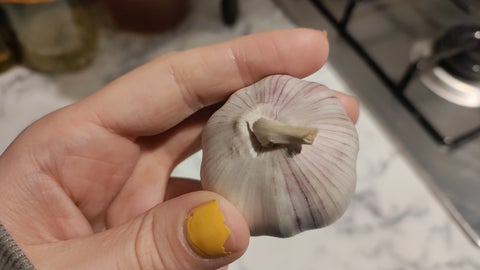
The source of garlic’s bitterness, though, is a little tougher to tackle.
The chemical allicin, which is responsible for the bulb’s signature biting taste, breaks down into diallyl disulfide when you damage (i.e., cut, smash, or grate) garlic.
This strong-tasting compound intensifies the more damage the cloves sustain. And while this can be welcome in some dishes, sometimes, you want a softer, sweeter flavour.
How can I make garlic less bitter?
For Nigella Lawson, the answer lies in roasting the bulb.
In her cauliflower soup recipe, she wrote, “Baking the garlic gives a lot of depth while taking away any potential for bitter heat”.
Science has her back.
Cooking garlic “destroys” allicin, The Garlic Farm shared, because the enzymes which help to create allicin die at higher temperatures.
And because Nigella recommends chucking the whole garlic in your oven, you’re not cutting it before use, preventing that sharp diallyl disulfide from taking over.
Additionally, roasting allows the natural sugars in garlic to caramelise, replacing harsher flavours with a rounder, sweeter taste.
Yet another benefit ― roasted garlic may be easier to digest, and “could be a promising functional food in the prevention of leaky gut syndrome,” a 2022 paper found.
What’s the best way to roast garlic?
Ironically, cooking garlic at too high a heat, including by roasting it, can make it even more bitter than it was to begin with.
Which is why it’s important to follow Nigella’s steps: she recommends tightly wrapping the bulb in tinfoil and placing it in an oven preheated to 200°C for 40 minutes.
Low and slow is the way to go. Not only does this prevent burning, but it gives those all-important sugars extra time to caramelise.
Are there any other ways to make garlic less bitter?
Yes! Regular sautéing works, though it’s less effective than roasting.
And, Serious Eats says, “alliinase’s activity is inhibited by highly acidic (or basic) environments, leading to fewer reactions that produce the harsh flavour compounds we tend to associate with raw garlic”.
So, they found, pureeing a whole head of garlic in something like lemon juice (vinegar or another citrus juice should work too; anything acidic) took the sharp tang from its cloves.










 Bengali (Bangladesh) ·
  English (United States) ·