


In 2024, Blackstone—the world's largest private equity firm at the time, with $1 trillion in capital under management—announced it was buying the sandwich chain Jersey Mike's. Founded on the Jersey Shore in 1975 by a 17-year-old Peter Cancro, who purchased the first shop with a loan from his high school football coach, Jersey Mike's had become one of the fastest-growing restaurant brands in America.
If you're from the Garden State, as I am, you might bristle a bit at the authenticity grab of Jersey Mike's toponym, as I do. The Original Italian, after all, doesn't display the level of New Jersey cured-pork sandwich artistry available at Dolce & Clemente's in Robbinsville, Michael's Salumeria in Lyndhurst, or Fiore's House of Quality in Hoboken. But it's sturdy enough, dependable, and less sad than the fading Subway footlong.
Maybe it was inevitable that after Jersey Mike's private equity acquisition, social media posts from sandwich enthusiasts began popping up alleging that portion sizes had shrunk and quality had declined, including from a TikTok user who held up what he said was a $9 sandwich between two fingers and addressed the camera directly: "This, my friends, is what $9 gets you." The posts went modestly viral on Instagram and Reddit and generated coverage in outlets from Yahoo! Finance to the food-ranking site Sporked. One Instagram Threads user pronounced, apparently before eating anything, that "private equity destroys everything it touches" and that the chain would be "sold for parts within five years."
@dionckhan#AmPm #JerseyMikes #LunchLady I shoulda went to Firehouse!
♬ original sound - Dion IKhanic
The outcry was such that newly installed CEO Charlie Morrison had to go on the record acknowledging he was, as reporting in one restaurant trade publication put it, "well aware of the often-negative perception surrounding private equity firms, especially in the food business" and that he was tracking the complaints.
But nothing had changed—the sandwiches and prices were the same. "We're not going to reconfigure, re-engineer, change, modify the brand. That's not happening," Morrison said.
Jersey Mike's revenue increased by more than 10 percent in the first year after the Blackstone deal, and in July the firm went public, raising $1 billion in the largest U.S. consumer initial public offering of the year. Now the brand is bigger than ever, with hundreds of new locations. In 2026, it broke Chick-fil-A's 11-year run as the top-rated fast-food restaurant in the American Customer Satisfaction Index.
This is a familiar story. If you listen to anti–private equity outfits like the Private Equity Stakeholder Project or ProPublica or usual-suspect gadflies on the left, private equity is just another mutation of predatory capitalism: "vampires" engaged in "legalized looting" per Sen. Elizabeth Warren (D–Mass.); "vultures" embodying "corporate greed at its most disgusting" by the lights of Sen. Bernie Sanders (I–Vt.).
Critics marshal an impressive breadth of bogeymen to make their case, seizing on private equity's infiltration of everything from hospitals to prisons to for-profit schools, and their reliance on extractive financial gizmos like "leasebacks," "roll-ups," and "dividend recapitalizations" to make billions for the few while zombifying the portfolio companies relied upon by the many.
What these critics want you to believe is that there is something uniquely bad about private equity, that it's a poisonous form of hypercapitalism. But case studies and a review of the evidence tell a different story. Private equity isn't a panacea, and it isn't without flaws. But from Italian subs to nursing homes to state pensions, it has plenty to offer both capitalists and consumers. Viewed in this context, it's clear that much of the hatred directed at private equity is just a familiar form of statist opposition to free markets.
Bond, Junk Bond
What we now know as private equity dates back to the 1980s and a loose confederacy of financiers who dealt in leveraged buyouts. In basic terms, leveraged buyouts are a process by which a group of investors acquires majority control in an existing business by pairing a small base of capital with a large helping of debt.
A pioneering analyst and booster of the novel financial structure, Michael C. Jensen of Harvard Business School, argued that replacing diffuse and often detached shareholders with a small cadre of highly incented owners would tend to produce lean and mean organizations, reducing overhead, improving management, and, of course, increasing profit.
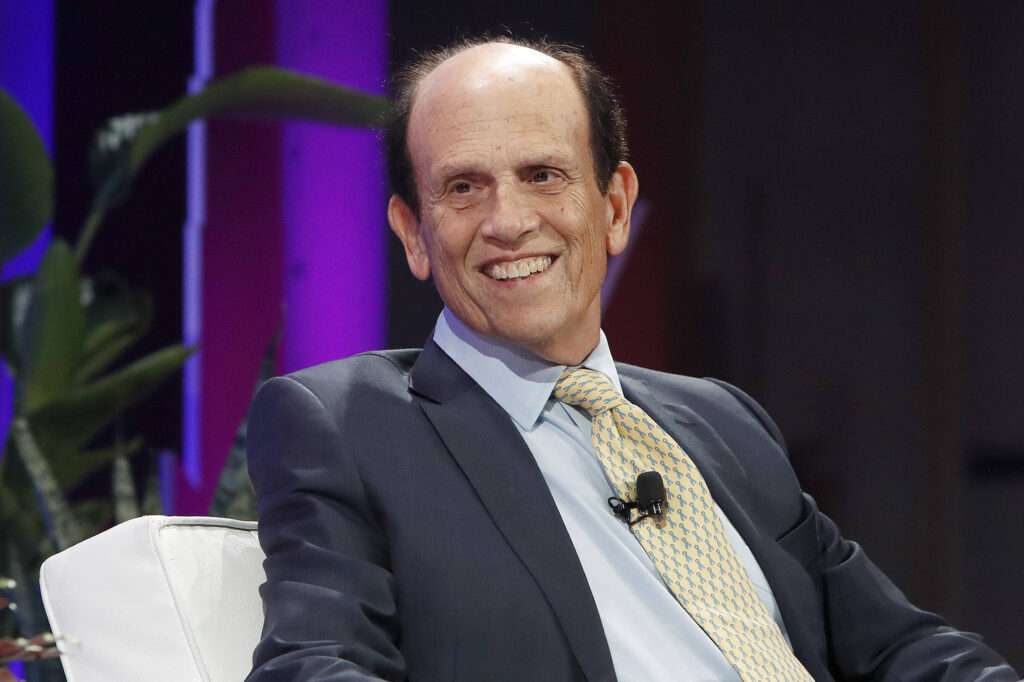
Unfortunately, that early group of raiders included the flamboyantly toupeed Michael Milken and his outfit Drexel Burnham Lambert. Milken figured out that the debt issued by companies that were too risky, or too small to earn investment-grade credit ratings, nevertheless paid high enough interest rates that a diversified portfolio of them could outperform safer bonds even after accounting for defaults.
 Andrew Schwartz/SIPA/Newscom
 These were called junk bonds, and Milken made himself the market for junk, operating from a signature X-shaped trading desk 3,000 miles from Wall Street in Los Angeles. The sector he created became the rocket fuel for leveraged buyouts. You borrowed against a company you didn't yet own, bought it with that money, and paid the debt back from the company's own cash flows. It was extraordinarily profitable and, allegedly, also occasionally criminal. Milken pleaded guilty to securities fraud in 1990. Drexel Burnham Lambert went bankrupt the same year. And the junk bond market that powered the whole enterprise seized up, ending the first wave of leveraged buyouts.
But like virtual reality or online pet food sales, leveraged buyouts reemerged with a vengeance a decade and a half later, and the age of private equity began in earnest.
The modern private equity firm operates through what the industry calls "closed-end funds." Think of these like film production companies formed for a specific project and dissolved when a film is finished, whether or not it is sold to a distributor.
Private equity funds deal in companies rather than talkies, but like many an indie film funding vehicle, a private equity fund is structured as an L.P., which limits participants' liability to what they put in, with two kinds of stakeholders: The fund's "general partners" (G.P.s) are like the directors, responsible for actual decision making and overall vision. The "limited partners" (L.P.s), which can be anything from pension funds and university endowments to ordinary rich guys, are like the executive producers, financiers with a stake in the outcome but no say in the day-to-day.
Private equity funds exist for a fixed term, often 10 years, after which point the general partners must actually sell or otherwise dispose of the underlying asset, called a portfolio company, before everyone gets rich. The 10-year time horizon is supposed to eliminate the short-termism and liquidity obsessions that hamper large publicly traded companies, while insulating private equity from panic runs and aligning management with investors on delivering substantive value rather than chasing paper returns.
Private equity exists in part to solve some of the managerial and operational problems associated with companies' publicly traded peers. For example, they have incentives to be better governed. The knock on the boards at sclerotic public companies is that they tend to look more like bureaucratic committees than profit seekers. Private equity ownership, by contrast, puts a small number of highly motivated decision makers in the room with direct authority to act in productive ways.
When it all goes according to plan, we get comeback stories involving household name brands.
KKR, the equivalent of a white-shoe, power-conference private equity firm that counts former CIA director and retired Army Gen. David Petraeus as a senior partner, bought Dollar General in 2007 when the discount retailer was bloated and stagnant, overhauled its operations, and took it public again to great success.
Blackstone, the force behind the Jersey Mike's deal, bought Hilton Hotels in 2007 for $26 billion, one of the largest deals in history at the time. It brought in new leadership, restructured operations, expanded, and took it public in 2013, booking billions in gains. It was one of the most profitable single private equity investments ever made.
Silver Lake, another major leaguer and a tech specialist, took desktop computer company Dell private in 2013 for $24.4 billion—freeing up its founder, Michael Dell, to make long-term investments and not quarterly earnings calls. Dell went public again in 2018 and has a current market cap of roughly $300 billion.
Domino's Pizza. Dunkin'. On and on. In each case, what private equity brought was less financial magic than what practitioners describe as pattern recognition: the ability to see across dozens of portfolio companies, past and present, and apply lessons that no single company could ever have accumulated on its own.
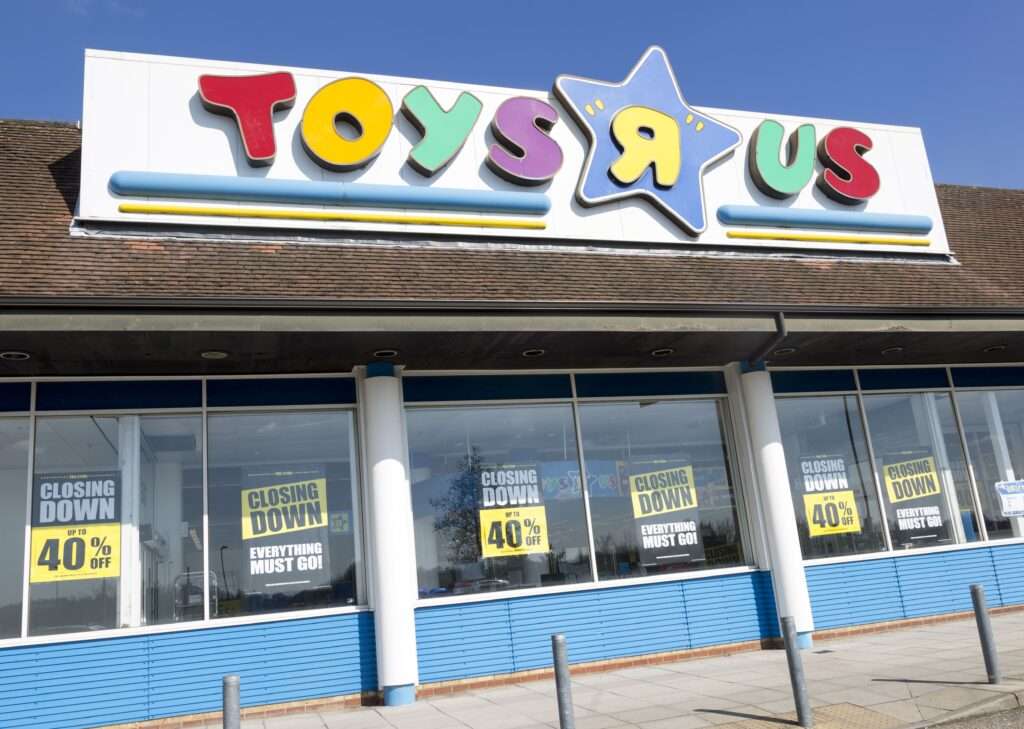
That's not to say every private equity takeover of a well-loved brand goes swimmingly. Critics often point to well-known retail chains that went south after leveraged buyouts. Toys "R" Us ended up spending 97 percent of its operating profit on debt service before going bankrupt. Red Lobster was gutted by a sale-leaseback—its real estate sold for cash and then rented back to it—that salvaged L.P.s' investment but also led to a bankruptcy. Payless allegedly paid out hundreds of millions in dividends to its private equity masters before its 2017 bankruptcy.
 Ian Murray / Universal Images Group/Newscom
 Private equity practitioners are not blind to these failures. Debt can improve good businesses. It can also make bad businesses worse. In a world where Amazon was upending retail, neither Toys "R" Us nor Payless had the financial flexibility to adapt. The debt still had to be paid regardless of what disruption was occurring in their markets.
But what about on average? A 2016 study looked at 10 years of data on private equity intervention in the restaurant industry. What makes the work of Shai Bernstein (then at Stanford University) and Albert Sheen (then at the University of Oregon) unique is that it relies on a robust and objective measure of operational improvement—health inspection records—that also happens to be well insulated from the argument that private equity owners are short-termists interested in maximizing fees and profits while customer experience suffers.
The study finds that private equity–owned restaurants improve under their ownership. Health violations decline by 25 percent. The restaurants become cleaner, safer, and better maintained in ways that are associated with more customers and fewer outbreaks.
Bernstein and Sheen also look at private equity–run restaurant chains that have both franchisee-operated locations and locations operated directly by the parent company, and find that parent-run companies improve much more than franchises—meaning the relationship between private equity and operational improvement is more likely to be causal than merely correlative.
The authors also find that private equity firms with partners who have experience in the restaurant industry tend to do better than those run by partners with purely financial backgrounds. Indeed, that's the core of private equity's value-add in the space. The fund managers who succeed in consumer industries tend to have strong connections with successful operators in the sector and access to broad expertise that no single portfolio company could access on its own.
Sheen and two collaborators have a more recent and more expansive paper on private equity effects on consumer products generally, titled "Barbarians at the Store? Private Equity, Products, and Consumers." The 2022 paper plays on the book Barbarians at the Gate that focused on the leveraged buyout of RJR Nabisco in the '80s, a classic of the private equity–skeptic genre. In that case, the then-record-setting $25 billion deal for the maker of Oreo cookies and Winston cigarettes became the defining cultural symbol of private equity excess that critics are still drawing on today.
But the paper's findings are positive and stark: "Following a private equity deal, target firms increase retail sales of their products 50% more than matched control firms. Price increases—roughly 1% on existing products—do not drive this growth; the launch of new products and geographic expansion do. Competitors reduce their product offerings and marginally raise prices."
The study also found less improvement for firms that were publicly owned before private equity acquisition. The authors suggest, again quite intuitively, that younger, smaller privately held companies have more headroom for growth by investing in geographic expansion, new product lines, and more aggressive marketing. In contrast, more mature publicly held companies lack the maneuverability to achieve growth. "This variation in deal outcomes," they write, "can also perhaps explain the negative portrayal of private equity in the media: layoffs and contraction are associated with the most visible, well-known targets."
That is certainly plausible, and it suggests an even starker conjecture. Perhaps big, slow, publicly traded companies deliver the most value to consumers, and thus to the market, by being chopped up and sold for parts. That's the sort of thing that makes anti-capitalists upset. But it's a perfectly ordinary part of the game for the capitalists themselves.
 Illustration: Joanna Andreasson; Source images: iStock
 Private Equity as Landlord
Inflation, the affordability crisis, and younger Americans' attendant despair at ever finding anything like the postwar American Dream make private equity's forays into the mass purchase of residential housing perhaps its biggest political liability. The phenomenon is real but dramatically overstated, and the concerns are mostly about business behaviors that are not unique to private equity.
In the years after the 2008 financial crisis, some private equity firms did in fact buy up homes in bulk in distressed markets, gobbling up foreclosures and short sales at pennies on the dollar and flipping them as rentals, creating a new class of corporate landlord that hadn't really existed before. These moves arguably helped prop up cratering home prices, according to a 2024 Government Accountability Office report, and provided a real benefit to owners even as they cut short prospective buyers' ability to shop at the bottom of the market.
In recent years, anecdotes and news reports percolated about maintenance delays, unresponsiveness, and hyper-aggressive fees and rents by private equity landlords. The latter even spawned a group of lawsuits from tenants, along with the Justice Department (DOJ) and several state attorneys general, against corporate landlords and RealPage, a software company that collected data from multiple institutional owners to help them set rents algorithmically. The government alleged that this amounted to coordinated price fixing. Two batches of tenant suits have resulted in settlements of nearly $360 million from landlords to date. And the DOJ action, initiated under President Joe Biden, ended with the Trump administration entering a proposed settlement with RealPage in November 2025, in which the latter agreed to stop using ostensive competitors' nonpublic data to train its product.
But if this is illegal price fixing, it's illegal whether it's private equity–owned firms doing it or not. And only one of the named defendants in the RealPage suit were private equity–owned, in a group that also included both publicly and privately held firms.
More broadly, the scale of private equity's involvement in the residential housing market is tiny compared with the shadow it casts in the minds of its critics. Institutional investors broadly defined—including publicly traded real estate investment trusts (think of a mutual fund for buildings), private equity–backed platforms, and other corporate landlords—own approximately 3 percent of the single-family rental stock nationally, and an even smaller proportion if you expand the denominator to include all single-family housing, according to a 2023 study.
Private equity specifically owns a fraction of that. By its own lights, Blackstone owned about 62,000 of 106 million single-family homes in the United States, and new acquisitions have crashed by about 90 percent since 2022. If this were once thought a lucrative market for mustache-twisting general partners, it would seem to be no more.
The truth is that the housing affordability crisis in America has a thousand fathers, among them onerous zoning restrictions and permitting processes, construction cost inflation, and the widespread hostility of existing owners to change and growth that has become known as NIMBYism ("not in my backyard"). These forces have nothing to do with private equity stakes, and they predate institutional investment in single-family housing by decades.
In fact, the causal story haters often tell—in which private equity bought houses, and therefore houses became unaffordable—is probably exactly backward.
Houses became attractive to private equity because supply constraints made residential real estate a reliable appreciating asset. The flip side—that private equity backed off residential home purchases when the interest rate environment got much less favorable in recent years—similarly situates private equity as one set of players reacting to incentives, not world-moving plutocrats rigging the system.
The Wages of Death
If critics are angry about the private equity call coming from inside their house, imagine how they must feel about the call coming from the liminal space between life and death.
That's the rub with private equity's growing investment in healthcare, particularly its "roll-ups" of independent practitioners and its investment in nursing homes.
One large and carefully controlled 2021 study led by University of Pennsylvania's Atul Gupta found that private equity ownership of nursing homes led to excess short-term deaths even as those facilities selected for lower-risk—that is, healthier—patients. That's an alarming finding. But these effects were the same whether a private equity firm took over existing large nursing home chains or rolled up a number of independents, suggesting that consolidation is not itself the culprit.
The same study also found that private equity–owned facilities that admitted more patients per bed than the median had better mortality outcomes than those admitting fewer patients than the median. So it can't be said that private equity is making patients worse off by cramming them into facilities.
The authors of that study posit that the ill effects on the lower-risk patients are linked to a marginal 3 percent decrease in nursing assistant hours at private equity–run homes. Nursing assistants "perform crucial well-being services such as mobility assistance, personal interaction, and cleaning to minimize infection risk," which would seem to double as a list of things you might do to ensure your otherwise healthy patients don't end up worse off by staying at your facility. But among high-risk nursing home patients, private equity ownership isn't associated with worse outcomes, because private equity firms also tend to hire proportionally more registered nurses, who provide more direct medical care.
So what's actually going on? One thing to remember is that the average nursing home receives 75 cents of every dollar from taxpayers. The data show that the larger the share of revenue a private equity–owned facility gets from Medicare, the worse it does. This invites an obvious question about what's really to blame: Private equity? Or a government-centered model that separates the patient from the payer and makes the latter an immense bureaucratic monolith overrun with waste, fraud, and abuse?
Even as the authors of the study led by Gupta starkly conclude that restricting private equity ownership of nursing homes could "save lives," they don't see it as a panacea, caveating that "restricting acquisitions could affect the incentives of providers to create new facilities, which could affect long term health outcomes." Regulating private equity investment in healthcare, in other words, could easily make things worse.
University of Chicago economist Steven N. Kaplan makes another simple but powerful point about the Gupta study: Many of the nursing home deals in the data set lost money. The poorer outcomes could be a product not of bad intentions but bad taste.
The bigger-picture results reveal the same sort of nuance and muddiness. A systematic review published by The BMJ, no friend to the industry, surveyed decades of empirical work on private equity–owned healthcare. Its topline is unflattering: The most consistent finding is higher costs to patients and payers—who, remember, are often not the same people.
But on health outcomes specifically, the category that actually includes mortality, the evidence cut both ways. It looked at eight studies that assessed health outcomes for private equity–owned providers, for instance, and classified two as finding beneficial impacts, three as harmful ones, and three as neutral. On the bad-for-private-equity side of the ledger, it found aggregate increases in spending and a reduction in total investment in nursing, cutting against the nuance in the Gupta paper above.
A number of component studies, however, show specific beneficial impacts, including improved patient access to care and reduced operating expenses. One paper found a relative decrease in both in-hospital and 30-day mortality for acute myocardial infarction—heart attacks—at private equity–owned hospitals compared with non–private equity controls. Another found that private equity hospitals showed improvements in pneumonia scores—significant because hospital-acquired pneumonia is a leading cause of death in those facilities.
Zooming out from nursing homes to the world of outpatient care, a 2022 study from JAMA Health Forum found that private equity acquisition of physician dermatology, gastroenterology, and ophthalmology practices was associated with higher patient volume, including more new patients seen, and with higher charges per claim. But again, how ought we look at this? As an instance of private equity–run shops upselling patients and squeezing every possible dollar out of insurers? Or as an instance of delivering more healthcare to more people? Proponents of subsidized and single-payer programs in the U.S., for instance, argue that increased utilization is a good unto itself. The practice areas studied in the paper are specialties with a significant number of elective procedures—ripe for upselling—but they also encompass many life-altering and deadly diseases and disorders.
One way to read the mixed record is that private equity operational and financial engineering may optimize for what gets measured and rewarded—like procedures with defined billing codes and quality metrics—and underinvest in more diffuse, hard-to-measure forms of care.
It also seems plausible that private equity in the healthcare space focuses less on reducing costs because those costs are heavily subsidized and largely paid not by the customers but by third parties. That, again, is not an argument against private equity per se. It's an argument about how our healthcare system creates the wrong set of incentives. Stakeholders respond accordingly.
What Private Equity Is and Isn't
It's worth taking the larger view and asking what private equity is actually supposed to do, what the evidence says it does on the whole, and who, exactly, benefits from private equity profits.
Private equity funds exist to deliver superior returns for their investors. Those investors are not just unsympathetic rich guys.
The two largest private equity investors in the United States are CalPERS and CalSTRS: the California Public Employees' Retirement System and the California State Teachers' Retirement System. Between the two, they have allocated something like $150 billion to the asset class.
CalPERS alone manages money on behalf of over 2 million California public employees, retirees, and their families. When private equity does well, the benefits flow back to some of the very same groups that private equity critics like Sanders and Warren tend to lionize.
Sanders, Warren, and the rest of the private equity–bashing brigade should be happy, then, to hear that compared with various benchmarks, private equity has done a pretty good job of providing those superior returns.
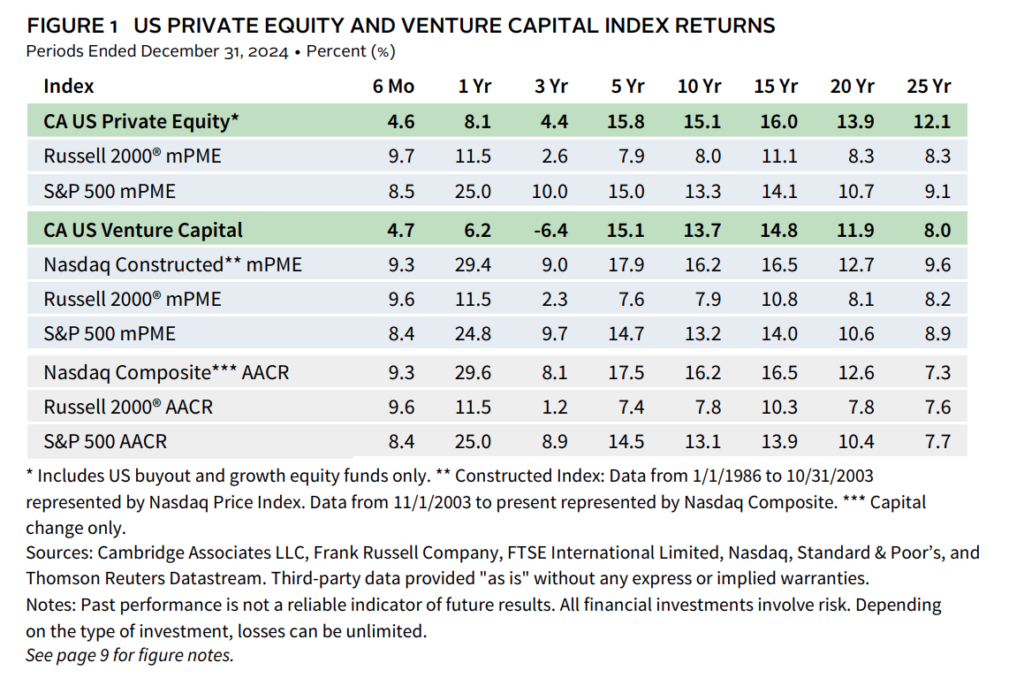
A series of studies from Kaplan and his co-authors calculates that private equity funds outperformed the S&P 500 by 3 percent annually from their birth in the 1980s through the global financial crisis in 2008. A 2026 McKinsey report focused just on the top quartile of private equity funds found they delivered a 24 percent rate of return over the prior decade, against 15 percent for the S&P 500. A private equity index created by Cambridge Associates, a firm that advises pensions and government investors, agrees that the sector outperformed both the S&P 500 and the Russell 2000 in recent years.
 Cambridge Associates
 Yes, private equity's performance has become more uneven. Kaplan et al. note that returns relative to public indices seem to have flattened, and are not appreciably better than the S&P 500 for private equity "vintages" after the 2008 crash. An influential 2020 paper from Oxford's Ludovic Phalippou, a private equity critic, argues that once you use proper benchmarks, the outperformance of the average private equity fund over public ownership largely disappears. Pretty much everybody agrees that 2022–24 was a genuinely bad stretch for private equity.
Elsewhere, Kaplan and company argue that that's because private equity is, like so much else under the sun, cyclical. Private equity booms happen when money is ample and cheap. When rates go up and credit markets contract, as has happened in the post-pandemic economy where the Federal Reserve responded to rising inflation with interest rate hikes, private equity returns suffer.
This makes plenty of sense: If you can buy a company earning 7 cents on the dollar and borrow at 5 percent interest, the deal works. If rates rise to 8 percent, it doesn't.
Kaplan shows that interest rates also lead to less leverage: The proportion of equity in a given private equity deal goes up, and the proportion of debt financing goes down. That puts downward pressure on returns. As the McKinsey report put it: "Private equity in 2026 is now a mature industry—a dramatic shift from a decade ago….The conditions that once amplified returns—declining interest rates, expanding multiples, and abundant leverage—have passed." Under tight credit conditions, "alpha is less likely to emerge from market dynamics alone. It will increasingly be made." In other words, when borrowing gets expensive, financial trickery alone isn't enough to make fat stacks as a private equity general partner. You might actually have to know what you're talking about.
To which capitalists and private equity haters alike should say: good.
As of 2025, private equity firms owned nearly 83,000 U.S. companies—roughly 3.5 percent of all private enterprises in the country, according to S&P Global Market Intelligence. Those companies employed an estimated 13.3 million people in 2024, according to the American Investment Council, the trade group representing the private equity industry. That makes private equity a significant, but not dominant, factor in the U.S. economy.
If a given private equity firm creates value for its investors, it will live. If it doesn't, it will die. And in either case, your next Original Italian sandwich will probably still be OK.
The post No, Private Equity Isn't Ruining Your Sandwiches, Your Apartment, or Grandma's Nursing Home appeared first on Reason Magazine.




 Bengali (Bangladesh) ·
  English (United States) ·