
 1 month ago
56
1 month ago
56 
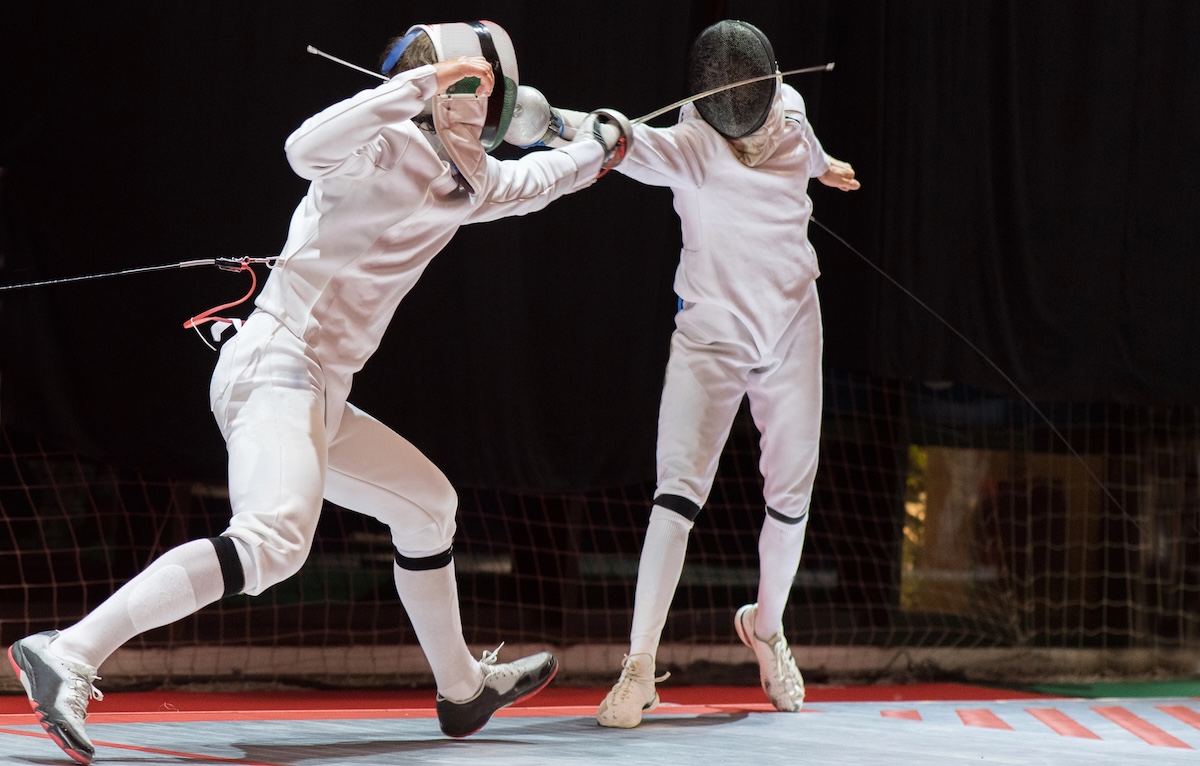
Getting into and paying for college can feel like daunting tasks, especially in today’s competitive environment. Playing a niche sport is one way to give yourself an edge when applying to a college that might be difficult to get into or a scholarship that many are vying for. Fewer high school kids play fencing than play basketball, so the college roster spots are easier to get, and the athletic tip helps at schools where acceptance rates keep falling.
That pitch still holds up. But the mechanics underneath it changed more between 2024 and 2026 than they had in the previous two decades, and most of what you'll read about niche sports online is now describing a system that no longer exists. If you're a high schooler thinking about how you'll pay for college, you need the current version.
Here's what actually changed, which sports the NCAA's own data says give you the best shot, and where the numbers get abused, plus how it fits with everything else in the college admissions process.
Would you like to save this?
The House v. NCAA Settlement Changed The Rules
On June 6, 2025, the $2.8 billion House v. NCAA settlement. It took effect for the 2025-26 academic year, and it replaced the NCAA's sport-by-sport scholarship limits with sport-by-sport roster limits. Under the old setup, men's swimming had 9.9 scholarships to split across a roster of 40 walk-ons and partial-aid athletes.
Under the new setup there is no scholarship cap at all (every athlete on the roster can be funded) but the roster is hard-capped at 30. That distinction matters enormously if you're weighing an athletic scholarship against your other aid options.
The roster caps land differently by sport. Rowing (women's) got 68. Equestrian got 50. Men's lacrosse got 48, women's lacrosse 38. Field hockey got 27. Fencing and water polo got 24 each. Swimming and diving got 30. Basketball, by comparison, got 15 and tennis got 10, which is why the scholarship math in some sports is so brutal.
The scope limit almost nobody mentions: roster limits only bind schools that opted into the settlement. Fifty-four Division I schools opted out, including all eight Ivy League schools. Division II and Division III aren't affected at all. So when someone tells you walk-on spots are gone, ask which school they're talking about, as the answer changes the whole admissions calculation.
There was a grandfathering provision, and it's closed. Anyone starting college in fall 2026 or later faces the hard caps with no exception, which is worth factoring into your application timeline.
The net effect is genuinely mixed. Roster spots at opted-in D1 schools got tighter, and dozens of Division I Olympic sports programs have been cut, merged, or reclassified since the settlement — Front Office Sports counted 32 by June 2025, and the number has kept climbing.
But funded spots expanded sharply: men's lacrosse went from 12.6 scholarships to 48 fundable roster spots, women's rowing from 20 to 68, men's swimming from 9.9 to 30.
How To Read Niche Sport Admissions Odds
Small high school participation numbers do not automatically mean good college odds. This is the single most common error in niche sports content, and it's as easy to check as any claim about FAFSA income limits.
The NCAA publishes the Estimated Probability of Competing in College Athletics (PDF File). The current version uses 2024-25 figures and was updated in March 2026. Here's what it says for the sports usually labeled "niche," alongside a few mainstream ones for contrast:
Ice Hockey (W) | 9,589 | 3,074 | 32.1% |
Lacrosse (M) | 113,696 | 16,691 | 14.7% |
Ice Hockey (M) | 32,253 | 4,558 | 14.1% |
Lacrosse (W) | 99,292 | 13,906 | 14.0% |
Field Hockey (W) | 50,764 | 6,610 | 13.0% |
Swimming (W) | 138,303 | 12,998 | 9.4% |
Baseball (M) | 472,598 | 41,580 | 8.8% |
Swimming (M) | 119,102 | 10,131 | 8.5% |
Water Polo (W) | 18,023 | 1,333 | 7.4% |
Water Polo (M) | 21,756 | 1,245 | 5.7% |
Basketball (W) | 356,240 | 16,823 | 4.7% |
Basketball (M) | 540,704 | 19,617 | 3.6% |
Look at water polo. Roughly 20,000 high schoolers play it nationally, and yet a boy's odds of playing in college are worse than a baseball player's. The college programs are just as scarce as the high school ones. The ratio is what matters, and it's the same reasoning you'd apply to any merit aid decision.
One more caveat before the sport list: the NCAA table excludes fencing, rowing, equestrian, gymnastics, skiing, rifle, and triathlon, because NFHS doesn't collect comparable high school participation data for sports most high schools don't sponsor. Our data points below are from other sources, and some are very old.
The Sports Worth Your Time In 2026
Women's Ice Hockey
Roughly one in three high school girls who play ice hockey competes in college, and nearly one in ten reaches Division I. Nothing else in the NCAA is close. The catch is cost — ice hockey was the most expensive youth sport in the Aspen Institute's national survey, and the club pathway starts young. If your family is saving in a 529 plan, understand that hockey often eats the equivalent of a year of contributions before the recruiting even starts.
Fencing
Learning how to deftly attack with an épée might get you admitted into one of the 46 schools across the country that offer varsity fencing. Schools like Harvard, Boston College, Yale, and the U.S. Air Force Academy have fencing. And they might even provide you with a scholarship.
In 2018, the odds of getting a scholarship for fencing were 22:1 for men and 13:1 for women. Compare that to the odds of 57:1 for men and 43:1 for women who want to play basketball. As you can see, opportunities abound if you can master the blade.
However, it’s important to note that fencing offers less potential than it did in the past, as Brown discontinued its varsity fencing program for men in 2020, and similar cuts may happen at more schools in the future.
Lacrosse
Lacrosse remains the best combination of odds and access. About 645 U.S. colleges field varsity lacrosse teams across NCAA divisions, NAIA, and junior college, and roughly 14-15% of high school players compete somewhere at the college level.
Post-settlement, men's lacrosse jumped from 12.6 scholarships to 48 fundable roster spots, which was one of the largest funding expansions of any sport. It's also heavily concentrated in the Northeast and Mid-Atlantic, which is worth knowing if you're comparing in-state and out-of-state costs.
Water Polo
Hop in the pool, and you might be surprised at how it can help you get into a good college. Cal State campuses offer varsity water polo teams, along with a number of other schools, including Arizona State University, Chapman University, Pepperdine, and the U.S. Naval Academy. There are 125 schools in total that offer varsity water polo teams.
But what are the odds that a high school water polo player will make the cut for college? A man has 13:1 odds of getting onto a team in college, while a woman has odds of 11:1. Making a roster for an NCAA Division I team has more difficult odds, at 34:1 for men and 29:1 for women.
The significant difference in the chances of making a Division I team versus a team in any of the three divisions highlights an important factor when considering niche sports for college admissions or even scholarships: Sometimes, applying to a smaller school might make sense. Even at a non-Division I school, you might still be able to get a scholarship, albeit likely a smaller one than you would for Division I.
Related: Best Extracurricular Activities For College Applications
Field Hockey
Around 288 schools sponsor varsity field hockey, and 13% of high school players go on to compete in college. Stanford, Georgetown, and a long list of Northeast liberal arts colleges carry programs, which puts field hockey squarely in the zone where athletic recruiting overlaps with selective admissions. The new roster cap is 27 at opted-in schools.
Equestrian
Equestrian has about 77 varsity programs and the second-largest roster limit in women's sports at 50. It's also the sport where the cost-benefit math is worst. Board, lease, training, and show fees run into five figures annually with no national survey even attempting to track them.
As with many other niche sports for college admissions, schools considered more prestigious, like Auburn, Dartmouth, Cornell, and Sarah Lawrence, are more likely to offer varsity equestrian teams. As a result, it’s important to weigh the scholarship against the potential cost of attendance. For example, tuition alone at Cornell University is more than $60,000 before factoring in grants and scholarships. A $16,000 athletic scholarship at a school like that won’t make much of a dent on its own.
On the other hand, a $16,000 scholarship at Auburn University would more than cover the cost of that school’s in-state tuition price tag of about $6,300. And it would leave plenty of room to cover the $7,700 needed for on-campus housing and food as well.
Rowing
The sport of rowing made headlines in 2020 as part of a college admissions scandal in which certain students received admissions help by being falsely portrayed as rowing team recruits. Other niche sports, like sailing, were also caught up in the scandal.
The incidents underscored the advantages that niche athletes have when they apply to certain colleges. Coaches of sports like rowing and sailing may find it challenging to fill their college rosters. So if a student is recruited for these teams, they may have a leg up in the college admissions process, even if they might otherwise be passed over based on academic merits alone.
Rowing carries the largest women's roster limit in the NCAA at 68, and roughly 151 schools sponsor women's crew.
Swimming And Diving
Swimming and diving are often lumped together for the purposes of admissions statistics. The odds of making a swimming or diving team at any college are 13:1 for men and 12:1 for women. However, the odds of getting a scholarship are 47:1 for women and 69:1 for men. These stats indicate that swimming and diving may be useful sports for getting into a school you’re interested in, but it’s far more challenging to study on a swimming or diving scholarship.
With 687 schools supporting a varsity swim team, you have the chance to get into schools at various levels. There are even scholarships available at the junior college level for swimming. If you’re looking for ways to save money in college, the combination of starting at a community college and getting a swimming scholarship could be a smart strategy.
Women's Wrestling
This is the biggest change. The NCAA approved women's wrestling as its 91st championship on January 17, 2025, with the inaugural championship held in winter 2026.
There were 111 women's wrestling teams across all three divisions heading into that season, and high school participation crossed 74,000 girls in 2024-25 — up 15%, with roughly 1,000 new schools adding programs. Supply and demand are both climbing fast, which usually means the aid opportunities arrive before the applicant crush does.
Acrobatics & Tumbling And Stunt
On January 16, 2026, the NCAA approved four new championships: acrobatics and tumbling and stunt (both across all three divisions, inaugural spring 2027), Division II bowling (spring 2028), and Division III women's wrestling (spring 2028).
Both acro and stunt cleared the 40-school threshold. Their roster limits are among the largest of any women's sport. For a competitive cheer or gymnastics athlete who assumed there was no college path, this is a door that opened in the last eighteen months — and it's early enough that building the rest of the application still matters as much as the sport does.
Flag Football
Flag football is now an NCAA emerging sport for women, alongside equestrian, rugby, and triathlon. It's also the fastest-growing high school sport in the country: 68,847 girls played in 2024-25, a 60% jump, with about 1,000 schools adding it.
NCAA sponsorship crossed 40 schools in 2025 and was projected near 60 by spring 2026. Championship status isn't there yet, but the trajectory is the clearest of any sport on this list, and it costs a fraction of what an ice rink or a horse does — which matters if you're trying to graduate without student loan debt.
Esports (Read This Before You Count On It)
The earlier version of this piece treated esports as a growth story, and that framing is now wrong. Anyone counting on it should have a backup funding plan. Miami University (one of the first varsity collegiate esports programs) shut down in June 2026. Illinois State dissolved its varsity program in May 2025 despite five Overwatch championship appearances.
Saint Louis University closed its program in August 2024. Maryville, UC Irvine, Simpson College, and Northeastern have all cut or restructured. Salt Lake Community College esports lost scholarship access in budget cuts.
High school esports participation is still rising: 30,440 players in 2024-25, up nearly 3,000. But the college side is consolidating, and the widely circulated figures for "number of varsity programs" and "total esports scholarship dollars" trace back to aggregator sites that contradict themselves. If a school offers you esports money, take it. Just don't build a college funding plan around a sector that's currently shedding programs.
The Cost Reality Nobody Prices In
The Aspen Institute and Utah State's Families in Sport Lab put average annual family spending on a child's primary sport at $1,016 in 2024, up 46% over five years. Their older by-sport breakdown (2018-19 data) had ice hockey at $2,583, skiing at $2,249, field hockey at $2,125, and lacrosse at $1,289, against an all-sport average of $693. Apply the 46% escalation and hockey plausibly runs north of $3,700 a year now. Multiply by eight to ten years of club play and you've spent more than the athletic scholarship will ever return.
Travel is the largest line item, not equipment. And there's no national survey data at all for fencing, rowing, equestrian, or water polo club costs. Aspen's own State of Play research documents that children from the wealthiest households play their primary sport more frequently than everyone else.
The niche sport advantage is, substantially, a purchased advantage.
Bottom Line
Niche sports still work as an admissions strategy, and the data behind them is better than it's ever been. Women's ice hockey, lacrosse, field hockey, and rowing carry real odds advantages. Women's wrestling, acrobatics and tumbling, stunt, and flag football are the genuinely new openings. These sports only gained NCAA status within the last eighteen months, where the programs exist and the applicant crush hasn't arrived yet. Those are also the sports where merit and athletic aid are least picked over.
If your kid already loves the sport, the odds above are a genuine edge. If they don't, there are cheaper ways to build a compelling college application, starting with the extracurriculars that admissions officers actually weigh.
Editor: Ashley Barnett Reviewed by: Robert Farrington
The post NCAA Data: The Niche Sports With The Best College Admissions Odds In 2026 appeared first on The College Investor.





 Bengali (Bangladesh) ·
  English (United States) ·