
 2 hours ago
9

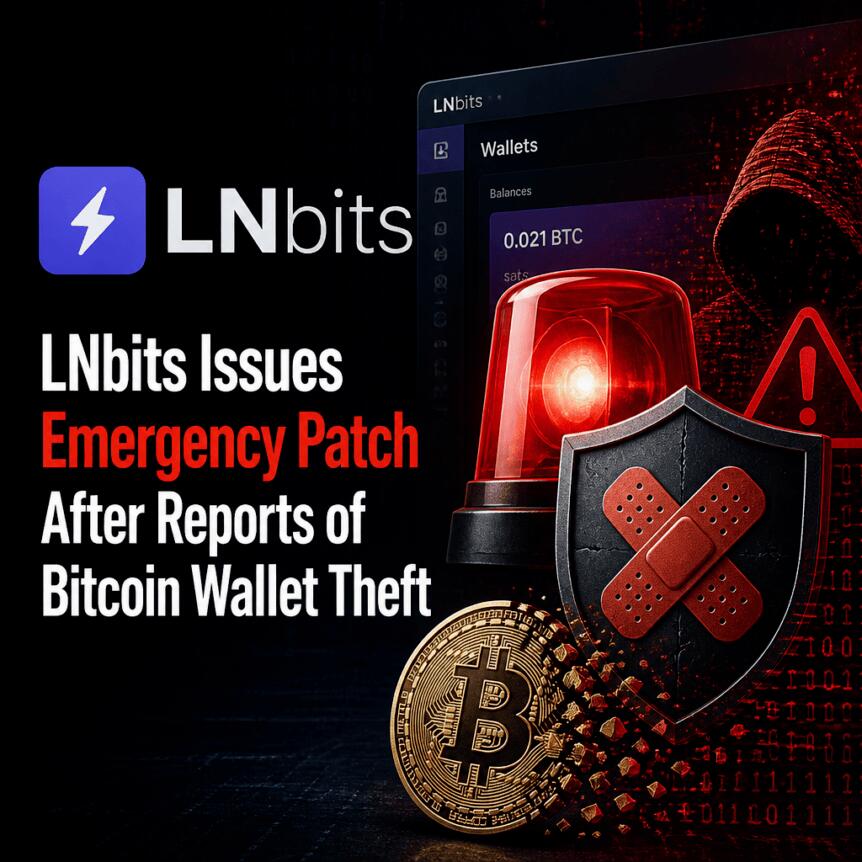
Lightning wallet software provider LNbits has released an emergency update urging operators to upgrade immediately after a reported wave of attacks that reportedly led to stolen funds from some LNbits installations.
In a security release published on Tuesday, LNbits pushed version 1.7.0, describing it as a critical patch aimed at addressing vulnerabilities and improving authentication, extension management, and payment handling. LNbits also stressed that simply upgrading may not be enough if an attacker already obtained credentials.
Key takeaways
LNbits says version 1.7.0 is a critical security update that fixes vulnerabilities affecting all versions released before 1.7.0. The project warns that servers whose credentials were already exposed may remain vulnerable even after upgrading. LNbits advised operators to disable the Paywall extension while it investigated and later urged users to shut down LNbits servers during the active incident. LNbits’ release guidance includes resetting wallet keys, replacing funding-source credentials, and treating secrets in LNbits settings as compromised.A critical patch after reported thefts
LNbits’ security alert follows what the project characterized as a challenging period responding to attacks against LNbits instances. Speaking on X, LNbits creator Ben Arc said the team was “working relentlessly” to deliver the v1.7 release after users “suffered losses.”
According to the announcement accompanying the patch, LNbits states the vulnerability impacts all versions prior to 1.7.0 and that funds may be at risk of theft. While LNbits has not yet publicly detailed the exploit mechanics or how many installations were impacted, the company’s guidance indicates the threat model extends beyond the software bug itself to potentially compromised access credentials.
What changed with LNbits 1.7.0
In its release notes for v1.7.0, LNbits frames the update as critical, with changes centered on strengthening core areas that affect how Lightning wallet services authenticate users and manage sensitive functionality.
The project lists improvements including:
Hardened authentication controls Improved extension management Updates to payment handling logicThese areas matter because LNbits commonly powers Lightning-based user flows such as merchant checkouts, tipping systems, and paywalls—features that rely on secure request handling and correct association of payments with the right wallet or account.
Why upgrading may not fully resolve the risk
LNbits’ warning is notably specific: installing the new version does not automatically protect installations where credentials were exposed before the upgrade.
In its update guidance, LNbits recommended that operators treat secrets stored in LNbits settings as compromised. The project also urged users to reset wallet keys, replace funding-source credentials, and, where compromise is suspected, move to a fresh server. The emphasis on post-incident credential hygiene suggests attackers may have been able to access or persist authorization through data already present on a compromised system.
This is an important operational distinction for Lightning wallet operators and integrators. Many self-hosted wallet deployments depend on long-lived credentials and configuration secrets; if those were obtained during the window when the vulnerability was present—or during any period of exposure—patching alone may only remove the original weakness, not the attacker’s access path.
Timeline of the incident response
LNbits’ public incident response began with a targeted action aimed at a specific feature. The project first warned operators on Sunday to disable its Paywall extension while it investigated a potential vulnerability. Just over an hour later, LNbits escalated its instructions—urging users to shut down LNbits servers immediately and taking its own hosted installations offline.
The short interval between feature-specific mitigation and full server shutdown underscores the severity of the threat as it evolved. It also implies the team likely concluded that the risk was broader than a single component and that active exploitation was underway.
Reported impact on at least one operator
While LNbits has not yet released an overall count of impacted wallets, at least one operator publicly described losses after attackers exploited their LNbits instance. On X, user Kevin Ravensberg said attackers withdrew about 2.3 million satoshis (approximately 0.023 Bitcoin) through newly created accounts before he could shut down the server.
LNbits indicated that a separate report describing the exploit would follow. Until that technical follow-up is published, the broader details—such as the precise vulnerability trigger, the most likely paths to credential exposure, and whether the attack was limited to particular extensions or configurations—remain unclear.
What operators should do next
For anyone running LNbits, the immediate priorities are straightforward: move to version 1.7.0, follow LNbits’ credential-reset and secret-compromise guidance, and assume that pre-upgrade exposure could have left lasting access—even after patching. Readers should watch for the promised exploit report, which should clarify how attackers succeeded and what specific configurations or extension usage patterns were involved.
This article was originally published as LNbits Issues Emergency Patch After Reports of Bitcoin Wallet Theft on Crypto Breaking News – your trusted source for crypto news, Bitcoin news, and blockchain updates.



 Bengali (Bangladesh) ·
 English (United States) ·