

This year, multiple weather experts have predicted an El Niño by midsummer.
Some think it could even become a “super El Niño”.
But what does that mean, and how could it affect the UK?
El Niño forming by May, potentially becoming strong by August — new ECMWF seasonal modeling.
By the numbers:
• 22% chance of a super El Niño by August
• 80% chance of a strong event
• 98% chance of a moderate event
That's according to data from 50 ensemble members. pic.twitter.com/LDOogrRcEC
What is an El Niño?
An El Niño happens when the surface of the Pacific Ocean heats up by 0.5°C or more.
During a super El Niño, though, temperatures rise by 1.5-2°C, professor emeritus of Geophysical and Climate Hazards at UCL, Prof Bill McGuire, told HuffPost UK previously.
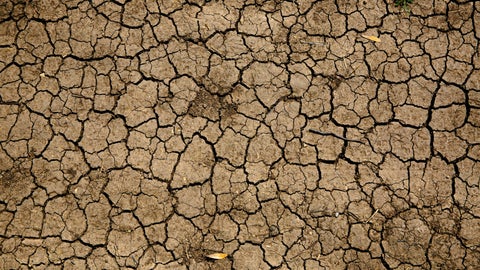
During both regular and “super” El Niños, extreme weather events like drought and flooding are much more common.
“Broadly speaking, the bigger the El Niño, the greater its impacts on the world’s weather,” Prof Bill McGuire said.
El Niños can also heat up the world as a whole. The 2023-24 El Niño heralded record-breaking temperatures across the globe in 2024.
“The cost of weather disruption caused by the super El Niños of 1982-83 and 1997-98 has been calculated as being in the trillions of dollars,” Prof McGuire added.
Usually, the most immediate results are seen in countries on or near the Pacific, like Australia, Indonesia, Peru, Ecuador, and the Philippines.
How would an El Niño impact the UK?
In the short term, the effects of El Niños tend to reach us a little later than those in the middle of the event.
It might make our summers a little hotter. It could also make our winters a lot colder, though that’s not a given.
But Prof McGuire said the longer-term impacts might be more significant here, even though the UK’s experience of El Ninos typically “lags” behind other countries’.
“A super El Niño later this year is likely to see the global average temperature rise since pre-industrial times smashed again, and it wouldn’t be a surprise to see both this year and next breaching the 1.5°C dangerous climate change guardrail,” he said.
That would affect the UK, as experts have cautioned that going over 1.5°C of global warming could lead a million more square miles of permafrost to thaw.
That might mean sea levels could rise from one to three feet by the end of the century, devastating coastal communities. That may bring about mass displacement and conflict.
Though the UK might not see the most extreme results of the possible super El Niño the fastest, the weather phenomenon could have truly global consequences.






 Bengali (Bangladesh) ·
  English (United States) ·