

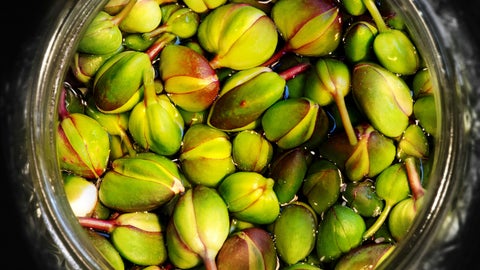
We’ve written before at HuffPost UK about the fact that some paprika is made from a type of bell pepper, as well as the flower bud origins of both capers and cloves.
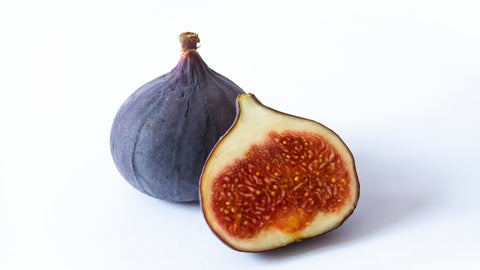
And I’ll never be able to forget the absurdly grotesque history between figs and wasps.
It turns out pineapples and figs have a surprising amount in common: both are made from a bunch of blooms.
What is pineapple made from?
A pineapple is technically a bunch of berries (well, kind of). The fruit itself is classed as a berry.
Pineapples form a syncarp, or the fusion of many flowers into a single fruit.
After about a year to a year-and-a-half, the flowers on top of a pineapple plant grow berries. These fuse together over time, forming a single unit (the pineapple).
This syncarp can contain “100 to 200 berries”, which merge as they develop, the North Carolina State University (NCSU) said.
They change from green to yellow as the collection ripens.
The scales on the surface of a pineapple show this fusion, Utah State University explained. All the sections are made from different flowers, which Britannica explains start off purple.
Pineapples are seedless, NCSU added, because “they produce berries without pollination”.
What’s the core of a pineapple made from?
If a pineapple is a kind of berry, why is its centre so fibrous and hard to chew?
Well, the core of a pineapple is actually the central stem of the inflorescence (cluster or flowers) that go on to become its constituent berries.
Serious Eats explained that it “act[s] like a spine that holds all the berries together”.
To do this job properly, though, it needs to be built differently from the rest of the plant.
The pineapple core is drier, tougher, and denser than its surrounding berries, which is why it’s so much harder to eat.
It is not, however, toxic. It’s high in anti-inflammatory bromelain, which is the part of pineapple that might make people’s tongues tingle, even if they’re not allergic to the plant.
Cooks recommend using it for tea, marinade (bromelain is great at breaking down protein, so it could make meat more tender), and even for cakes when very finely chopped.




 Bengali (Bangladesh) ·
  English (United States) ·