
 1 month ago
44
1 month ago
44 
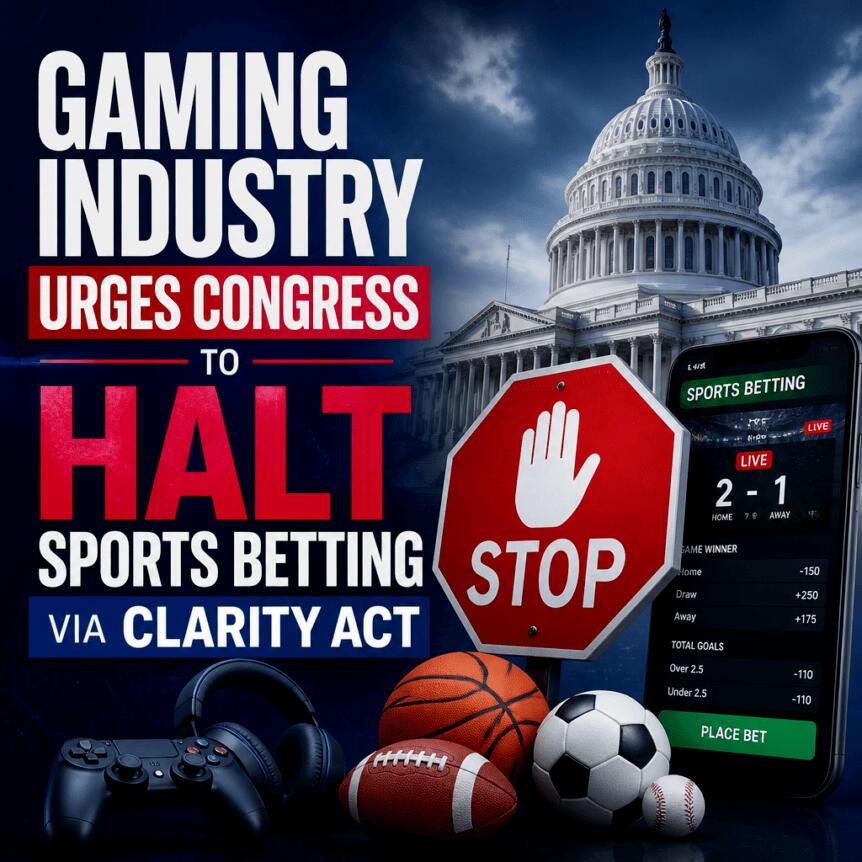
US gaming and tribal-related organizations, along with labor groups, are urging lawmakers to tighten federal rules around crypto-linked prediction markets. In a letter reported by Semafor, they ask the Senate to include language in the Digital Asset Market Clarity (CLARITY) Act that would “explicitly prohibit event contracts tied to sports and casino-style gaming.”
The groups’ core argument is jurisdictional and policy-driven: they contend that sports betting belongs under state and tribal regulatory frameworks, not under the Commodity Futures Trading Commission (CFTC). Their request comes as the CFTC, under Chair Michael Selig, has asserted “exclusive jurisdiction” over prediction markets.
Key takeaways
Sports and casino-related prediction market contracts are the focus of a new push to bar them under the CLARITY Act. Gaming and tribal organizations say prediction markets have expanded gambling “without voter approval or legislative authorization” over the past 18 months. The letter argues the CFTC was not built to regulate sports wagering, pointing to existing state and tribal oversight. CLARITY is positioned to shift some digital-asset enforcement authority from the SEC to the CFTC, but it still faces timeline and political hurdles. Legal disputes over whether prediction-market event contracts are regulated as “swaps” could ultimately escalate to the US Supreme Court.Gaming industry groups target CLARITY’s wording on prediction markets
According to the Semafor report, organizations including the Indian Gaming Association and the American Gaming Association have coordinated their opposition to using crypto legislation to enable sports-betting-style prediction products. They want Congress, while the CLARITY Act is under Senate consideration, to “affirm” that sports betting is outside the CFTC’s remit and therefore cannot be offered through prediction market platforms.
In the letter, the groups argue that prediction markets have contributed to what they describe as the “largest expansion of gambling in US history” during the previous 18 months, and that this growth occurred without what they call democratic authorization. Their emphasis is not only on consumer protection, but also on whether federal regulators should be allowed to reshape gambling rules nationally.
CFTC’s “exclusive jurisdiction” claim collides with state regulatory systems
The lobbying effort arrives amid an ongoing regulatory clash. Semafor notes that the CFTC, led by Chair Michael Selig, has claimed exclusive jurisdiction over prediction markets. Selig has also supported enforcement actions and legal strategies aimed at platforms such as Kalshi and Polymarket, according to earlier coverage by Cointelegraph regarding the CFTC’s stance in lawsuits brought by state-level gaming authorities. (Earlier reporting: CFTC lawsuit: Minnesota prediction markets ban.)
The letter’s counterpoint is straightforward: the CFTC, the groups say, was created for commodities and derivatives—not gambling and sports wagering. They also argue the agency lacks the expertise and operational infrastructure to oversee nationwide sports betting when state and tribal regulators already provide the principal regulatory mechanisms.
While the groups frame their concern as a mismatch of regulatory roles, the policy conflict is also structural. If Congress enshrines an explicit prohibition tied to sports and casino-style event contracts, it could narrow the practical scope of what platforms and litigants treat as CFTC-governed “swaps” or derivatives. Conversely, if such language does not survive, the CFTC’s jurisdictional posture could remain a centerpiece of future enforcement.
Tax-dollar losses become a central talking point
The American Gaming Association, also cited in the Semafor report, reportedly argues that states have lost revenue since sports event contracts began appearing on prediction market platforms. Per the AGA’s figures, state gaming authorities have lost about $1.08 billion in tax dollars “since prediction markets began offering sports event contracts” as of Wednesday, according to the organization’s reported update.
For policymakers, this is more than a political talking point. Revenue and tax streams are often central to how states justify their gambling regimes, and the claim—if accepted by lawmakers—adds weight to the argument that prediction markets function as a substitute for regulated wagering channels.
That said, the dispute remains largely about classification and regulator authority rather than only market growth. The jurisdictional fight will determine whether enforcement actions focus on CFTC-style derivative frameworks or instead defer to gambling laws administered by states and tribes.
What CLARITY could change—and why timing matters
Some lawmakers expect the CLARITY Act to clear Congress out of the Senate by August. Semafor reports that the bill passed the House of Representatives in July 2025, but it faced delays tied to concerns including stablecoin yield, ethics, and tokenized equities.
CLARITY’s broader purpose is to transfer some regulatory and enforcement authority for digital assets from the Securities and Exchange Commission (SEC) to the CFTC. In that context, the letter’s demand for a carveout is significant: it aims to prevent the CFTC from regulating sports and casino-style event contracts even if Congress expands the agency’s general role over digital-asset markets.
If included, the language the groups seek could reshape the compliance landscape for prediction market platforms that offer sports-related contracts. It would also potentially affect how operators design product structures—whether they try to avoid “event contracts” tied to sports wagering or whether they challenge the applicability of any prohibition.
Regulator jurisdiction may become a Supreme Court question
Legal uncertainty already looms over prediction markets, and the letter’s pushback reflects that the regulatory fight is not settled. Some experts and advocates anticipate that if CFTC leadership—Selig in particular—continues to challenge state-level crackdowns through courts, the dispute could ultimately reach the US Supreme Court.
Cointelegraph previously discussed scenarios in which the federal-state conflict might escalate, including the possibility that appeals over how such event contracts should be classified could culminate in the nation’s highest court. (Earlier coverage: CFTC Michael Selig defending prediction markets and prediction markets legal fight Supreme Court Kalshi appeal.)
The constitutional backdrop is Murphy v. NCAA (2018), in which the Supreme Court gave states the authority to regulate sports gambling. Kalshi, Polymarket, and the CFTC have argued in the course of related litigation that event contracts offered through prediction market platforms should be treated as “swaps” subject to the CFTC’s jurisdiction—rather than as gambling regulated primarily under state law.
That tension—federal derivatives classification versus state gambling authority—could become the central question for courts. Meanwhile, legislation like CLARITY could either reduce the room for interpretation by carving out sports and casino-style contracts or, if it doesn’t, leave courts to decide how far the CFTC’s “exclusive jurisdiction” claim extends.
For investors, platform operators, and users, the immediate watch item is whether the Senate version of CLARITY incorporates the requested sports- and casino-style prohibition—and, separately, whether ongoing cases continue to climb the appellate ladder toward the Supreme Court as regulators keep insisting on competing jurisdictional theories.
This article was originally published as Gaming Industry Urges Congress to Halt Sports Betting via CLARITY Act on Crypto Breaking News – your trusted source for crypto news, Bitcoin news, and blockchain updates.




 Bengali (Bangladesh) ·
  English (United States) ·