

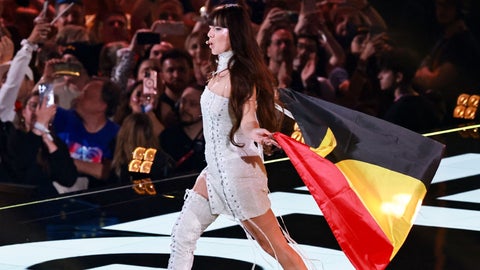
 Noam Bettan represented Israel at the Eurovision Song Contest this year
Eurovision bosses are introducing some new rules ahead of next year’s contest.
On Wednesday afternoon, organisers confirmed that new regulations were being put in place from 2027 onwards, which most notably say that a winning country will no longer be permitted to serve as host if it is involved in any kind of “armed conflict”, “sensitive geopolitical situation” or “any other situation [which] materially affects the security, safety or stability of their state or immediate region”.
In the event that a winning country does fall into this category, organisers will “identify an alternative host broadcaster” which will “not be required to stage the event on behalf of another member” as the UK did with Ukraine in 2023.
After Ukraine’s victory at the 2022 contest, it was deemed unsuitable for the event to take place there due to the Russian invasion, so the UK co-hosted the Eurovision Song Contest on their behalf.
These new rules would also presumably affect Israel, which has finished in second place at Eurovision for two years running, and whose involvement in the event has become an increasingly divisive issue in light of the ongoing conflict in the Middle East.
Ahead of last year’s Eurovision, five countries announced that they were withdrawing due to Israel’s involvement, with a sixth having indicated that they will follow suit if Israel is invited back in 2027.
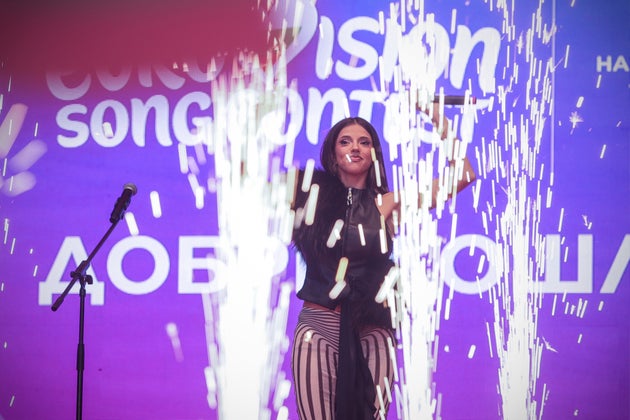 Dara won this year’s Eurovision Song Contest on behalf of Bulgaria
Meanwhile, Eurovision has said that an alternative host country might be also chosen if the reigning winners are deemed to be unsuitable, either due to them not “abiding by the rules of the ESC”, being “found to have attempted to unfairly influence the results or outcome of the ESC in favour of its own entry”, undermining the “non-political character” of the contest, or being unable to “guarantee the safety, security, integrity, continuity or smooth operational delivery of the event”.
Next year, Eurovision is due to take place in Bulgaria for the first time, following Dara’s victory with her original song Bangaranga back in May.
It will also mark the first time that Canada will be competing, after the country’s national broadcaster became part of the European Broadcasting Union earlier this year.






 Bengali (Bangladesh) ·
  English (United States) ·