

Emperor penguins brave extreme cold, storms, starvation and predation. But global warming might ultimately defeat their efforts. If populations of this species fall, these iconic birds might soon find themselves marching toward extinction.
Emperors are the largest of the penguins. On April 9, the International Union for Conservation of Nature, or IUCN, moved the status of this species from “near threatened” to “critically endangered.”
IUCN is a network of more than 17,000 scientists and experts from over 160 countries. They maintain IUCN’s Red List. It identifies species that appear at risk of extinction in the wild — and how imminent their die-off might be.
“Critically endangered” is the Red List’s most severe category. IUCN deems these species at “very high risk of extinction in the wild.”
Let’s learn about Antarctica
The breakup and loss of sea ice around Antarctica is driving emperor penguins toward the brink, scientists say. Over the last decade, Antarctica has seen record lows in the expanse of sea ice that fringes the continent. A breakup of that ice is also coming earlier in the year.
That is imperiling the emperors. To breed and raise their young, this species requires “fast” ice — sea ice that is immobile most of the year. If this ice breaks apart too soon, emperor chicks risk drowning or freezing to death. Those young birds won’t yet have waterproof feathers.
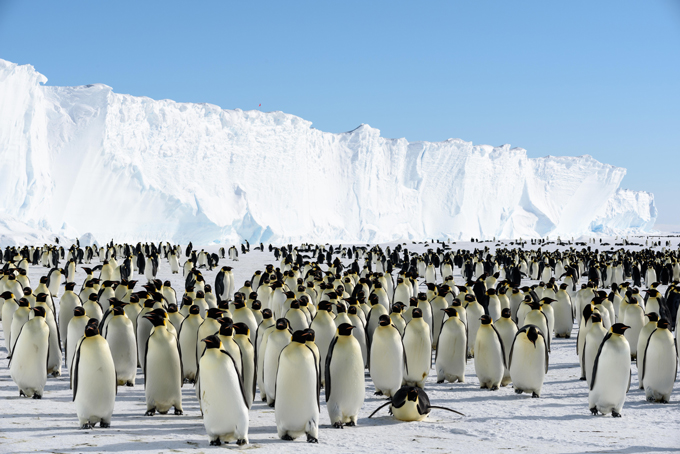 Emperor penguins congregate on sea ice near Antarctica’s Brunt Ice Shelf. Climate change is shrinking the ice cover here. It’s also causing coastal ice to break up earlier, putting the birds’ chicks at risk of dying. Stuart Holroyd/Alamy
On thin ice
In 2022, satellites observed a catastrophic loss of five separate emperor penguin colonies. All were near the Bellingshausen Sea when the ice beneath them broke apart. In all, an estimated 10,000 chicks died.
Today, emperor penguin populations are estimated at around 595,000 adults, some 10 to 22 percent fewer than in 2009. By 2080, the species’ numbers are expected to fall even more — by half, IUCN reports.
Martin Harper heads BirdLife International. With partners on six continents, this group responds to local bird-conservation and species threats. “The emperor penguin’s move to endangered is a stark warning,” Harper said in a statement. “Climate change is accelerating [their] extinction crisis before our eyes.” His group led the new assessment of emperor penguins.
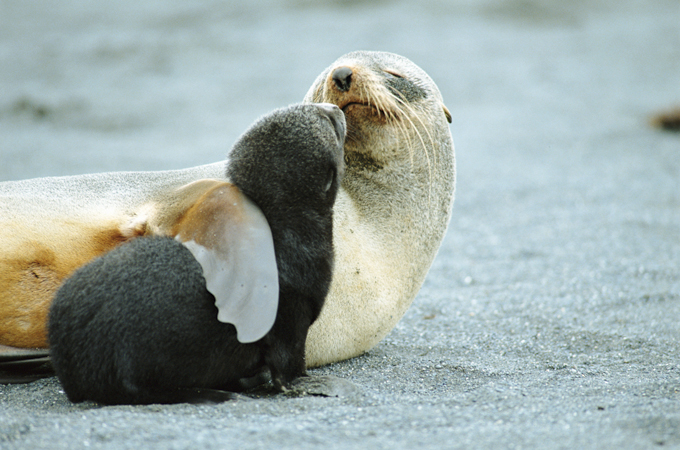 A mama Antarctic fur seal hugs her pup on South Georgia Island. It’s off the coast of Antarctica.Johnny Johnson/The Image Bank/Getty Images
A loss of sea ice is also rapidly moving the Antarctic fur seal several steps closer to extinction, IUCN reports. In 1999, the animals were considered of “least concern” on that group’s Red List. There were an estimated 2.2 million adults of this species. By 2025, that number had plunged to 944,000. Such a dramatic drop moved the seals’ status to endangered.
Here, too, climate change is playing a big role in the decline: Rising ocean temperatures and the loss of sea ice are pushing their primary food source — tiny crustaceans called krill — to deeper ocean depths. As a result, seal pups are far less likely to survive their first year.




 Bengali (Bangladesh) ·
  English (United States) ·