
 1 month ago
38
1 month ago
38 
When Arnold Palmer won the Canadian Open in 1955 for the first PGA Tour title of his career, the tournament’s value had little to do with prize money. Like the U.S. Open and The Open Championship, national opens were viewed as pillars of the sport’s history, attracting elite players because of prestige rather than financial incentives.
More than 70 years later, the future of those legacy events has become one of the biggest talking points in professional golf. Speaking ahead of the 2026 U.S. Open, Rory McIlroy argued that LIV Golf’s arrival triggered a financial arms race that now threatens the standing of tournaments such as the RBC Canadian Open.
“I don’t really know. I guess like at an event — I guess, just recency, an event like last week, the Canadian Open, potentially going to one of these track 2s. Track 2 is a glorified Korn Ferry event. That’s what track 2 is going to be. So I don’t think the Canadian Open should be one of those,” Rory McIlroy said at the media presser ahead of the US Open 2026. “Like I think, as they’ve done all this work, you start to realize that the way the TOUR was before LIV came along was actually pretty good. It was a pretty good structure, and everything sort of worked pretty well.”
“LIV created this false economy where we had to up prize funds and had to cut fields and try to support the top players and all that stuff, which I think needed to happen because that was the only way to retain talent at the time, but now that LIV looks like it’s less of a threat, I think, as I said, the old ways of the PGA TOUR weren’t actually that bad.”
Since LIV’s arrival in 2022, the PGA Tour has doubled purses at several marquee events, expanded player compensation programs and secured outside investment to support rising costs as it fought to retain top talent.
McIlroy’s comments reflect a growing debate within the PGA Tour as officials evaluate a formal “Track 1” and “Track 2” structure for 2028. Under proposals discussed by CEO Brian Rolapp, the top tier would feature 15 to 18 premium events with purses of at least $20 million, while the second tier would serve as a pathway for players attempting to earn or regain elite status.
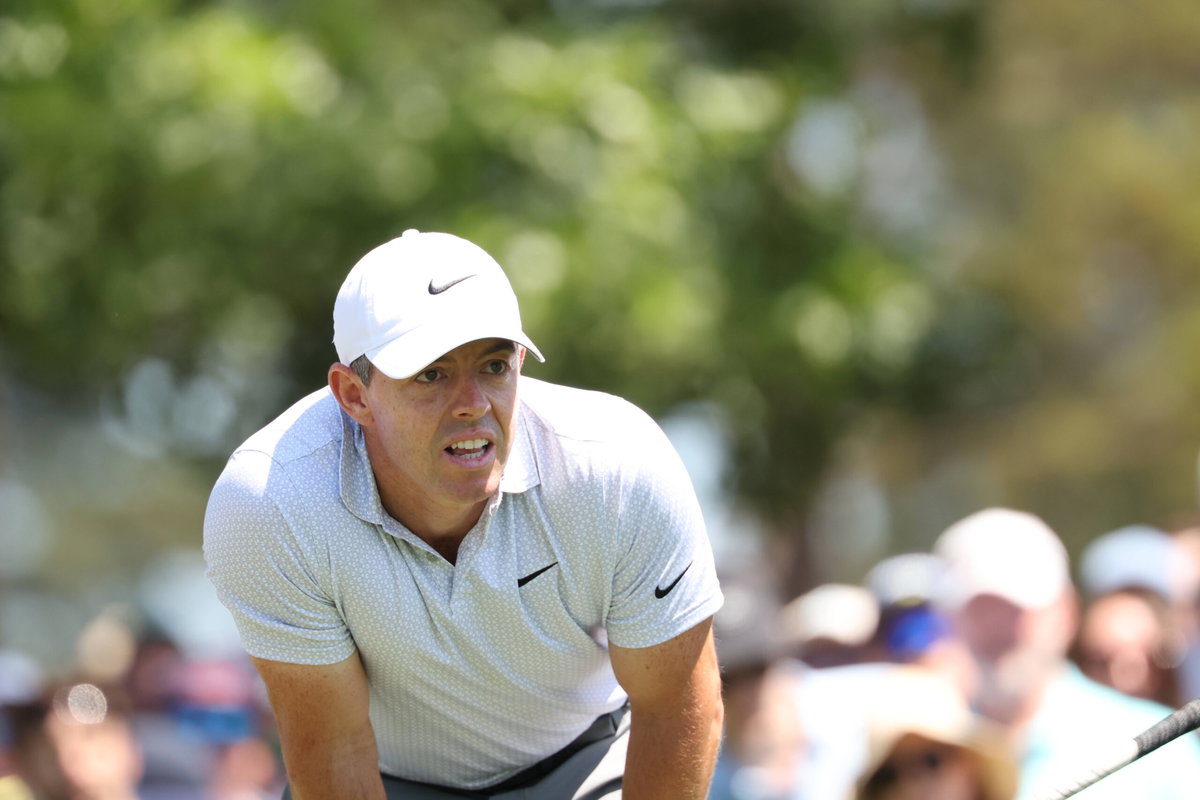 Ireland s Rory McIlroy during the day 2 of the 2026 Masters golf tournament at the Augusta National Golf Club in Augusta, Georgia, United States, on April 10, 2026. Noxthirdxpartyxsales PUBLICATIONxNOTxINxJPN aflo_326531319
Concerns over the commercial impact of a two-tier structure intensified last week when Rocket Companies announced that the 2026 Rocket Classic would be its final year as a PGA Tour title sponsor after a 13-year partnership. The company did not directly attribute its exit to the proposed Track 1-Track 2 framework, but the decision arrived amid growing uncertainty over how sponsors of non-premium events fit into the Tour’s long-term plans.
Canadian players have been among the most vocal critics of the proposal.
Nick Taylor warned that restricting elite players to Track 1 tournaments could fundamentally alter the identity of national opens.
“That would certainly suck,” Taylor said during the RBC Canadian Open when discussing the possibility of the event falling outside the top tier. “I wouldn’t love that certainly.”
Corey Conners echoed those concerns. “I’m really passionate about this event. I care a lot about this event. The Open factor, you know, it’s always been nice to have 21 Canadians, give some young Canadian players an opportunity to play at such an elite event.”
Rolapp has defended the concept as a way to restore competitive meritocracy after several years of limited-field Signature Events. Speaking at the Memorial Tournament earlier this month, the PGA Tour CEO said, “At the end of the day, sports is about how good the athletes are and what the competitive consequences are. I think we have lost a lot of that with the smaller field, no-cut events.”
The concern extends beyond player participation. Under the framework being discussed, Track 1 events would carry purses of at least $20 million, roughly double what many PGA Tour tournaments offered before LIV Golf’s arrival. The Tour’s response to LIV also included expanded player compensation programs and increased financial commitments that critics argue were necessary to retain talent but difficult to sustain long term.
McIlroy’s stance is notable because few players were more vocal in defending the PGA Tour during LIV Golf’s rise. Four years after LIV Golf’s arrival reshaped the economics of professional golf, he now believes the Tour faces a different challenge: preserving the relevance of historic tournaments while adapting to the new financial realities that the rivalry created.
The post ‘Created This False Economy’: Rory McIlroy Blames LIV Golf as He Addresses PGA Tour’s 2-Tier Plan appeared first on EssentiallySports.




 Bengali (Bangladesh) ·
  English (United States) ·