
 1 month ago
36
1 month ago
36 
For many Canadians, tax season comes and goes with the intention of filing “later.” Life gets busy, paperwork piles up, and before you know it, the deadline has passed.
If you’ve missed filing your income tax return in Canada, you’re not alone. Every year, thousands of Canadians file late or fail to file altogether.
While it may seem like something you can deal with eventually, ignoring your tax obligations can lead to penalties, interest charges, delayed benefits, and, in some cases, enforcement action from the Canada Revenue Agency (CRA).
The good news is that filing late is almost always better than not filing at all.
In this guide, we’ll explain exactly what happens when you don’t file your tax return, the penalties you may face, and the steps you can take to get back on track.
Do You Have to File a Tax Return in Canada?
Many people assume they only need to file a tax return if they owe money. In reality, filing a tax return can be important even when you don’t owe any tax.
For example, filing your return may help you receive or continue benefits and credits such as:
GST/HST credit (or the Canada Groceries and Essentials Benefit beginning in July 2026) Canada Child Benefit (CCB) Provincial and territorial tax credits and benefits Other income-tested federal and provincial benefit programsIn many cases, people who skip filing miss out on money they’re entitled to simply because they didn’t file a tax return.
What Happens If You Miss the Tax Filing Deadline?
Missing the filing deadline doesn’t automatically mean you’ll face severe consequences. However, the longer you wait, the more expensive the situation can become.
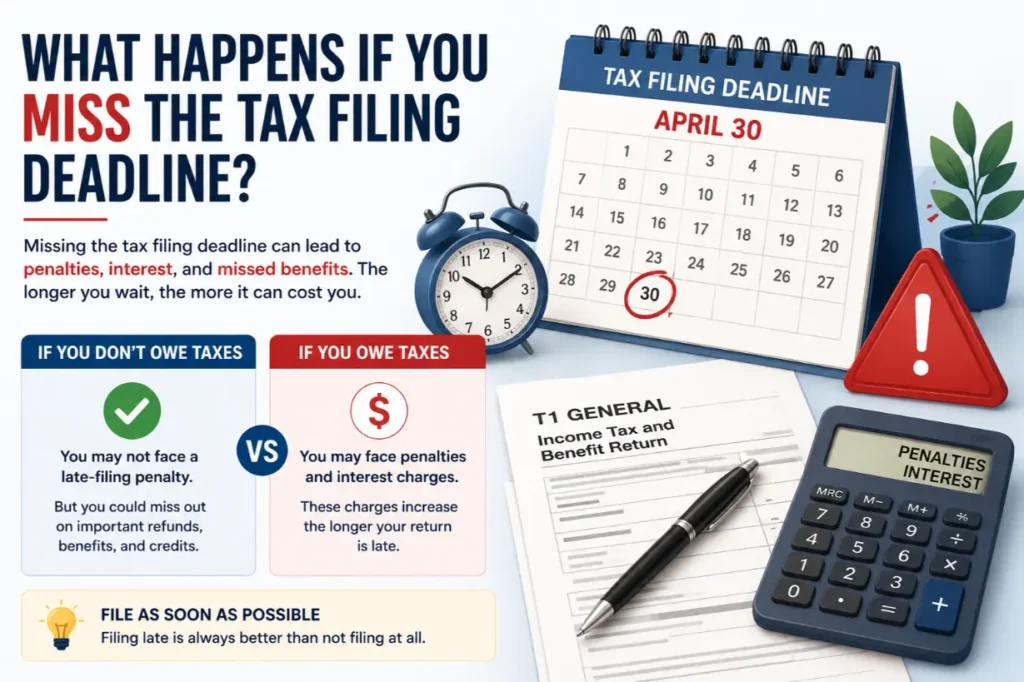
For most individual taxpayers, both the filing and payment deadlines are generally April 30 each year. Self-employed individuals generally have until June 15 to file, although any balance owing is still generally due by April 30.
When you miss the deadline, the consequences depend largely on whether you owe money to the CRA.
If You Don’t Owe Any Taxes
If you are entitled to a refund or have no tax owing, you may not face a late-filing penalty. However, delaying your return can still affect government benefits and credits that depend on your tax information.
If You Owe Taxes
If you owe taxes and fail to file by the deadline, the CRA can apply late-filing penalties and interest charges. These costs can increase over time, making the amount you owe significantly larger than the original tax balance.
CRA Late-Filing Penalties Explained
One of the biggest concerns for taxpayers is the late-filing penalty.
The CRA typically charges a penalty when:
You file your return after the deadline, and You owe taxes that were not paid by the due date.First-Time Late Filing
For most taxpayers, the late-filing penalty starts with:
5% of your balance owing, plus 1% of your balance owing for each full month your return is late, up to a maximum of 12 months.Repeat Late Filers
If the CRA charged you a late-filing penalty in a previous year and issued a formal demand to file, the penalty increases to 10% of your balance owing, plus 2% of your balance owing for each full month your return is late, up to a maximum of 20 months. This makes it even more important to file as soon as possible.
Example
Let’s say you owe $4,000 in taxes and file six months late.
You could face:
An initial penalty of $200 (5%) Additional monthly penalties Interest charges on both the tax debt and the penaltiesWhat started as a $4,000 balance can quickly become much more expensive.
Interest Charges Can Add Up Quickly
Many taxpayers focus on penalties but overlook interest charges.
The CRA generally charges interest on unpaid tax balances starting the day after the payment deadline. Interest is compounded daily, meaning interest can accumulate faster than many people expect.
Even if your original tax debt is relatively small, leaving it unpaid for months or years can result in high additional costs.
The longer you wait, the more difficult it may become to catch up.
Benefits and Credits You Could Miss
Not filing a tax return doesn’t only affect people who owe taxes.
In fact, some of the biggest financial consequences come from losing access to government benefits.
Filing your return may help you receive or continue benefits and credits such as the GST/HST credit, the Canada Groceries and Essentials Benefit beginning in July 2026, the Canada Child Benefit, provincial and territorial credits, and other income-tested payments.
GST/HST Credit
The GST/HST credit helps eligible Canadians offset some of the sales tax they pay. Eligibility is generally determined using information from your income tax return.
If you don’t file, your payments may stop.
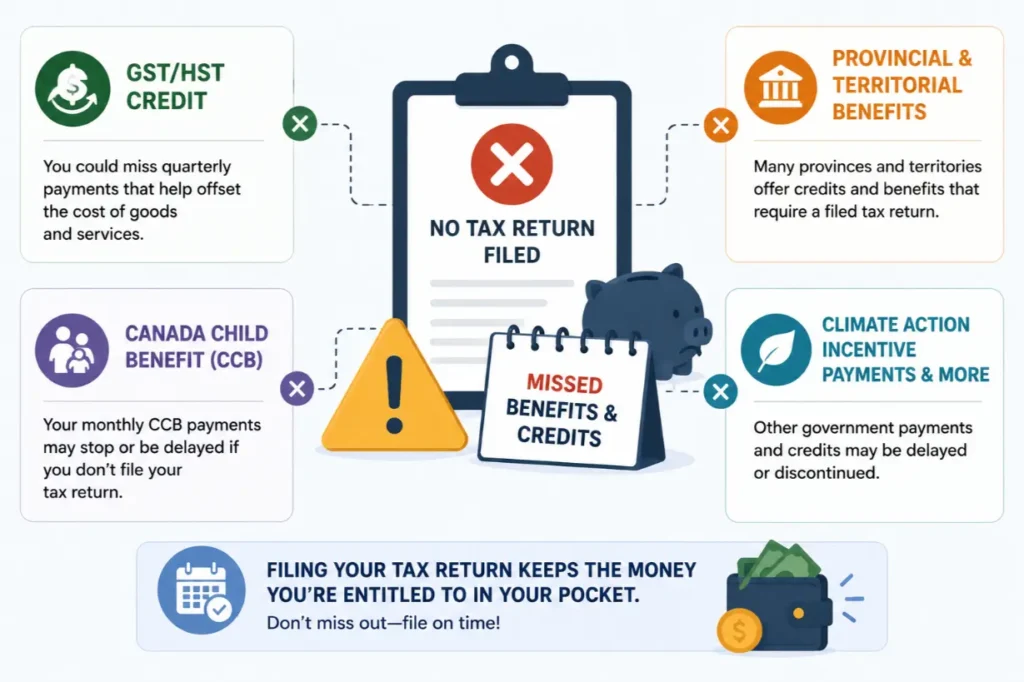
Canada Child Benefit (CCB)
Families with children often rely on Canada Child Benefit payments throughout the year.
Failure to file can interrupt these payments, potentially affecting your household budget.
Provincial Benefits
Many provinces offer additional tax credits and benefit programs that also require current tax information.
Without a filed return, these benefits may be delayed or suspended.
For many taxpayers, filing a return can put money back in their pockets rather than cost them money.
What If You Can’t Pay Your Tax Bill?
If you can’t pay the full amount you owe, don’t let that stop you from filing your return. Filing on time (or as soon as possible if you’re already late) can help reduce additional penalties.
After filing, contact the CRA to discuss a payment arrangement. Depending on your financial situation, the CRA may allow you to make monthly payments while continuing to charge interest on the outstanding balance.
Ignoring the debt is almost always more costly than working with the CRA to find a solution.
Frequently Asked Questions
If you don’t file your tax return, the Canada Revenue Agency (CRA) may charge penalties and interest on unpaid taxes. It may even take legal action or withhold government benefits such as GST/HST credits or the Canada Child Benefit.
Yes. The CRA charges a late-filing penalty of 5% of your balance owing, plus 1% for each full month your return is late (up to 12 months). Repeat late filers may face even higher penalties.
No. If you don’t file, you will not receive any tax refund you may be entitled to. The CRA does not issue refunds automatically without a filed return.
Yes. The CRA charges compound daily interest on any unpaid tax balance starting from the day after the payment due date until the amount is paid in full.
Yes. Benefits such as the Canada Child Benefit (CCB), GST/HST credit, and other provincial or federal benefits may be delayed, reduced, or stopped if you don’t file your return.
If you owe taxes and ignore CRA notices, the CRA has the authority to garnish income or amounts held in bank accounts, and may put a lien on or seize assets to recover unpaid taxes.
Repeated failure to file can lead to higher penalties, legal enforcement actions, audits, and possible prosecution in serious cases of tax evasion.
Yes. You can file your tax return late at any time. However, penalties and interest will still apply if you owe taxes.
You should still file your return and then contact CRA to set up a payment arrangement. CRA may allow you to pay in installments depending on your situation.
In some cases, yes. You can apply for Taxpayer Relief Provisions, and the CRA may cancel or reduce penalties and interest due to circumstances such as illness, financial hardship, or natural disasters.
Final Thoughts: It’s Never Too Late to Get Back on Track
Missing the tax filing deadline can feel overwhelming, but the longer you wait, the more expensive it can become. Even if you can’t afford to pay your tax bill today, filing your return as soon as possible is usually the smartest first step. It may reduce additional penalties, stop further delays to your benefits, and help you avoid more serious collection action from the Canada Revenue Agency (CRA).
Remember, many Canadians who file a return don’t actually owe money. In fact, some receive refunds, credits, and benefits they didn’t realize they qualified for. Filing your tax return each year helps ensure you receive everything you’re entitled to while keeping your tax affairs up to date.
If you’ve fallen behind, don’t panic—but don’t ignore it either. The sooner you file, the sooner you can start putting the situation behind you.
Have you ever filed your tax return late or received an unexpected refund after finally filing? Share your experience in the comments below. Your story may help another Canadian who is facing the same situation.
Should You Be Breaking Your Mortgage? Consequences Of Filing A Late Income Tax Return Income Tax Is Like a Four-Letter Word How To File Taxes For The First Time How To Catch Up With A Late Payment (Sample Letter)Disclaimer: This article is intended for general informational purposes only and should not be considered tax, legal, or financial advice. Tax laws and CRA policies can change. For advice specific to your situation, consult the Canada Revenue Agency or a qualified tax professional.
The post CRA Tax Penalties in Canada: What Happens If You File Your Income Tax Return Late? appeared first on Canadian Budget Binder Your Way To Debt-Freedom.


 Bengali (Bangladesh) ·
  English (United States) ·