

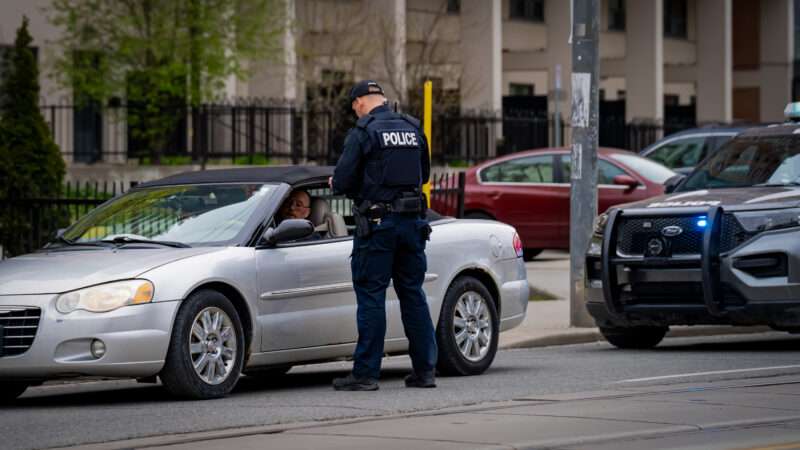
Democratic Colorado Gov. Jared Polis signed a bill earlier this month tightening the state's restrictions on when police can seize cash and property from suspected criminals, as well as giving property owners a right to an attorney in forfeiture cases.
Colorado now has some of the strictest laws in the country governing police's use of civil asset forfeiture, a practice that typically allows law enforcement to seize property suspected of being connected to criminal activity, even if the owner isn't charged with a crime. Colorado is also now the second state to create a right to legal access in forfeiture proceedings.
Polis signed House Bill 26-1250 into law on June 4. The bill, which passed the Colorado House and Senate by votes of 33–2 and 64–1, respectively, requires courts to pause forfeiture cases until there is a conviction in a related criminal case. Additionally, the bill creates a right to court-appointed legal counsel for property owners who can't afford an attorney. A fund created from asset forfeiture revenues will be used to pay for attorney fees.
The new law is the result of more than a decade of bipartisan concerns over civil asset forfeiture in Colorado and other states across the country. Law enforcement groups say civil asset forfeiture is a vital tool to disrupt drug trafficking and other organized crime by targeting their illicit proceeds. However, news investigations, reports from civil liberties groups, and major lawsuits over the years have all revealed how civil forfeiture practices created perverse profit incentives for police departments and lacked due process protections for innocent property owners.
In response, states have passed laws increasing reporting and transparency requirements, setting minimum thresholds for cash seizures, adding innocent owner defenses, and in several cases abolishing the practice altogether.
The Institute for Justice—a public interest law firm that has successfully challenged asset forfeiture practices in Philadelphia, Albuquerque, Detroit, and elsewhere—applauded the enactment of the new Colorado law.
"Colorado has taken another important step toward better protecting the property rights of its citizens. Property rights are fundamental, and this reform provides stronger protections for people whose property is targeted for forfeiture," Alasdair Whitney, the legislative counsel at the Institute for Justice, said in a press release. "With Governor Polis's signature, Colorado becomes just the second state in the nation to provide counsel for property owners facing forfeiture."
The Institute for Justice recently released a nationwide survey of civil asset forfeiture laws and practices. One of the report's findings was that property owners challenging civil forfeitures rarely have attorneys, since there is no right to legal representation in civil cases and in many cases the cost of an attorney was greater than the value of the seized property.
"Very few owners who contest forfeiture have legal representation—just 6% in Arizona and 7% in Oregon—likely because it is prohibitively expensive," according to the report. "A straightforward state-court forfeiture case costs an estimated $3,300, nearly twice the median cash forfeiture of $1,678 across 24 states."
The post Colorado Becomes Second State To Create Right to an Attorney When Police Seize Your Property appeared first on Reason.com.





 Bengali (Bangladesh) ·
  English (United States) ·