

This year, I’ll be trying sleeping tricks to see whether they actually improve my insomnia. Check back in on this series, Rest Assured, to see how I get on.
For the past few weeks, I’ve been on a science-baked crusade against bad sleep.
I’ve tried reading before bed, eating kiwis, drinking passionflower tea, and tackling my vitamin D deficiency in an attempt to significantly reduce my sleep maintenance insomnia.
So, when I heard about “analogue sleep,” I thought I’d give it a go to see whether it stopped my 3am wake-ups.
What is “analogue sleep”?
Nick Hawkins, Managing Director at Grove Bedding, explained that it’s a low-tech, screen-free approach to bedtime.
“We may live in a digital world, but sleep remains physical, rhythmic, and deeply human. By making our nights tech-free, we give ourselves the chance to rest properly – and to wake feeling genuinely restored,” he said.
Basically, it’s about avoiding screens and building a tech-free sleep routine. Speaking to HuffPost UK previously, Dr Chelsea Perry, owner of Sleep Solutions and a Diplomate of the American Board of Dental Sleep Medicine, said she ditches her phone two hours before bed.
In the same article, sleep expert Dr Nerina Ramlakhan from Oak Tree Mobility said: “Set healthy boundaries on tech: no electronics in the bedroom”.
Some research suggests that excessive screen time can affect sleep quality, and that blue light can mess with our Circadian rhythm (which a study suggests might be as important to a great night’s kip as sleep duration).
Reading and other calming hobbies (perhaps something like stress-reducing knitting or NHS-approved meditation) might be a good replacement for my previous nighttime scrolling, Hawkins said.
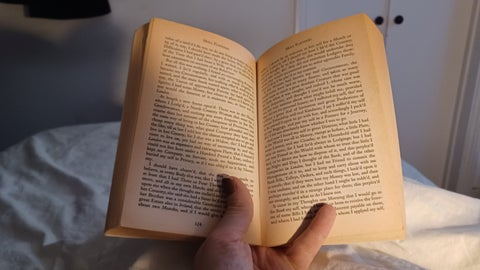
While I have already got into the habit of enjoying a novel before bed, I confess I usually watch some videos or check my alarm afterwards.
So, I gave it a go.
How did it go?
I’m going to be completely honest here: I struggled a lot.
I’ve been reading more than ever, but I couldn’t help but feel a familiar urge when I flopped my book down on my bedside table – I usually check my messages, ensure my alarm’s been set, and yes, enjoy a bit of social media before bed.
Perhaps this in itself is a cause of concern, but I found that while I had my average five 3am wakeups a week, my failure rate of returning to sleep was higher than usual (I only fell back asleep before 7am once, resulting in too many midday naps, which is a vicious cycle).
I think I was worrying about little things, like whether I’d missed an important message or (a repeated concern) not saved my alarm correctly.
Some reassurance, however: some scientists think that, though all artificial light can disrupt your sleep patterns, the blue light linked to your phone might not actually be especially harmful.
Dr Michael Gradisar, head of sleep science at Sleep Cycle, previously shared: “While sleep experts often recommend keeping phones out of the bedroom or avoiding them before bed, many people simply won’t follow this advice. This can lead to stress... which negatively impacts sleep”.
In this case, being too fastidious about avoiding screen time did not work for me, despite strong evidence that it should.
Still, sticking to a routine is undeniably great for your sleep health, and reading before bed, which really has helped my sleep, has cut my screen time down significantly.
As Dr Grasidar said, “individuals can still use interactive technologies like video games or their phone, but then transition to more passive activities such as watching TV, listening to music, or tuning into a podcast as they wind down.”






 Bengali (Bangladesh) ·
  English (United States) ·