

The Bybit Card carries no annual fee in Germany, and both the virtual card and the first physical card are free. Fees only arise when you use it: 0.9 percent when a payment is funded from a crypto balance, 0.5 percent on transactions in a foreign currency and 2 percent at cash machines once more than €100 is withdrawn in a month. For customers in the European Economic Area the card is issued by Bybit EU, the exchange's Vienna-based subsidiary, which holds an authorisation under the EU's MiCA regulation. That is what the Bybit EU fee schedule says, last updated on October 8, 2026.
Who is the card for? Mainly for anyone who already has a Bybit EU account and wants to use balances in euros, stablecoins or bitcoin in everyday life without selling manually first. If you only want to pay with crypto now and then, set the fees against those of other crypto cards; our comparison of crypto credit cards gives an up-to-date overview.
Bybit Card in Germany: a Mastercard debit card from MiCA-licensed Bybit EU
The Bybit Card is a debit card on the Mastercard network. A debit card charges every payment immediately to the linked balance; there is no credit line as with a classic credit card. Payments come out of the funding account of your Bybit EU account, either in euros or in crypto assets that are sold automatically at the moment of payment. The card is available as a virtual version for online shopping and as a physical card for tills and cash machines; both share a single spending limit.
The provider for customers in Germany is Bybit EU GmbH, based in Vienna. The Austrian Financial Market Authority FMA granted it authorisation as a crypto-asset service provider (CASP) on May 28, 2025. A CASP is a company that may hold, exchange or transfer crypto assets under MiCA and needs a licence from an EU supervisor to do so. The entry appears in the MiCA register of the European Securities and Markets Authority ESMA and is valid throughout the European Economic Area. Our overview of the MiCA licence explains the obligations such a licence brings.
Important when choosing an account: customers from the EEA are served via bybit.eu, not via the global platform bybit.com. The fees and limits in this article refer exclusively to the Bybit EU card. Our assessment of the exchange itself, with trading fees and product range, can be found in our Bybit review.
Bybit Card fees: 0.5 percent on foreign currency and 0.9 percent on crypto conversion
Bybit EU's fee structure is lean. According to the official Bybit Card fee schedule, these items apply as of October 8, 2026:
| Annual fee | none |
| Inactivity fee | none |
| Virtual card | free |
| Physical card, first issue | free |
| Physical card, replacement | €5 |
| Foreign currency fee | 0.5 percent on the Mastercard exchange rate |
| Crypto conversion fee | 0.9 percent on Bybit EU's One-Click-Sell rate |
| Cash machine | 2 percent after the first €100 a month |
The crypto conversion fee is the surcharge Bybit EU levies when a card payment is funded from a crypto asset rather than from euros. It applies to every transaction paid from non-fiat balances in the funding account, and the minimum amount for a conversion is one euro. If you hold euros in the funding account, you do not pay this fee. Bybit EU also points out that fees and limits may change depending on market conditions.
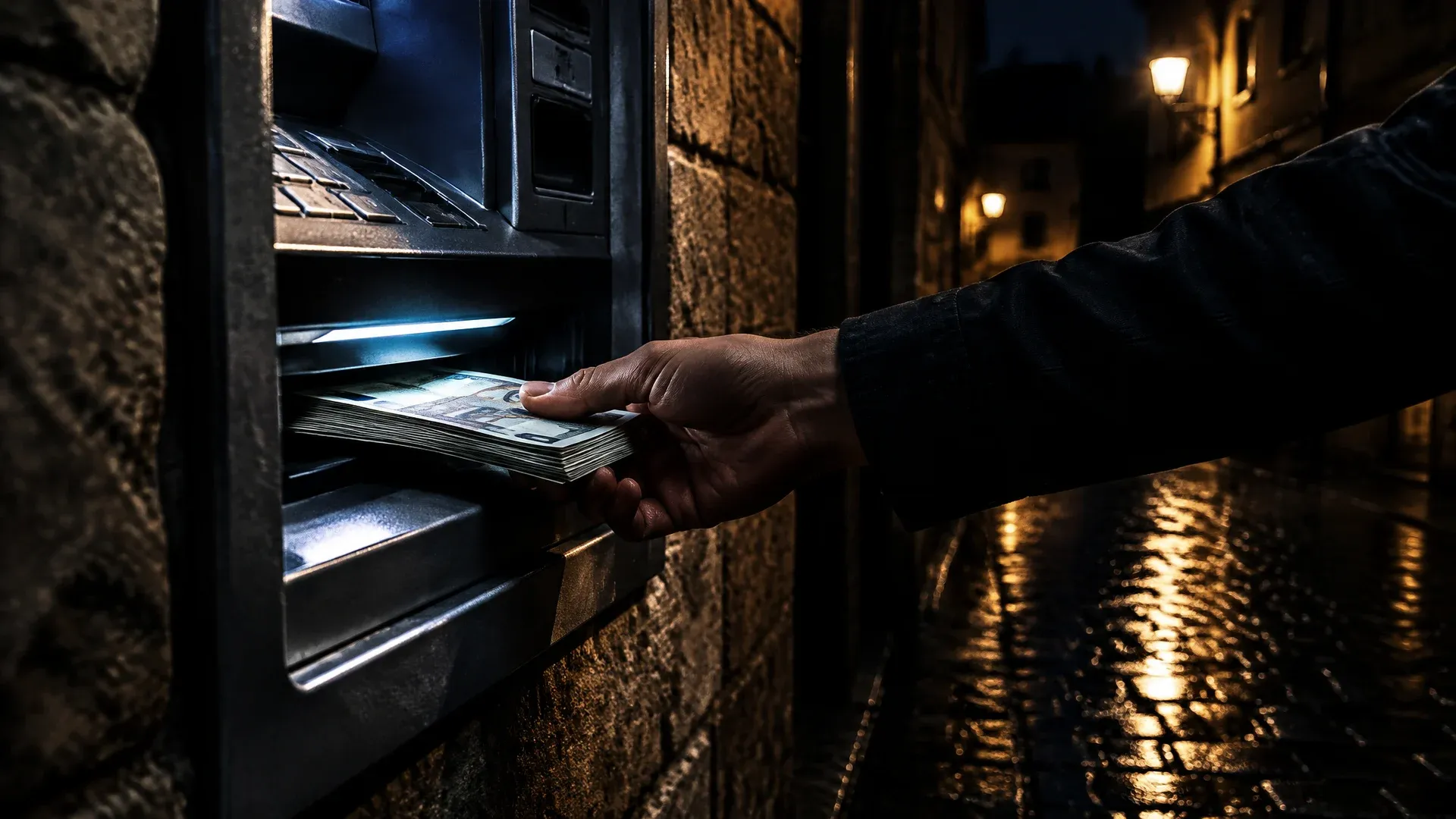 The first €100 a month at cash machines are free of charge; after that Bybit EU charges 2 percent.
Worked example of crypto conversion: a €100 payment from USDC
Bybit EU sets out an example in its own schedule. A customer pays €100, and the funding account holds only the stablecoin USDC. The assumed sale rate is €0.93167 per USDC. So 107.33 USDC are sold for the €100, plus a 0.9 percent conversion fee of 0.97 USDC. A total of 108.3 USDC is debited.
The example contains two sources of cost. The visible one is the 0.9 percent fee. The less visible one is the sale rate itself, because Bybit EU uses its own One-Click-Sell rate for this, not an exchange price from the order book. If that rate deviates from the market price, you pay the difference on top. If you pay with the card regularly, it is therefore usually cheaper to convert into euros beforehand and fund the card from your euro balance.
Cash withdrawals with the Bybit Card: €100 free, then 2 percent
You can withdraw cash with the physical Bybit Card. The first €100 in each calendar month are free, and Bybit EU charges 2 percent on every euro above that. If you withdraw €300 in a month, you pay the fee on €200, which comes to €4. If the money comes from a crypto balance, the 0.9 percent conversion fee is added.
Fees from the cash machine operator may come on top. Some machines charge their own fee or offer a conversion into the card currency. Bybit EU recommends reading the on-screen notices carefully. Abroad, you are generally better off declining a conversion offered by the machine, because the operator's rate is rarely better than Mastercard's.
Separate limits apply to withdrawals. At the lowest tier they are €2,000 per transaction and per day, €2,000 a month and €10,000 a year. At the higher tiers the monthly and annual limits rise, while the daily limit stays at €2,000.
Bybit Card spending limits: from €5,000 to €15,000 a day
The spending limits depend on the tier your card account is assigned to. The virtual and physical cards share the same limit:
| per transaction | €5,000 | €10,000 | €15,000 |
| daily | €5,000 | €10,000 | €15,000 |
| monthly | €10,000 | €25,000 | €50,000 |
| annually | €60,000 | €125,000 | €250,000 |
You apply for an increase in the card dashboard via the limit review. If you applied for the card as a regular customer, you can move from tier 1 to tier 2; tier 3 is open only to VIP customers, who start at tier 2. According to Bybit EU, processing takes up to seven working days. For everyday use, tier 1 is enough for most users: €10,000 a month also covers larger purchases.
Bybit Card cashback: between 1 and 10 percent, depending on tier and promotion
On cashback the figures diverge, and this is exactly where it pays to check your own account. In a press release on January 20, 2026, Bybit EU announced that cardholders could choose to receive their cashback in bitcoin or USDC. Depending on the reward tier, the company cited 2 to 10 percent at the time, credited daily to the balance account. New users could receive up to 10 percent on selected categories for a limited period, capped at €150.
In June 2026 the specialist outlet Cryptonomist reported on a new Bybit EU programme with a flat 1 percent cashback on every eligible payment, with no cap. Which structure applies to your card depends on when you applied and on your tier. When deciding, it is prudent to work with the lower figure: 1 percent on €1,000 of monthly spending is €10. If you pay the same amount from a crypto balance, the conversion costs around €9, and barely anything is left of the cashback.
 For payments in foreign currency, 0.5 percent is added to the Mastercard exchange rate.
Bybit Card abroad: Mastercard rate plus a 0.5 percent foreign currency fee
The card is denominated in euros. If you pay in another currency, such as dollars, pounds or francs, Mastercard converts the amount at its own reference rate and Bybit EU adds 0.5 percent. Bybit EU says it does not charge an additional safety margin on the rate, known in the trade as FX padding.
The example from the fee schedule: a payment of 69.80 Singapore dollars comes to €49.30 at the assumed Mastercard rate, the foreign currency fee is €0.20, and €49.50 is debited. The amount reserved at authorisation may be slightly higher to cover exchange rate fluctuations until settlement; the surplus then flows back to the funding account.
Whether that is cheap depends on your alternative. Many German girocards charge their own foreign transaction fee outside the euro area, while some direct banks and travel credit cards waive it. Before a longer trip, compare the terms of your own bank.
Crypto cards and tax: every payment from bitcoin is a sale
For tax purposes the Bybit Card is not a special case. If you pay from a crypto balance, Bybit EU sells the required amount at the moment of payment. For the German tax office this is a disposal under Section 23 of the Income Tax Act (EStG). If less than a year has passed between purchase and payment and the price has risen since, a taxable gain arises as soon as all private disposal gains for the year together reach the €1,000 exemption threshold. After a holding period of more than a year, the gain remains tax-free.
If you often pay small amounts from bitcoin or other volatile coins, you create many small taxable events, each of which must be traceable in your tax return. With stablecoins such as USDC, gains and losses usually stay in the cent range, but the sales are reported all the same. Our article on crypto credit cards and tax explains this in detail. As a provider licensed in the EU, Bybit EU is also subject to the DAC8 reporting obligation; the data reach the German tax office via the automatic exchange of information.
Bybit Card or Coinbase Card: how the crypto cards differ
The obvious alternative for customers of a large exchange is the Coinbase card. We broke down its terms in October in our article on the Coinbase Card. In principle, crypto cards differ in three respects: the surcharge when crypto assets are sold, the fees abroad and at cash machines, and the type and size of the reward.
With the Bybit Card, the 0.9 percent crypto conversion carries the most weight, while annual and issuance fees are waived entirely. For users who pay from a euro balance, the costs shrink to the foreign currency fee abroad and the cash machine charge above €100. If, on the other hand, you want to spend crypto assets directly, you should weigh the conversion fee against the cashback. An overview of other providers with their fees and rewards can be found in the card comparison.
Bybit Card: a euro balance saves the 0.9 percent conversion
The Bybit Card is a low-cost crypto card as long as you use it deliberately. Here is how to proceed:
Compare cards: set the Bybit Card's fees alongside other offers in the comparison of crypto credit cards before you open an account. Check the provider: make sure you sign up at bybit.eu, and compare the licence with other regulated crypto exchanges. Document payments: every card payment from a crypto balance is a sale. A crypto tax tool imports the export and calculates gains and holding periods.(As of November 10, 2026. This article is not investment advice. Prices and fee structures change; check the terms with the provider before you buy.)



 Bengali (Bangladesh) ·
 English (United States) ·