

When a blockchain is shut down, your coins do not usually disappear. In most cases they are reissued on another chain, in exactly the amount that sat at your address on a fixed cut-off date. That cut-off date is called the snapshot, and it is the only number that counts in the end. Anything you swapped, transferred or deposited after it can fall away with no replacement. Anyone who knows how the process works usually loses nothing when a chain is switched off. Anyone who does not notice the difference only once the new chain is already running.
This article explains the mechanism using a case that is unfolding right now and can be verified down to the second. The BounceBit chain has been standing still since August 20, 2026, its operators do not intend to restart it, and the token is to be reissued on BNB Chain. What you get here is the procedure behind that, which applies again at every future shutdown, and no price opinion on this token.
What It Means When a Blockchain Is Shut Down
A chain shutdown, usually called a sunset, is the decision by operators and validators to stop producing new blocks and to halt the network for good. A validator is a machine that checks transactions and writes new blocks. Once enough validators stop, the chain stands still, because nobody is left to confirm what users send.
The important distinction is between the chain and the claim. The chain is a bookkeeping system. Your balance is an entry in that book. If the book is closed, the entry does not automatically become worthless, because the project can transfer it into a new book. That is precisely what happens in a reissue: a team reads the balances out of the old book and writes them again on a different blockchain. The token keeps its name but changes its technical foundation.
For you this has a very practical consequence. Private key control over your old address remains important, because many projects deliver the new tokens to the same address on the target chain. Anyone who has lost access, or who has moved to a new address in the meantime without documenting it, has an attribution problem that nobody else will solve. How to keep keys safe for the long run is covered in our hardware wallet comparison.
BounceBit Halts Its Own Chain: the Case That Shows the Mechanism
BounceBit is a restaking platform that ran its own layer 1 blockchain. Layer 1 means the chain operates independently and does not sit on top of another blockchain. According to The Block, an attacker exploited an authorisation flaw in the underlying Evmos stack. The Evmos stack is a ready-made kit for blockchains that lets you run your own chain with Ethereum-compatible contracts. The flaw allowed a contract call to name someone else's account as the source of funds, without any check that this account had agreed.
In fourteen transactions from nine accounts, the same report says, roughly 286.5 million BB were taken, worth about $3 million to $3.3 million at the price at the time, depending on which newsroom does the maths. The independent report by Protos adds that no user keys and no individual wallets were compromised. The fault sat in the protocol layer, not with the holders.
Rather than close the flaw and keep running, the operators chose the hard cut. The chain stays off, and BB is reissued as a BEP-20 token on BNB Chain. The current price page for that target chain is our BNB price prediction.
The Scale, Honestly Stated
BB is a very small token. Our own CoinGecko query on August 23, 2026 at 00:38 UTC: price $0.0102, market capitalisation around $4.18 million, rank 1,722, circulating supply 409.5 million units. The all-time low was reached on August 20, 2026, the day the chain stopped. The number of investors directly affected is therefore small. The value of this case lies not in the size of the token but in its clarity: it is rare to watch a shutdown while it is still running.
What I Measured Myself
The figures below come from our own query of the public BounceBit node fullnode-mainnet.bouncebitapi.com on August 23, 2026 at 00:37 UTC, cross-checked against the second endpoint mainnet-rpc.bouncebitapi.com with an identical result:
The highest block on the chain carries the number 20,702,857 and the timestamp August 20, 2026, 02:36:37 UTC. No further block has been added since, which is around seventy hours of standstill. Block 20,697,260, named as the cut-off, carries the timestamp August 19, 2026, 21:02:35 UTC. There are 5,597 blocks between the cut-off and the head of the chain. The block immediately after it, 20,697,261, already contains a transaction.These four values are the core of the whole affair, and they explain why the next section is the most important one.
What a Snapshot Is and Why a Single Block Decides Your Balance
A snapshot is an image of every account balance on a blockchain at one precisely named block. It marks a single moment, not a period and not an average. Whatever sat at your address in that moment counts as your claim. Whatever arrived or left a second later is invisible to the reissue.
At BounceBit the snapshot sits on block 20,697,260, immediately before the first unauthorised transaction. From the project's point of view that is the clean solution, because it takes the theft out of the new supply. The attacker's 286,543,148 BB will not be reissued, the operators say.
A snapshot is therefore always a decision about two things at once: which movements count and which do not. Whoever sets a cut-off date also decides whose activity is discarded. That is why a project should always name the chosen block in public. A snapshot without an exact block number is an assertion, not evidence.
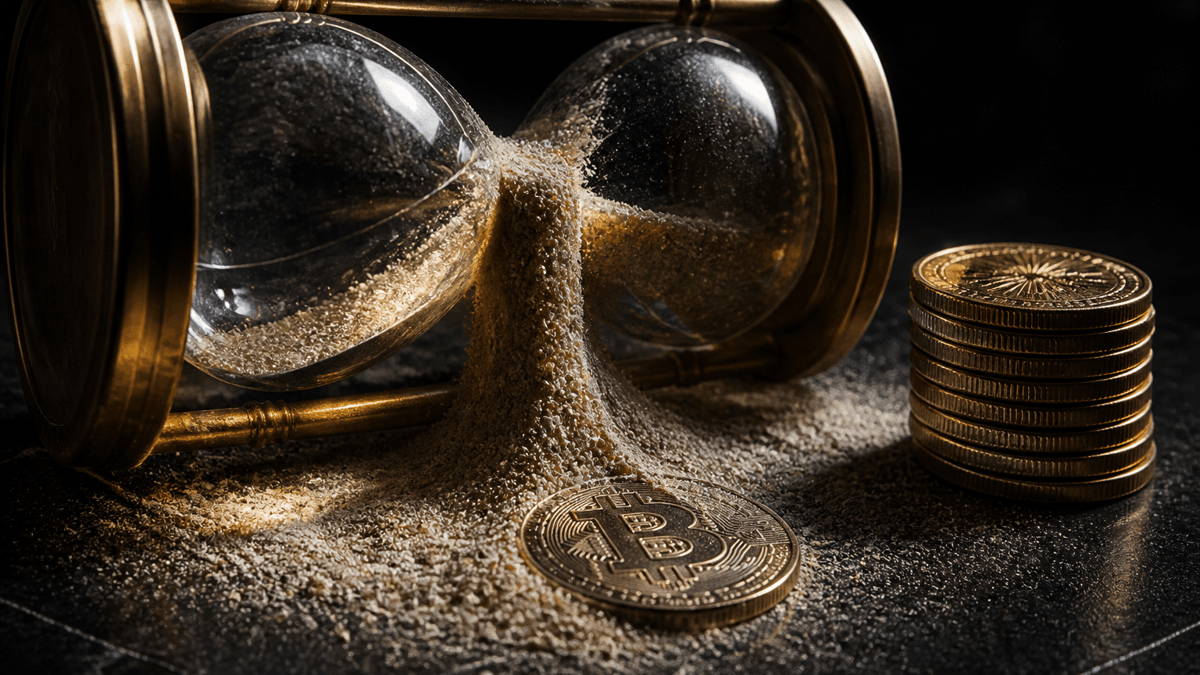 A snapshot fixes a single block: everything that happens on the chain after it no longer counts in a reissue.
5,597 Blocks Without Effect: What Happens to Transactions After the Cut-Off
This is the point almost nobody says out loud. The snapshot does not only discard the theft. It discards everything that happened in those 5,597 blocks, and that includes perfectly ordinary user activity. Between August 19 at 21:02 UTC and August 20 at 02:36 UTC the chain kept running for around five and a half hours, and the very block after the cut-off carries a transaction again.
In practice that means anyone who bought, sold, transferred or deposited BB into a contract inside that window gets the balance from before it. A sale in that window can become retroactively ineffective even though it was confirmed on the chain. A deposit can equally come to nothing. In a chain shutdown, confirmed no longer means final, and that experience catches out even seasoned users.
For you a simple rule of conduct follows, as soon as a chain anywhere stands still or a team announces a halt: hands off that token until the cut-off date has been named publicly. Every movement in the unresolved window is a risk with nothing on the other side, because you do not know whether it will still exist later.
Why Staking Positions Usually Fare Better Than Open Trades
According to the operators, staked holdings and those in the unbonding period are also to flow into the reissue. Unbonding is the waiting time a chain demands before staked tokens become freely available again. These positions are tied to an address and can therefore be read out cleanly. An open trade on an exchange, by contrast, sits in the provider's books rather than at your address, and is therefore allocated by the exchange itself.
Reissue as a BEP-20 Token: How a Coin Changes Chains
BEP-20 is the token standard of BNB Chain, a fixed set of rules for how a token holds balances and transfers them there. It is functionally equivalent to the ERC-20 standard on Ethereum. A token built to this standard no longer needs a chain of its own; it shares the infrastructure of the target blockchain.
A reissue almost always follows the same pattern. First the snapshot is set and published. Then a new contract is created on the target chain with the total supply that follows from the snapshot. After that the balances are distributed, either automatically to the identical addresses or through an application process in which you prove your old address. BounceBit has announced automatic distribution to the same addresses for its own case, with no separate application process.
The last step lies with the trading venues. Exchanges have to pull the old token from trading, switch over deposits and withdrawals and rebook customer holdings onto the new contract. This step takes the longest, and it is the reason why balances at an exchange often sit stuck for days during a migration. Which providers document such changes cleanly and publicly on a regular basis is set out in our crypto exchange comparison.
One Open Point in This Case: No Date
BounceBit has so far named no timetable for the reissue. There is no date for the launch of the new contract and no deadline by which holders would have to act. That is unusual and rather uncomfortable for you, because an open-ended wait is harder to monitor than a hard deadline. Anyone holding BB should therefore actively watch the project's announcements and their exchange's notices instead of waiting for a notification.
Chain Shutdown, Rollback and Delisting: Three Events That Are Often Confused
These three terms sound similar, and they hit you in completely different ways.
A rollback turns a running chain back to an earlier state and then carries on as normal. The blockchain survives, part of its history is discarded. How that works and what it means for the acquisition date and the holding period, we described in detail using the Harmony case: blockchain rollback after an exploit.
A chain shutdown ends the blockchain for good. The token only survives if somebody reissues it on another chain. That is the case at hand here.
A delisting, by contrast, affects only a single trading venue. The chain keeps running, your token still exists, but this one exchange no longer trades it and at some point also closes withdrawals. What to do in that situation we described on August 17, 2026 in a separate piece on delistings at a crypto exchange.
The order of severity is therefore clear. A delisting costs you a trading venue, a rollback costs you a piece of transaction history, a shutdown costs you the entire chain. Only in the last case does your holding depend on a team rebuilding it somewhere else.
Exchange, Software Wallet or Hardware Wallet: How a Shutdown Hits You
Where you keep your coins decides how much work comes your way and how much control you keep.
If the tokens sit at an exchange, the provider handles the migration for you. That is convenient and has a price: you depend on their timetable, you often can neither trade nor withdraw during the changeover, and you only see afterwards whether the rebooking is correct. Once it is done, check the balance against your own record from the cut-off date.
If the tokens sit in a software wallet, meaning an app or browser extension with its own key, an automatic distribution to the same address usually runs smoothly. In the wallet you only have to add the target chain and enter the new contract, otherwise it will not show the balance. Take contract addresses exclusively from the project's official announcement, never from a search engine or a chat group. Migrations are the favourite occasion for fake contracts.
If the tokens sit on a hardware wallet, the same applies, with one advantage: the key stays offline, and you can add the target chain in the accompanying software without ever exporting the key. One drawback is device support, since not every hardware wallet carries every target chain. Which devices cover which networks is shown in our hardware wallet comparison.
One Rule That Applies in All Three Cases
Document your holding as of the cut-off date before anything is switched over. A screenshot of the wallet balance, the address in plain text and the block height are enough. If the distribution later deviates, that is your only evidence towards an exchange or a support desk. Without that note you are arguing from memory against a booking system.
 In a reissue the token changes its foundation: the old chain is left behind, the claim moves to another one.
Which Deadlines Really Count in a Chain Shutdown
Every migration comes with several dates, and they are readily thrown into one pot. These in particular need to be kept apart:
The snapshot block. It decides the size of your claim. After it, no movement helps you any more. The exchanges' deposit stop. From here the trading venue no longer accepts the old token. Transfer after that and you risk the deposit not being credited. The trading halt. From this point you can no longer sell the old token there. The end of the swap window. In application-based procedures this is the hard limit. Miss it and in many cases your claim is gone. The withdrawal stop. It often comes last and is the final chance to move the old token off the exchange into your own custody.How tightly such dates can sit together is shown by the ICON case from our archive. Our article of August 17, 2026 on the ICX to SODA migration sets out two separate deadlines side by side, one for the swap via the exchanges and one for the shutdown of the chain itself. Anyone who only knows the first one acts too late.
The Tax View: Is a Forced Token Migration a Disposal?
This question comes up with every migration, and in Germany it cannot be answered in a single sentence. The core issue is whether the tax authorities treat the event as the continuation of the same position or as a disposal followed by a fresh purchase. In the first case your holding period keeps running, in the second it starts again, and a gain can become taxable.
One pointer from practice: the more technically forced the changeover is and the more unchanged the economic position remains, the more likely it is treated as mere continuation. If, on the other hand, the amount changes, a different asset comes out or the position is settled against fiat money, that speaks more for an event with tax relevance. How differently this can turn out is shown by the Revolut case of August 10, 2026 from our archive, in which a forced conversion into euros took place and therefore clearly had to be treated as a sale.
This overview does not replace tax advice, and I deliberately give no ruling on an individual case here. What you can do is secure the evidence: cut-off date, block number, holding before and after, the project's announcement as proof. A tax tool helps you record the event cleanly instead of reconstructing it after the fact. You will find an overview in our crypto tax software comparison.
Early Warning Signs That a Chain Is Heading for the Exit
Chain shutdowns rarely come out of nowhere. They are usually preceded by months in which the situation deteriorates measurably. Watch for these signals:
A falling validator count. When ever fewer operators write blocks, the chain becomes technically more vulnerable and economically less attractive. Declining total deposits. The technical term for this is total value locked, the sum of all funds held in a chain's applications. Once this figure falls into the five-figure dollar range, the ecosystem no longer carries itself. Protocol updates drying up. A core team that publishes no new version for months has often given up on the chain before it says so. Applications withdrawing. When bridges, exchanges and applications drop support, a chain loses its connectivity. A security incident at the protocol level. It is frequently the final trigger, because the repair would cost more than starting over elsewhere.None of these signs is proof on its own. When several appear together, it is time to review your position and to stop tying holdings into that chain's applications.
What the ICON, TON and Harmony Cases Teach About Chain Shutdowns
Three episodes from our own archive show the pattern in different forms.
ICON stands for the orderly case: an announced shutdown with a swap into a successor token and clearly named deadlines, described in our article of August 17, 2026. Anyone who keeps to the dates loses nothing in the process. The effort lies purely in paying attention.
The TON bridge shows a variant that many underestimate. Here no chain is being shut down, but a connection between two chains. A bridge is a service that represents a token on a foreign chain as a deposited claim. If the bridge falls away, the deposited claim can become worthless even though both chains keep running. Our piece of August 21, 2026 on the shutdown of the TON bridge describes the return deadline in detail.
Harmony stands for the rollback, the unwinding of a chain that keeps running. The comparison with BounceBit is instructive: in both cases a snapshot taken before the attack is the reference point, but one time the chain is turned back and carries on, the other time it is ended and the claim moves. For you the second case is the more laborious one, because you have to set up a new chain in your wallet and verify the new contract.
Common Mistakes in a Token Migration and How to Avoid Them
The most expensive mistakes almost always come from haste, hardly ever from a lack of technical knowledge.
The first mistake is the panic move inside the unresolved window. As long as no cut-off date has been named, every transaction with the affected token is a blind flight. Waiting costs you nothing, acting can cost you the claim.
The second mistake is the wrong contract address. Around every migration, fake tokens with identical names appear, spread through search results, comment sections and supposed support accounts. The contract address is to be taken exclusively from the project's official channel and verified before the first purchase.
The third mistake is blind trust in the exchange. Providers usually rebook migrations correctly, but they do it on their own schedule and without itemised proof. Without your own note from the cut-off date you cannot prove a discrepancy.
The fourth mistake is ignoring the withdrawal freeze. Anyone who leaves the token at the exchange until the very last day loses the option of self-custody the moment withdrawals close. That freeze often comes without warning and is rarely lifted again.
Blockchain Shut Down: What to Take Away
Secure key control first. An automatic reissue to the same address is only of use to you if you still control that address. Review your custody and upgrade it if it hangs on a single device or on a provider account. The options are in our hardware wallet comparison. Note the cut-off date and your holding before you move anything. Block number, address, amount, date. Only then turn to your trading venue's deadlines. How transparently providers announce such changes is shown in our crypto exchange comparison. Record the event for tax purposes while the data is fresh. Whether a changeover counts as continuation or as disposal is decided case by case, and your evidence is created today, not next spring. Tools for that are in our crypto tax software comparison.(As of August 23, 2026. This article is not investment advice. Prices and fee structures change; check the terms with the provider before you buy.)




 Bengali (Bangladesh) ·
  English (United States) ·