
 1 hour ago
1
1 hour ago
1 
Eve J. Chung’s sophomore novel, The Young Will Remember, turns its gaze to a lesser-known corner of twentieth-century history—the Korean War and its aftershocks. At its center is Ellie, an American journalist whose plane crashes in enemy territory. She’s rescued by Emma, a North Korean woman searching for her daughter who was taken years earlier by the Japanese occupation forces to serve in “comfort stations.” From this meeting unfolds a story of two women bound by survival, silence, and the stories that war leaves untold.
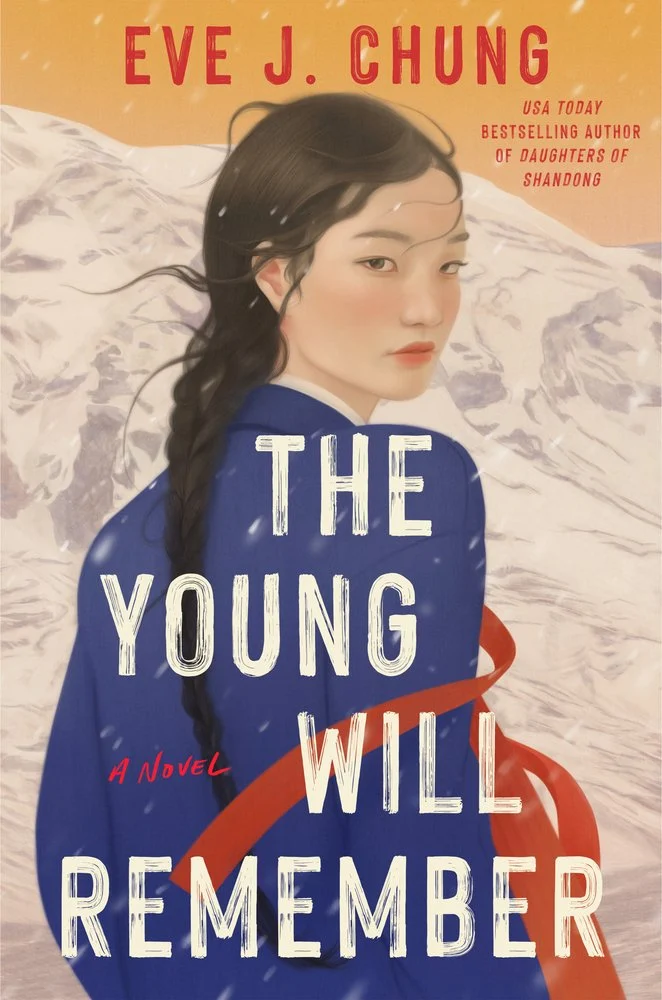
Readers expecting a conventional World War II narrative will find something more searching here. Chung’s novel is about the “Forgotten War” and threads together the personal and political—the human cost of conflict, the burden of inherited history, and the question of who pays the true price of war. Her writing dwells on the mothers and daughters whose lives have been shaped, and sometimes erased, by forces larger than themselves.
Chung’s debut, Daughters of Shandong, was intimate and propulsive, and The Young Will Remember expands her canvas, offering history as backdrop while inviting immersion into what it must have been like.
When I spoke with Chung over e-mail, we discussed what it means to write about the atrocities of war without replicating their violence on the page, the challenge of portraying ordinary lives under extraordinary pressure, and the responsibility artists carry when turning collective trauma into narrative.
Cherry Lou Sy: As I read the novel, I was constantly aware of Ellie’s racial and ethnic background as a Taiwanese American woman moving through spaces we don’t often imagine Asian Americans occupying—particularly war reporting in that era. I found myself checking my own assumptions about visibility and belonging. Did questions of plausibility or historical erasure shape how you imagined Ellie’s movement through the world? Were there moments where you felt you were writing against the archive?
Eve J. Chung: It was important for me to write an American war story with a main character who is a woman, and specifically, an Asian American woman. As someone who studies war and history, I’ve generally found it difficult to find media about the 1940s and 1950s that address how BIPOC Americans might have experienced WWII, and the Cold War after that. Ellie’s Taiwanese American heritage is crucial to this story, because she is able to blend in somewhat in North Korea, and speak both Japanese and Chinese as a result of Taiwan’s colonial history. Thus, Ellie can communicate with some Koreans and some of the Chinese soldiers.
In order to write Ellie, I had to combine research, because Ellie, as a BIPOC woman, faces at least two different forms of discrimination. For this, I relied on Maggie Higgins’s books, which detailed the difficulties she faced as a woman journalist during the Korean War, and also biographies of Hazel Ying Lee, which described how “orientals” were banned from many establishments. Segregation was still legal during the Korean War, but the Korean War was the first war with integrated troops. However, integration in the military was difficult to enforce—despite the presidential order, commanders in the field still insisted on segregating their troops. This background would be important for someone like Ellie, who is fully aware that different types of Americans receive different treatment from their government. Most notably, the Korean War takes place only four years after the Japanese internment camps closed, so this is a major fear for Ellie. Today, even though it has been 80 years since those specific camps closed, I still worry about being put in one—and indeed, these camps are already operating right now, for immigrants who are allegedly undocumented, many of whom were taken without due process, so even their status as being undocumented is questionable. It is the present that makes me care so much about learning from the past, and much of my motivation for telling these stories is to fight against the erasure of history.
CS: Alexander Chee has written about the ethical questions writers should ask themselves when writing beyond their own direct experience. What questions did you return to while writing this novel—especially as it moves across cultures, languages, and borders?
My motivation for telling these stories is to fight against the erasure of history.
EJC: Interestingly, my husband, who is half-Korean, read the first draft of my novel, and commented that things would be logistically easier if I made my character a Korean American who could speak Korean. I did not want to write as a Korean American [main character], because a Korean American would have a significantly different inner thought process during this war than a Chinese American. In the US, there is a tendency to lump East Asians together, and while there are certainly overarching cultural similarities, Chinese, Koreans, and Japanese people have important distinctions, especially when it comes to geopolitics. Perhaps because I myself am of Chinese descent, I was particularly interested in the interactions between the US and the Chinese soldiers and the rising rivalry between the countries that continues to this day. For background, I was an international relations major, with a masters in international criminal law, and I currently work in international human rights. The perspective that I wanted to write from, and what I had more to say about, was that of someone who is ethnic Chinese, in an era in which American and Chinese relations were so bad that they were physically in combat, and General MacArthur was pushing to drop nuclear bombs on Manchuria. Like Ellie, I have at times found myself torn between being proud of my American identity and my Chinese heritage, but also able to see some of our global conflicts through a different lens because of that duality—and sometimes, I am deeply ashamed of the violence that my government is perpetuating abroad.
Writing as Ellie felt natural to me, but there were other challenges. Though Ellie herself is not Korean, the setting was in Korea, and I had many Korean characters, so I wanted to be able to portray them accurately. I do have many Korean friends and extended family members (though most of them are either Korean Americans, or Koreans who immigrated to the US decades ago), so I interviewed my mother-in-law about her childhood in Seoul, and also asked other friends about their parents’ experiences during the war, and did additional research about refugees and survivors, not just from the Korean War but also from World War II and the Japanese Colonial period. I had Korean friends, including fellow authors, who were kind enough to beta read my drafts, and I also had a Korean linguist, who I found via my mother-in-law, check as well. Despite having tried my best, I am sure that there will be things that I got wrong—but I hope that they are minor, and that readers will know that it certainly wasn’t from lack of care or effort!
There is the added complication of time, since culture in the 1950s is also different from what it is now—though I didn’t feel obligated to make my characters conform to gender or social norms, because they, like most women’s human rights defenders, purposefully defied the standards around them. Still, I asked myself how each woman might consider her juxtaposition with the rest of society. I wanted to ensure there were references to how difficult it was for them to break the conventions that they did, and how irritating or daunting it might have been for them to constantly defend their decisions.
CS: I was struck by how multilingualism functions almost as a form of mobility in the book—Ellie’s ability to move, blend, and survive is tied to language. How did your understanding of the formation of the 38th Parallel and the emergence of modern nation-states shape the way characters encounter one another across linguistic and cultural lines?
EJC: I love languages—I’ve loved learning them, and have noticed how being able to speak certain languages has opened opportunities and friendships for me. For context, I am conversationally fluent in Spanish, French, and Mandarin, but also studied Japanese and Korean. Just as Ellie manages to get her posting as a foreign correspondent because she is trilingual, I’ve also been hired for certain jobs because of my language skills. In the human rights field, as with the journalism field, gathering information depends on being able to converse with the right people, whether those are witnesses, government officials, or partners. Speaking through an interpreter works, but it is different when you are able to connect with a person directly. Through her language skills though, Ellie is able to connect with some Koreans, and some Chinese soldiers.
However, just as language connects us, we also see, from various colonies around the world, how language is also a tool for dominance and erasure. I was conscious of this while writing this story. From interviews, I understood that older Koreans who grew up under colonial rule hated having to speak Japanese—so Ellie also couldn’t randomly strike up conversations in Japanese either with the average Korean at the time. Pastor Pak ends up being someone she can speak to safely because he too has such a varied linguistic background. Through Pastor Pak and Ellie, I also hoped to show how learning another language does also open one’s mind to other people, and other ways of thinking.
I consider divisions such as nationality and religion to be arbitrary.
CS: Imo’s character stayed with me, particularly as the novel reveals the moral cost behind her comfort and stability. Reading her made me think about how nationalism can both protect and obscure—especially when viewed from our current, globalized moment. How did you think about patriotism and complicity while writing her? Did your understanding of “our country” shift as the book took shape?
EJC: I think I wrote this story as a response to my understanding of “our country.” There are several conversations in this book that are meant for the diaspora reader. For example, Ellie’s conversations with Pastor Pak about those who stay to fight, versus those who run from war. I am the granddaughter of refugees, so my family fled war. There is, in many contexts, a tension resulting from that decision, and resulting loyalties and affiliations are also personal to the individual.
I consider divisions such as nationality and religion to be arbitrary. Often, we choose a particular religion because it is what we grew up with, and yet, so many wars are fought along national and/or religious divides. Imo is a character who is willing to reject her own privilege when she understands that it comes with a tremendous cost to others around her—a decision that arises from seeing the common humanity between people, versus whatever categories that we choose to divide ourselves with. This is a quality that is not necessarily uncommon, but unusual enough that her actions stand out. In many countries, criticizing one’s government for human rights issues is considered unpatriotic. I try to emphasize that true patriotism is holding your country to standards, and trying to make life better for everyone in the country. This being said, my concept of “country” and citizenship are very fluid, because my grandparents, parents, and I were all born in different countries, and the same for my husband, so our children are a mix of ethnicities. I don’t know if I would have a different understanding of nationalism had I been born in China, for example. In the book, Ellie too wonders the same thing—how her life might be if her parents hadn’t come to the United States—but then she also later acknowledges that maybe the world would be a better place, with less war, if more people were between worlds, and knew that it is natural to love across those boundaries.
CS: The novel carries a great deal of historical research, and I know parts of the story are connected to your husband’s family history. Why did this story need to be a novel rather than nonfiction or memoir? What could fiction hold that those forms couldn’t?
EJC: One of the main reasons I wanted to write about the Korean War is because it is a nexus between American, Chinese, and Korean history, which are the cultural influences of my family, and also offered points for me to tie in human rights issues that are important to Taiwanese people as well, namely justice for survivors of WWII military sexual slavery. My husband’s grandfather was a pastor from Pyongyang, and I based many aspects of Pastor Pak’s character on him, but otherwise the stories do not overlap much. My grandfather-in-law fled North Korea because he was concerned about being persecuted for his religion, and was already in the South when the Korean War began. He ended up meeting his wife in a refugee camp, and together they came to the United States. I did end up using snippets of what he told my husband and my mother-in-law, but more for research about how life had been during the war than for the storyline itself. This being said, I know that my husband’s grandfather had been working on a memoir for himself, but nothing ever came of it. Perhaps that will be something that one of his grandchildren (or maybe great-grandchildren) will do!
CS: One of the most powerful moments for me is Ellie’s encounter with Song Yun-Hee while she is living as Lin Yan-Xi—it felt like a kind of haunting, as though identity itself had become spectral. Do you see this kind of transformation and silence as specific to war, or as something shared by many survivors of trauma? Did you always know this would be how their paths crossed?
I hope that people who finish this book might become more committed to opposing war.
EJC: When the idea for this book first formed, I had thought about calling it The Changeling, because of Emma substituting Ellie for her daughter. The message that I wanted to get across can perhaps be best summed up by one of James Baldwin’s famous quotes: “The children are always ours, every single one of them, all over the globe; and I am beginning to suspect that whoever is incapable of recognizing this may be incapable of morality.” It ties into the atrocity of mass bombing, which makes it impossible to distinguish between military targets and civilians—and notably, from the US military record, there seemed to be cases in which there wasn’t any effort to do so. Emma, as a name, is a play on “Emma,” and she is indeed meant to be “mother” because I intended for her character to represent motherhood in war. All mothers suffer in war, whether directly from violence, or from the loss of their children. I believe that what some of the leaders of this world have done to mothers is unforgiveable, and this book is the result of my anger at the willingness of men—often old men—to sacrifice young lives for their own legacies, or even just to keep themselves from losing power. I always imagined Ellie and Yun-Hee meeting, and saw the ending of the book early on. Professionally, I have previously worked on the issue of enforced disappearances as a form of torture. This was a type of violation that I wanted to make clear with Emma, and show that not knowing what has happened to a loved one who was taken by the State is indeed a pain amounting to torture.
CS: What did you learn while writing this novel? And what do you hope readers carry with them after finishing it?
I learned a lot of military history! Before deciding to write this book, I only knew the basics about the Korean war but was ignorant of the scale of damage. Though I had known that Chinese soldiers had fought in Korea, I did not know about the Battle of Chosin—I did not know that at one point, there were more Chinese soldiers than North Korean soldiers in North Korea, or that Mao had been poised to send a million more men across the Yalu River. From a Taiwanese perspective, I had known that the Korean War was essentially what saved Taiwan from invasion. At that point, Mao’s soldiers had been preparing for amphibious assault, but the US crossing the 38th parallel led him to divert those soldiers to the North, where they eventually clashed with UN troops in North Korea. I hope that readers will leave this story with more knowledge about this history, which is relatively forgotten in the US.
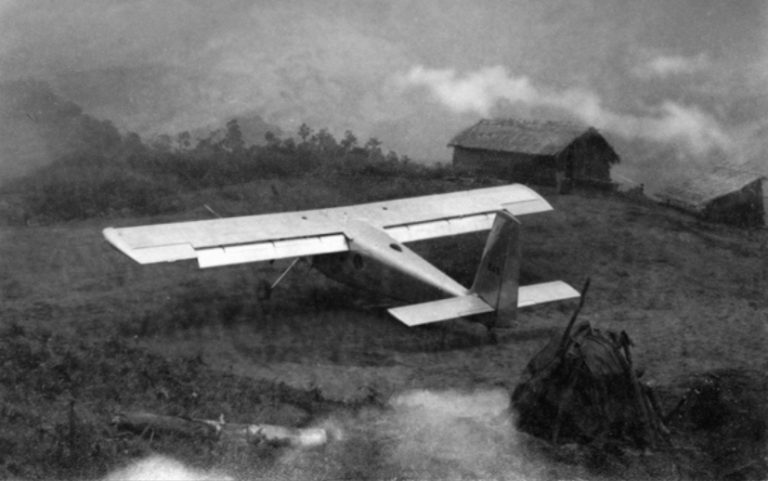
7 Books About Forgotten Wars
Jessica Pearce Rotondi recommends novels and non-fiction about conflicts that are left out of American textbooks
I also intended for this book to call attention to the lack of justice for survivors of sexual violence, then and now. Sexual violence remains the most difficult crime to prosecute because it is so normalized in this society—this idea that men will be men, and that certain powerful men never have to apologize. No one should be above the law, and the horror of sexual violence should never be minimized for the convenience of those in charge.
Lastly, I hope that people who finish this book might become more committed to opposing war. Lately, I find there are leaders who are willing to risk escalation, largely because they and their loved ones will not be at the front lines, and also to use war itself as a justification for holding onto power or saving themselves from prosecution for other crimes. It is always ordinary people who suffer more during armed conflict. In this sense, protecting our democracy is intimately tied with the prevention of war, because we must be able to hold our leaders accountable when they fail us.
The post A Novel That Refuses the Korean War’s Erasure appeared first on Electric Literature.




 Bengali (Bangladesh) ·
  English (United States) ·