

 3 weeks ago
23
3 weeks ago
23 
When my parents died, I expected grief. I expected flowers and casseroles, sympathy cards and awkward hugs from well-meaning acquaintances. I did not expect sticker shock.
According to the most recent statistics from the National Funeral Directors Association, the median cost of a funeral with burial is $8,300. The median cost of a funeral with cremation isn’t much better, at $6,280. Fortunately, my parents left some money behind—their friends really know how to run up a bar tab! But the bills don’t end with the memorial service. It cost around $300 to publish my dad’s obituary in the newspaper. It cost thousands of dollars to hire an estate attorney. While that money ultimately came from my parents’ estate, I’d never hired a lawyer before—I was just a 35-year-old baby, after all—so I was initially under the horrifying impression that I’d be on the hook. And I might have been, had my parents been in significant debt when they died. (Fear not: You don’t inherit your dead parents’ debts. But if their estate can’t cover the incidentals—like hiring a lawyer to deal with probate court—those bills might land in your mailbox.) I also had to pay an accountant to handle the taxes, shipping companies to send their belongings across state lines, and the county clerk’s office for dozens of death certificates.
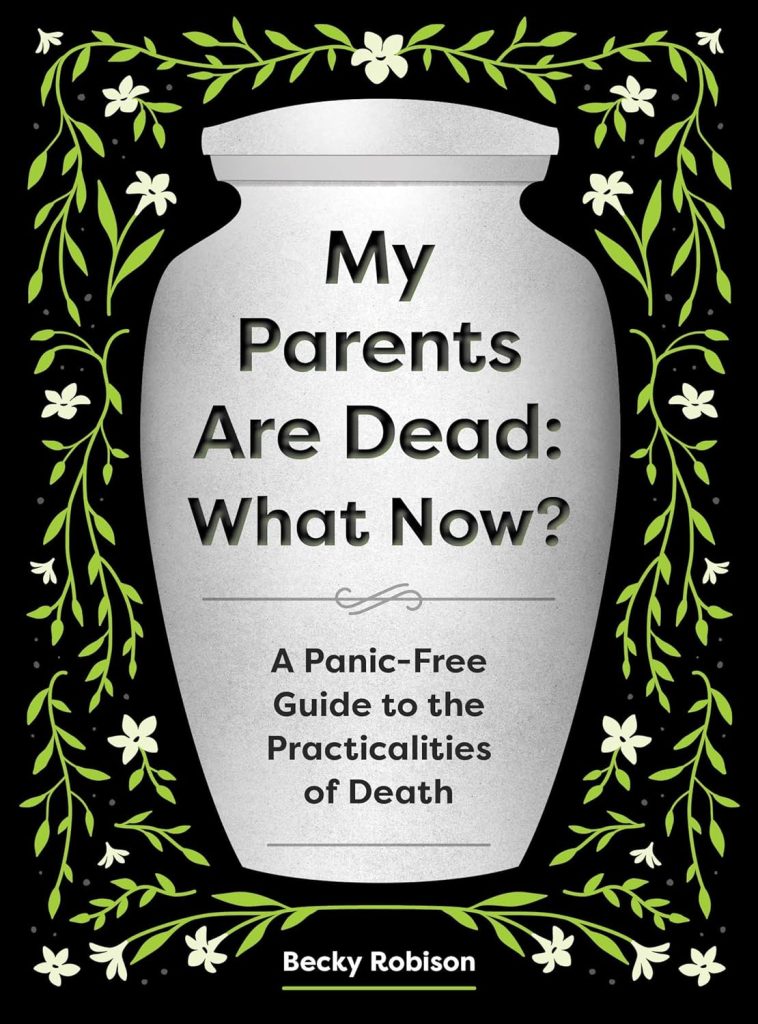
As it turns out, death ain’t cheap. And because I have extreme eldest daughter energy, I decided it was my problem to help everyone else navigate the maze of postdeath bureaucracy. When I was writing my how-to book, My Parents Are Dead: What Now? A Panic-Free Guide to the Practicalities of Death, I made sure to include information about covering the Grim Reaper’s associated fees, especially when mom and dad didn’t factor mortality into their budget. My research involved training as a death doula, auditing an estate law course, and interviewing morticians, accountants, attorneys, and more. And of course, I did plenty of reading. Here are some other books that show how the invisible hand of the market reaches far beyond the grave.
The American Way of Death Revisited by Jessica Mitford
Born into a conservative, aristocratic British family, Jessica Mitford defied her parents by embracing communism and eloping to Spain with her first husband to fight against Francisco Franco in the Spanish Civil War. That wasn’t the end of it; she later moved to the United States, married a civil rights attorney, and became a muckraker. Her most famous book is 1963’s The American Way of Death, which took the funeral industry to task for its exploitative behavior toward grieving families, from wildly inflated pricing to outright lying about legal requirements. Updated shortly before Mitford’s own death in 1996, her wry exposé remains depressingly accurate, despite the Federal Trade Commission’s efforts, beginning in the 1980s, to regulate the industry. Mentioning Mitford’s name is still an effective way to piss off many funeral directors.
Too Poor to Die: The Hidden Realities of Dying in the Margins by Amy Shea
Forget about a funeral—what happens when a bereaved family can’t even afford to bury their dead? And what about deceased people who have no family to claim them? Through a combination of reporting and personal essays, Amy Shea—author and cofounder of the Equitable Disposition Alliance—uncovers the patchwork system U.S. municipalities have cobbled together to lay the indigent dead to rest. Some cities bury the unclaimed dead, while others cremate them. Some cities hold mass memorial services, while others dispose of the bodies without ceremony. By weaving her own experiences of death and working with unhoused populations into the narrative, Shea forces us to consider not only how we plan (or don’t plan) for our own demise, despite our comparative privileges, but also what we owe others in our community—during and after their lives. No spoilers, but you shouldn’t skip the index.
The Unclaimed: Abandonment and Hope in the City of Angels by Pamela Prickett and Stefan Timmermans
While Too Poor to Die covers funeral poverty in the United States more broadly, Prickett and Timmermans focus on a specific case study in The Unclaimed: four Angelenos who join the ranks of the abandoned dead for dramatically different reasons. Their reporting reveals that the poor aren’t the only ones who end up in the care of the overworked and bureaucracy-burdened civil servants we meet in the book. Like many cities, Los Angeles prioritizes immediate family when it comes to claiming a body—and some families refuse to claim their dead. Even if friends or other communities wish to step in, they often aren’t legally allowed to do so. When I saw Pamela Prickett speak at last year’s Funeral Consumers Alliance conference, she emphasized another cause: fraying social ties. Our culture promotes self-reliance, which can easily turn into isolation. As communities dissolve, more people die alone.
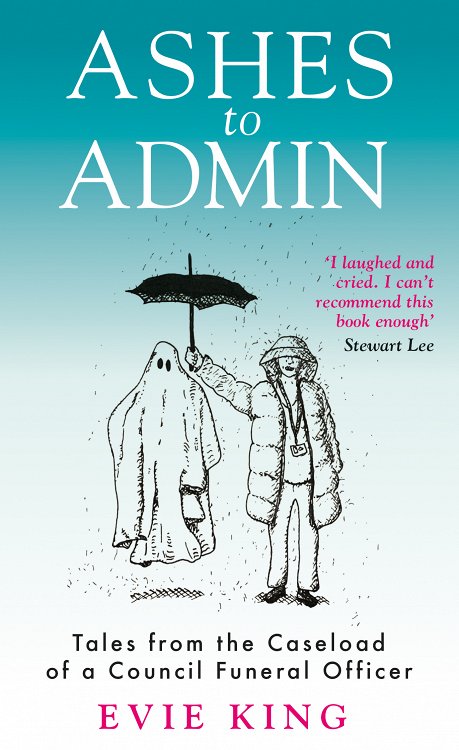
Ashes to Admin: Tales from the Caseload of a Council Funeral Officer by Evie King
Although it’s tempting to imagine Europe as a paradise with robust social programs, they have their own problems with indigent death across the pond. In the United Kingdom, the Public Health Act requires that local governments provide funerals for the unclaimed dead. Enter Evie King. Ashes to Admin tells the story of how King became a Council Funeral Officer and her efforts to learn more about the individuals who wind up in her caseload so she can give them the sort of sendoff they would have wanted—mortician meets gumshoe. As far she’s concerned, a government funeral doesn’t have to mean a bad funeral. King’s memoir also discusses the increase in Section 46 funerals due to rising funeral poverty in the U.K., as well as the undue shame families feel when they can’t afford to pay for these services themselves.
All the Living and the Dead: From Embalmers to Executioners, an Exploration of the People Who Have Made Death Their Life’s Work by Hayley Campbell
In addition to its high monetary costs, death requires a tremendous amount of unacknowledged labor. In All the Living and the Dead, Campbell speaks to the workers you might expect—embalmers and gravediggers, for example. But she also speaks to a longtime executioner who performs complex mental gymnastics to reconcile his profession with his faith. She speaks to investigators who recover and identify bodies—or parts of them—after major disasters. She speaks to an artist who casts death masks of the recently deceased. Campbell is honest about how these interviews and experiences impact her own mental health, which gives readers permission to acknowledge and work through their abjection as they encounter these ordinary yet astounding professions for the first time. For what it’s worth, I don’t think it’s healthy—or even possible—to be stoic while reading an interview with a bereavement midwife.
Body Brokers: Inside America’s Underground Trade in Human Remains by Annie Cheney
Think capitalism stops with your funeral? Think again! In Body Brokers, Cheney reports on the illegal-but-thriving trade in human remains—bodies (and body parts) that were meant to be cremated or donated to science instead sold for a profit to companies who want them for research, testing, and transplantation. She even includes a price list, in case you want to know how much your knee is worth (though the book was first published in 2006, so you’ll need to account for inflation). I want to stress that this is incredibly unlikely to happen to you or anyone you know. Most corpses end up exactly where they’re supposed to go. But as the recent grave robbing scandal at Philadelphia’s historic Mount Moriah Cemetery shows, the black market body trade didn’t end with the Resurrectionists of the 19th century—who Cheney also covers, in case you’re unfamiliar with the term.
From Here to Eternity: Traveling the World to Find the Good Death by Caitlin Doughty
If we’re not doing death the right way, who is? After rising to prominence through her “Ask a Mortician” YouTube series, Caitlin Doughty began to publish some very funny books that, in no small part, influenced my own work. In the second of those books, From Here to Eternity, Doughty does exactly what the title says. She travels to Japan and watches families use chopsticks to carefully place the bones of cremated loved ones inside an urn. She travels to Bolivia to meet Doña Ely’s collection of behatted skulls from whom visitors seek advice about their daily problems. And while many Americans may be disinclined to imitate the Torajan people of Indonesia and ritually exhume their ancestors every few years to check in, Doughty’s morbid anthropological journey proves that we don’t have to accept the consumerist streak running through America’s funeral and mourning customs. There are other options.
The post 7 Books That Reveal How Capitalism Is Coming for Your Corpse appeared first on Electric Literature.








 Bengali (Bangladesh) ·
  English (United States) ·