

We’ve written before at HuffPost UK about why a 2,700-year-old poem somehow continues to inspire us in the 21st century – Christopher Nolan’sThe Odyssey being the latest, and undoubtedly most expensive and star-studded, example of the book’s ongoing impact.
Of course, not all movies have to stay faithful to the original text (some even benefit from well-placed alterations).
And with 12,000+ sprawling lines of Homeric poetry in which the main character doesn’t even appear until book five to wrestle with, it’s no wonder the director felt overwhelmed by his adaptation at times.
So what stayed out, what was left in and what was added?
Here are 11 ways in which the film differed from Homer’s iconic work...
Christopher Nolan’s Odysseus is complicated and guilt-ridden
Speaking to HuffPost UK ahead of The Odyssey’s release, Jeffrey Carnes, an Associate Professor of Classics and Classical Civilisations at Syracuse University, pointed out that the Odysseus of the original text isn’t all that complex a character.
Since the movie, he said, there’s more “talk about Odysseus being a complicated man – I think Nolan leans into this aspect, as does [The Return, Uberto Pasolini’s adaptation of The Odyssey from 2024], but Homer’s Odysseus isn’t wracked by guilt or self-doubt”.
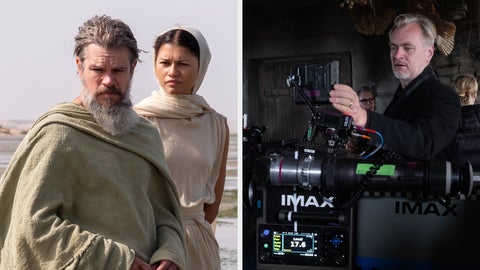
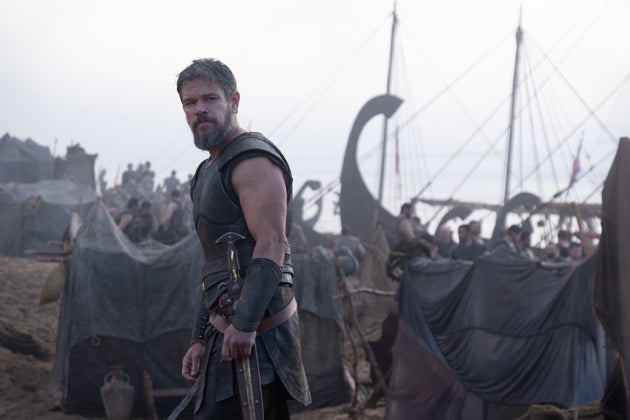 Matt Damon as Odysseus
“He isn’t complicated – he makes things complicated for the people who get in his way,” he continued.
In the film, though, Matt Damon’s character is riddled with remorse.
Indeed, speaking to Letterboxd, the film’s lead said that his character is someone “who, much like Oppenheimer, is wrestling with the price of his ingenuity and what it’s going to mean for the world”.
In the film, Tom Holland’s Telemachus misses a key visit
In the poem, Telemachus (Odysseus’ son, played by Tom Holland in Nolan’s movie) makes one more stop than we see on screen.
His film counterpart meets Menelaus (Jon Berthnal) and Helen of Troy (Lupita Nyong’o) in Sparta on the quest to find out more about his missing dad, which happens in the poem too.
But in Homer’s version, he takes an important step to see the frankly far cleverer King Nestor (who advised Agamemnon, played by Bennie Safdie) in Pylos before that. This king then directs him to Menelaus.
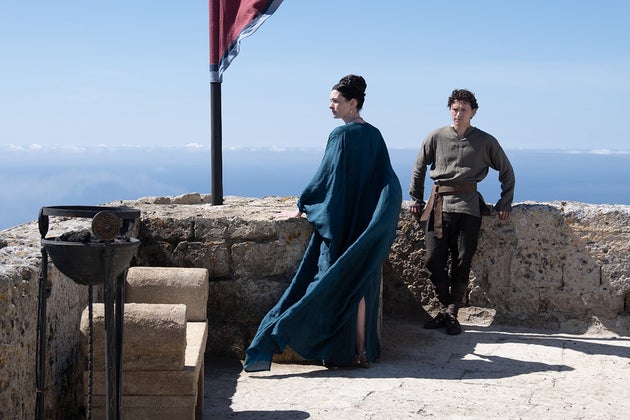 Penelope and Telemachus
The Gods are less present in the film
Speaking to Vulture, Nolan said that while he considered making the Greek gods as present in his film as they were in the text, ultimately, he shied away from the idea.
“Having these remote gods with chess pieces or whatever, all the things you’ve seen in the past, felt alienating,” he suggested.
“It’s not so much about trying to be realistic; it’s just trying to see the gods the way these characters would have seen them.”
Of course, the gods still have their roles in the blockbuster – Zendaya plays a manifestation of Athena, the god Odysseus explicitly calls upon most often.
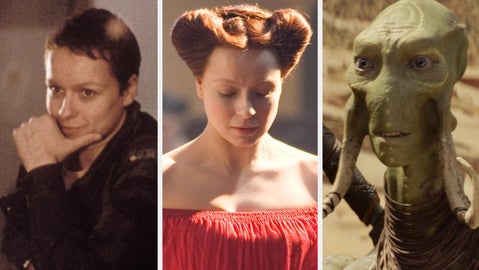
Charlize Theron also stars as Calypso, and Samantha Morton’s eye-wateringly impressive performance as Circe arguably stole the show.
But the rest of the gods, like Zeus and Poseidon, whose presences roared through the original poem, are quieter and more implied.
The character of Sinon is borrowed from another version of the story
Sinon, played by Elliot Page, is heart-rendingly betrayed by Odysseus early on in Nolan’s film.
However, this character is not actually in the original poem, nor does he show up in Homer’s other big title, The Iliad.
Instead, the character has been yanked from The Aeneid, a later Ancient Roman retelling of the story.
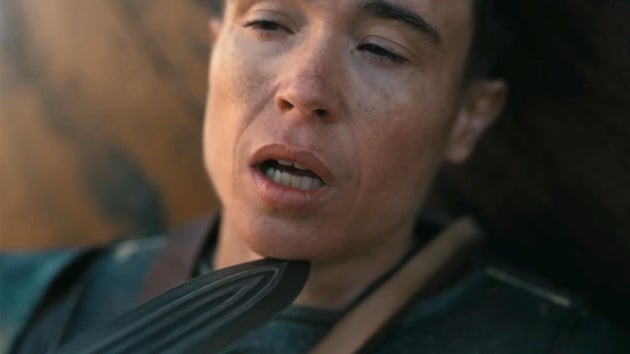 Elliot Page in character as Sinon in Christopher Nolan’s The Odyssey
This also means that the movie’s depiction of Sinon’s relationship with Antinous (Robert Pattinson) didn’t occur in the book, because, well, he wasn’t there yet.
They don’t meet in the Aeneid, either – this is strictly a Nolan special.
Odysseus’ parents are notably absent from Christopher Nolan’s film
Personally, one of the details I wish had been kept involved Odysseus’ dad.
His parents aren’t really mentioned in the film version, but Homer describes his protagonists’ ma and pa (Laertes and Anticlea) – in fact, Laertes is the original person for whom Penelope (Anne Hathaway in the film) weaves her intricate shroud.
In the poem, Odysseus’ return doesn’t just involve meeting his beloved Penelope again. He also reunites with his ageing father after years away from home.
And in a more tragic reconnection, he discovers his mother has died after seeing her during a trip to the underworld, too.
Penelope’s identity checks for Odysseus are different
In both the film and poem, Odysseus dons a disguise upon his return to Ithaca, so he can suss out how loyal the island’s residents are feeling after their king’s decades-long absence.
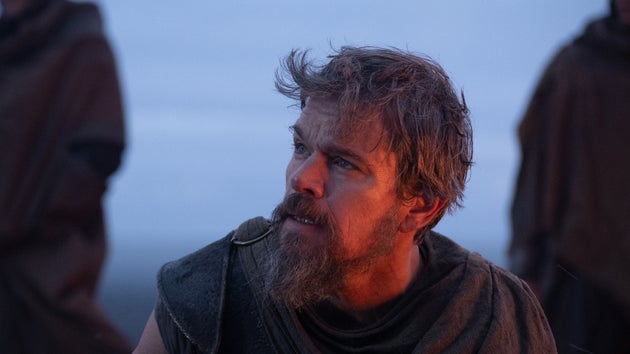 Odysseus removing the cloak hood he uses for disguise
That’s partly because Agamemnon, who was killed by his wife Clytemnestra after what seemed like a loving welcome home, advised him that not everyone may be as happy to see the monarch return as he might expect.
Nolan’s version of Penelope is unhesitatingly pleased to see her husband once she works out it’s really him (via the Athena statuette she gave him).
In the poem, though, she tests him by threatening to move their marital bed – to which Odysseus (correctly) replies that it can’t be moved, because it was built around an olive tree.
Clytemnestra and Helen are portrayed as twins in Christopher Nolan’s The Odyssey
In the new movie, Clytemnestra and Helen of Troy are depicted as identical twins (both played by Lupita Nyong’o). However, in the text, they’re only half-sisters.
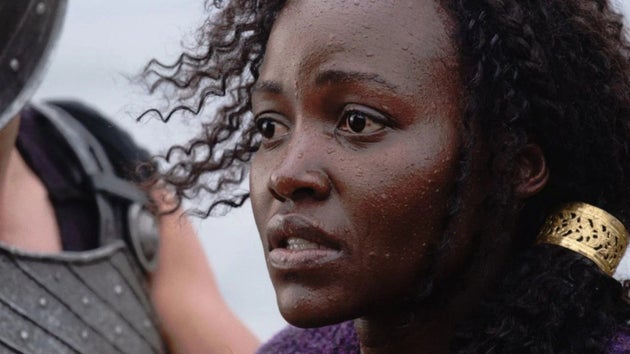 Lupita Nyong'o as Helen of Troy: she also plays her "identical twin" Clytemnestra in the film
Odysseus was more of a ‘nobody’ in the original text
In the poem, Odysseus calls himself “Nobody” (Outis in Greek) when fighting the Cyclops Polyphemus.
That means that when he attacks the giant, Polyphemus tells the fellow cyclops that have come running to his aid that “Nobody” is hurting him. Therefore, his would-be saviours leave him, and he dies at the hero’s hand.
Speaking on The Daily Show about his choice to leave the millennia-old joke out, Nolan said: “It’s a pun. Puns in translation are tough. I tried. It was not possible to work in it.”
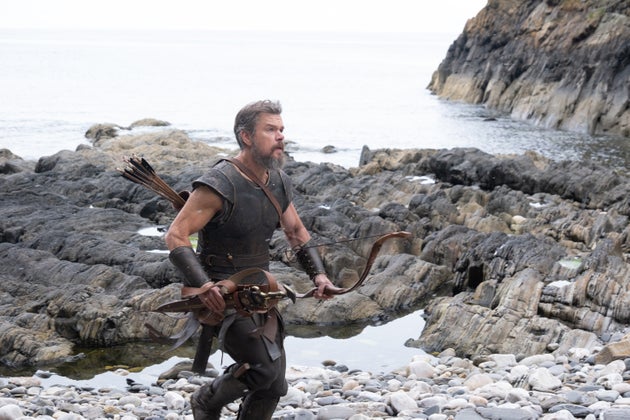 Odysseus
There’s less sex – and less (divinely sanctioned!) infidelity
If viewers of the film wondered whether Odysseus and Calypso ever got down and dirty on that beach, let the source text banish all doubt – they definitely did.
He was also “instructed” to sleep with Circe by the god Hermes in the poem (what’s a mortal man to do?).
There’s less lotus to go around
Speaking of Calypso, in the film, we see Odysseus devouring the lotus flowers she offers, which dull his memory.
But this is actually a mash-up of a couple of stories in Homer’s version. It combines Odysseus’ time with Calypso, and a separate section about his entire crew’s landing on an island of lotus eaters.
There, the whole boatload of warriors lost track of time and memory, and couldn’t find the motivation to go home without their leader’s corralling.
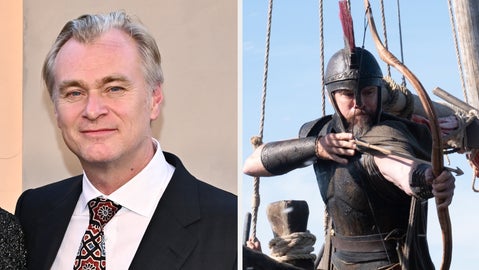
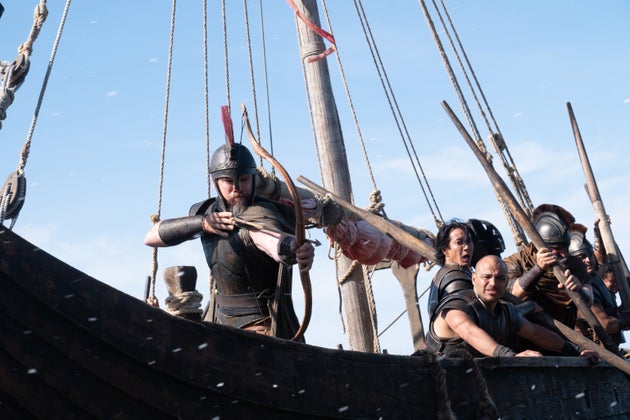 Odysseus' men
The poem ends with a more complete peace
The film’s satisfying ending sees Odysseus and his wife literally sail off into the sunset, where they’ll spend their lives in happy exile. Telemachus, meanwhile, becomes the rightful king.
But in the poem, the ending is both more bloodthirsty and more peaceful (and involves Odysseus’ dad).
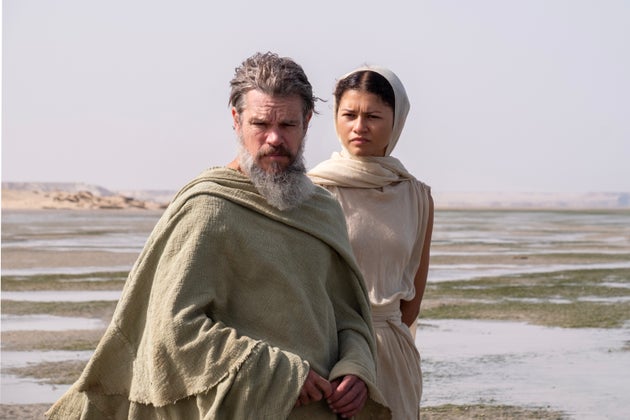 Odysseus and Athena
The father of Antinous (Penelope’s failed suitor, played by Robert Pattinson in the movie) mobilises a group against Odysseus, Telemachus and Odysseus’ dad, Laertes.
Before they come to blows, though, Athena – who consulted Zeus on the matter – calls for peace, and so Homer’s epic ends.
The Odyssey is in cinemas now.





 Bengali (Bangladesh) ·
  English (United States) ·