

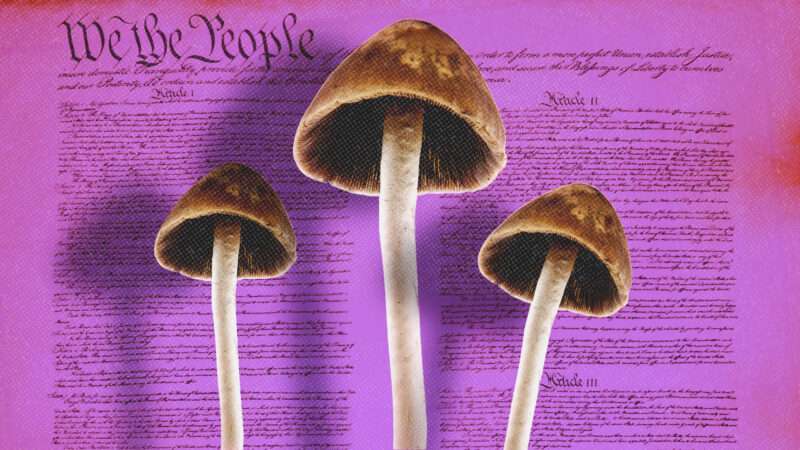
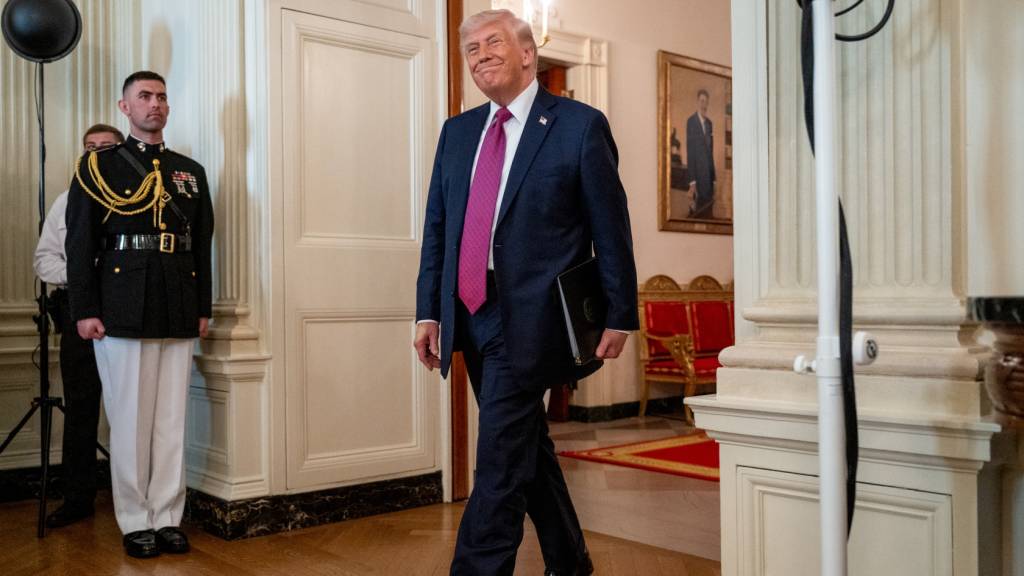
On Saturday, President Donald Trump issued an executive order aimed at "accelerating medical treatments for serious mental illness" by facilitating regulatory approval of ibogaine and other psychedelics that have shown promise as psychotherapeutic catalysts. Although the case for doing that is compelling, the medical model embraced by the president excludes most psychedelic use, which will remain illegal even if the "historic reforms" that Trump announced work as planned.
Trump takes it for granted that Americans should be allowed to use psychedelics only for reasons that the government recognizes as legitimate. Otherwise, they are criminals rather than patients, subject to arrest, prosecution, and potentially severe penalties for daring to assert sovereignty over their own bodies and minds.
The injustice of that policy is readily apparent when people use psychedelics in ways that manifestly improve their lives. Many combat veterans, for example, have found that ibogaine, which is derived from the root of an African shrub, provides dramatic relief from the constellation of problems known as post-traumatic stress disorder (PTSD).
"It absolutely changed my life for the better," former Navy SEAL Marcus Luttrell, whose Afghanistan memoir inspired the 2013 movie Lone Survivor, remarked as Trump signed his executive order. "I was reborn," says Luttrell's twin brother, Rep. Morgan Luttrell (R–Texas), also a former Navy SEAL. "It is one of the greatest things that ever happened to me."
Because ibogaine is banned in the United States, the Luttrell brothers had those transformational experiences at a clinic in Mexico. So did the 30 subjects of a recent Nature Mental Health study, which found that ibogaine, combined with magnesium as a safeguard against the drug's cardiac side effects, "safely and effectively reduces PTSD, anxiety and depression and improves functioning in veterans" with traumatic brain injuries.
Research on ibogaine, which also is reputed to be remarkably useful for people struggling with drug addiction, is relatively limited so far. But the evidence supporting the use of MDMA (for PTSD) and psilocybin (for depression), both of which the Food and Drug Administration (FDA) has designated as "breakthrough" therapies, is strong enough that they may soon be approved as prescription medications.
If that happens, some people who could benefit from these drugs will be able to use them legally, provided they can obtain a diagnosis and a prescription. But where does that leave all the psychedelic users who can't meet those requirements?
In a 2023 survey of psilocybin users, the RAND Corporation found that the most common motivations included "fun" (59 percent), "improved mental health" (49 percent), "personal development" (45 percent), "curiosity" (43 percent), and "spiritual growth" (41 percent). Although very few of those people would qualify for the medical exception that Trump advocates, that does not mean their reasons for using psilocybin should be dismissed as frivolous, let alone that they should be treated as criminals.
A forthcoming Cornell Law Review article argues that psychedelic prohibition infringes on the First Amendment right to "epistemic discovery," which "focuses on the social and material processes through which humans gain and share knowledge—a pursuit at the heart of modern free speech law." Columbia law professors Jeremy Kessler and David Pozen note that "psychedelics afford many users access to information that is difficult, if not impossible, to obtain through other means."
That information, Kessler and Pozen write, "takes a variety of forms: novel images, surprising insights, unsurprising insights that are given new depth, and even 'messages' from submerged aspects of one's own consciousness. Across cultures, 'people frequently receive information of great personal significance' when they consume psychedelics, and then continue to find it significant for years afterward."
Such experiences are not fundamentally different from the ibogaine-assisted revelations that Marcus and Morgan Luttrell credit with turning their lives around. But by and large, they are not the sort of psychedelic uses that will ever be blessed by the FDA, which suggests the problems with empowering federal bureaucrats to decide who can use these tools of self-exploration.
© Copyright 2026 by Creators Syndicate Inc.
The post Trump's Embrace of Psychedelic Therapy Leaves Most Users on the Wrong Side of the Law appeared first on Reason.com.



 Bengali (Bangladesh) ·
  English (United States) ·