
 19 hours ago
2
19 hours ago
2 
Myths rarely disappear. They mutate, migrate, and reappear in new forms. In contemporary fiction, their presence is often subtle, embedded in the structures of narrative or the emotional architecture of characters wrestling with forces larger than themselves.
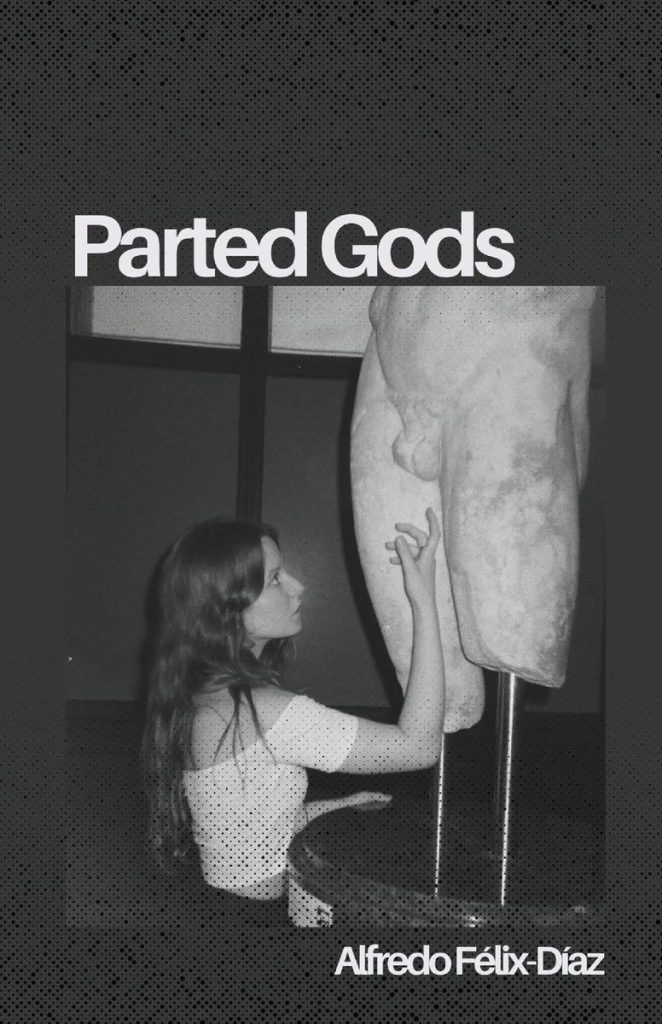
In Parted Gods, Alfredo Félix-Díaz builds a novel that moves between the ancient and the modern through the lives of fraternal twins Antonella and Federico Adamo—a painter and a jazz pianist whose artistic ambitions unfold across Berlin, Sicily, and New Orleans. Drawing on classical mythology while remaining grounded in contemporary artistic life, the novel brings music, painting, and literature into constant conversation. The result is a narrative attentive not only to plot but to rhythm, image, and artistic inheritance.
Félix-Díaz comes to the novel with a background in theater and screenwriting—disciplines that emphasize movement, dialogue, and visual composition. Those influences shape the structure of Parted Gods as much as myths do. The novel’s scenes often feel staged and the prose carries a musical cadence that mirrors the inner lives of its characters.
I sat down with Félix-Díaz to discuss the novel’s relationship to myth, how music and visual art shape narrative voice, and what happens when artists working across disciplines bring those sensibilities into fiction.
Summer Stewart: Alfredo, myth has persisted as a structural backbone in literature for centuries. What drew you specifically to the “hermaphrodite” myth and mythic duality while writing Parted Gods?
Alfredo Félix-Díaz: I wanted to start from the biggest cliché about love. Baudelaire used to say that there is nothing more beautiful than a cliché or a common saying—the first thing that approaches people before a “forest of symbols” opens up. Everyone talking about love says things like, “Oh, my other half” or “my better self.” Yet, when you really go into the myth, as my characters do, a huge world opens up. It implies a sense of history. My characters are international beings—Sicilians with a conflicted past. Their father is Argentinian and their mother is Austrian; they feel they have no “path,” but they have the path of this mythical past: the idea that we were once powerful beings joined together, but we were split apart.
It also speaks to a present that is relatable to all of us—the feeling that we are split within ourselves and split from the other. I’m very interested in right- and left-brain dynamics and the asymmetries between them. The myth puts my characters into a dramatic situation. We want to rejoin ourselves; we want to be powerful like the gods.
In Plato’s Symposium, this myth is told by Aristophanes, a comic poet. It’s not presented as a “true” final solution for what love is; it’s a bit grotesque. It goes against the ideal of Greek beauty. We were “monsters” before we were “complete.” This simple cliché about love has layers of darkness, an aspiration toward the divine, and an animalistic side. It implies the things that divide us from the gods—like the lack of “mating seasons,” which leads to the necessity of social controls like the taboo against incest. All these layers were buried in a myth that seems so accessible.
SS: Before turning to the novel, you worked extensively in theater and screenwriting. How do those disciplines shape the way you think about pacing and scene construction?
AFD: A lot of that is subconscious. In theater and screenwriting, you are used to having a “problem,” or something happening in every scene—even if it’s just someone trying to cross a room filled with plants and people.
I always like my characters to have “stage business” or props. For example, I have an image of Federico putting butter on toast while speaking to his sister. I don’t always dare to have a conversation if there isn’t enough stage business to ground it.
However, I tried to move away from cinema in terms of the “embodied self.” When Antonella gains awareness of her brother’s memories, she gains awareness of what he was feeling in his body. That is something I can’t easily transmit in cinema or theater. I leaned into that to avoid making a “cinematic” novel where you are just seeing things from the outside.
The moment you have twins, you get the friction that we usually only have inside ourselves.
SS: Antonella and Federico are both artists navigating ambition and rivalry. What does the dynamic of twinhood allow you to explore, regarding artistic identity, that might not emerge with a single protagonist?
AFD: It allows for dialogue and evades the “echo chamber.” Artists can be very Whitman-like: “I am myself and I am my universe.” The moment you have twins, you have a divided consciousness. Are they one? Are they two? You get the friction that we usually only have inside ourselves.
When you’re writing, is it your brain? Your feelings? Your fear? Your desire to please a reader? With twins, I can take that inner turmoil and dramatize it. For me, drama is always at least two people in dialogue. One person looking at themselves in a mirror doesn’t interest me as much.
SS: The novel moves through Berlin, Sicily, and New Orleans. How did those environments shape the emotional atmosphere, and what led you to choose them?
AFD: I was living in Berlin as I wrote the novel. I grew up in Mexico City and San Diego—San Diego is so spread out and Mexico City is a “monster”—but Berlin is complex and big enough to sustain everything I could imagine. I could contain the whole map in my head like a stage.
Regarding New Orleans, I identified with Federico’s approach because I’ve only been there a few times. He enters it as a complete foreigner, though he has “been there” through his music. Jazz and the piano playing he admires happened there, partly in reality and partly in his imagination. That gives it an unsettling energy.
Sicily is my favorite part of the novel, yet I have never been there. It represents an aspirational world. I love ancient Greek culture, and so much of it was in Sicily. For me, it is a world of nostalgia for something you lost but never actually had. Italian friends who read the manuscript couldn’t believe I’d never been. I compare it to the birth of opera or the violin in the Renaissance; they were created by people trying to recreate the sound of the ancient Greek lyre without actually knowing what it sounded like. From that imagination, something completely new was born.
SS: Music feels embedded in the prose itself. Do you think of scenes in terms of musical composition
I write novels like poems—which is a huge struggle.
AFD: Not exactly, because I’m not actually good at music! It’s a point of frustration for me. I had a piano at home as a kid, but I didn’t start classes until I was 15 or 16, which felt too late.
What you’re feeling is likely that I am a poet, and I think like a poet. I write novels like poems—which is a huge struggle. I wish I could just sit down and write a terrible first draft to get the story out, but I can’t. Every section I start, I have to find the perfect phrase, the right accent, the right alliteration. It’s tiresome, but it creates a musicality that comes more from poetry than from a technical knowledge of music.
SS: Antonella’s work as a painter introduces another artistic language. How did visual art influence your construction of imagery?
AFD: It was exciting to tell the story through the eyes of a painter. It gave me a lot of liberties. She is the narrator, and even when she’s telling Federico’s story, she has an aesthetic vision. She cares about color, shape, and composition.
I’ve written catalogs for sculptures before, and I love interpreting the world through that lens. Again, it’s a bit of a “frustrated artist” thing—I painted a bit as a teenager but wasn’t very good at it. It’s nice to take those frustrations and work through them in fiction.
SS: Many novels about artists focus on success or failure, but Parted Gods seems more interested in the psychological cost of creating. What questions about ambition were you exploring?
AFD: The concept of “success” is actually quite off-putting to me. Having lived in Europe for a long time, I feel this is a Central European novel. There, people aren’t as obsessed with the concept of success as Americans are. I find it strange when people track how much money a movie made on its opening weekend—why do we care? That’s for industry magazines.
The poet Paul Celan once asked the poet Ingeborg Bachmann why she wanted to go to America, saying he was puzzled by a place where experience is measured by success. I share that sensibility.
The twins’ ambition is deeper and perhaps more “dangerous” than success: It’s the act of creation itself—the “peak experience.” It’s about stealing fire from the gods. When you are possessed by the muse, you feel a sense of power. That “high” of inspiration is their true ambition.
SS: You engage with classical mythology without it becoming a simple retelling. How do you see myth functioning in contemporary fiction?
AFD: I think the “hero’s journey” has been cheapened by Hollywood. In ancient Greek myth, a hero isn’t necessarily someone who saves people; a hero is someone who has the capacity to suffer.
What if these myths were not myths, but facts occurring in our own bodies?
I try to do what Flannery O’Connor did with the Catholic religion. Myth was religion. I want to treat myth as an “incarnational” art—as if it were real. There is a famous anecdote about O’Connor where someone called the Eucharist a “wonderful symbol,” and she replied, “If it’s a symbol, to hell with it.” For her, it was a fact.
I wanted to make Greek myth a literal, incarnational fact. In Western art, art has often taken the place of religion. I wanted to take this to the level of the “grotesque,” asking: What if these myths were not myths, but facts occurring in our own bodies?
SS: Do you think of Parted Gods as engaging with a particular literary lineage?
AFD: Certainly Flannery O’Connor, but also the Impressionists like Joseph Conrad and Ford Madox Ford. They always used a narrator who was part of the story. Antonella is a bit of an unreliable narrator, but only because she filters everything through her own eyes. She isn’t lying to the reader; she’s telling the story to herself.
8 Books Reimagining the Monstrous Women of Mythology and History
These diverse retellings will leave you reconsidering who the real villain is
I also have to mention Hermann Hesse. I read all his novels as a teenager and then forgot about them, thinking they were “teenage” readings. But looking back, my focus on duality and twins is very much like a Hesse novel—like Narcissus and Goldmund or Steppenwolf. I also touch on alchemy toward the end of the book, which also ties back to that Jungian influence found in Hesse.
SS: Is there anything else you’d like to add about the “incarnational” aspect of the book?
AFD: I don’t care much for “newness.” Homer is the peak; we’ve been going downhill since then! But I think the idea of bringing myth into the body is what makes this work.
Painting has always done this. Antonella values Velázquez. In his paintings, you see Hephaestus working in his smithy. If no one told you he was a god, you wouldn’t know—he looks like a contemporary worker. Rembrandt’s Artemis is a huge, physical woman who has nothing to do with the “ideal” Greek form. Painting brings the gods into the present of the painter. I wanted to do that with the novel: to give the myth flesh.
The post This Debut Novel Transforms Myth Into Flesh appeared first on Electric Literature.




 Bengali (Bangladesh) ·
  English (United States) ·