

If the number of satellites in Earth's orbit exceeds 100,000, humanity may lose its ability to study the universe from the planet's surface.
That's the conclusion of a study conducted by astronomers from the European Southern Observatory (ESO) which warns that if existing plans to deploy a million orbiting data centers and tens of thousands sun-reflecting mirrors were to come to fruition, the world's most cutting-edge astronomical telescopes may as well be mothballed.
"We can reach conditions where basically, there is no point in operating the telescopes anymore because all the data will be corrupted. All. 100 percent," Olivier Hainaut, the director of operations at ESO and lead author of the study, told Space.com.
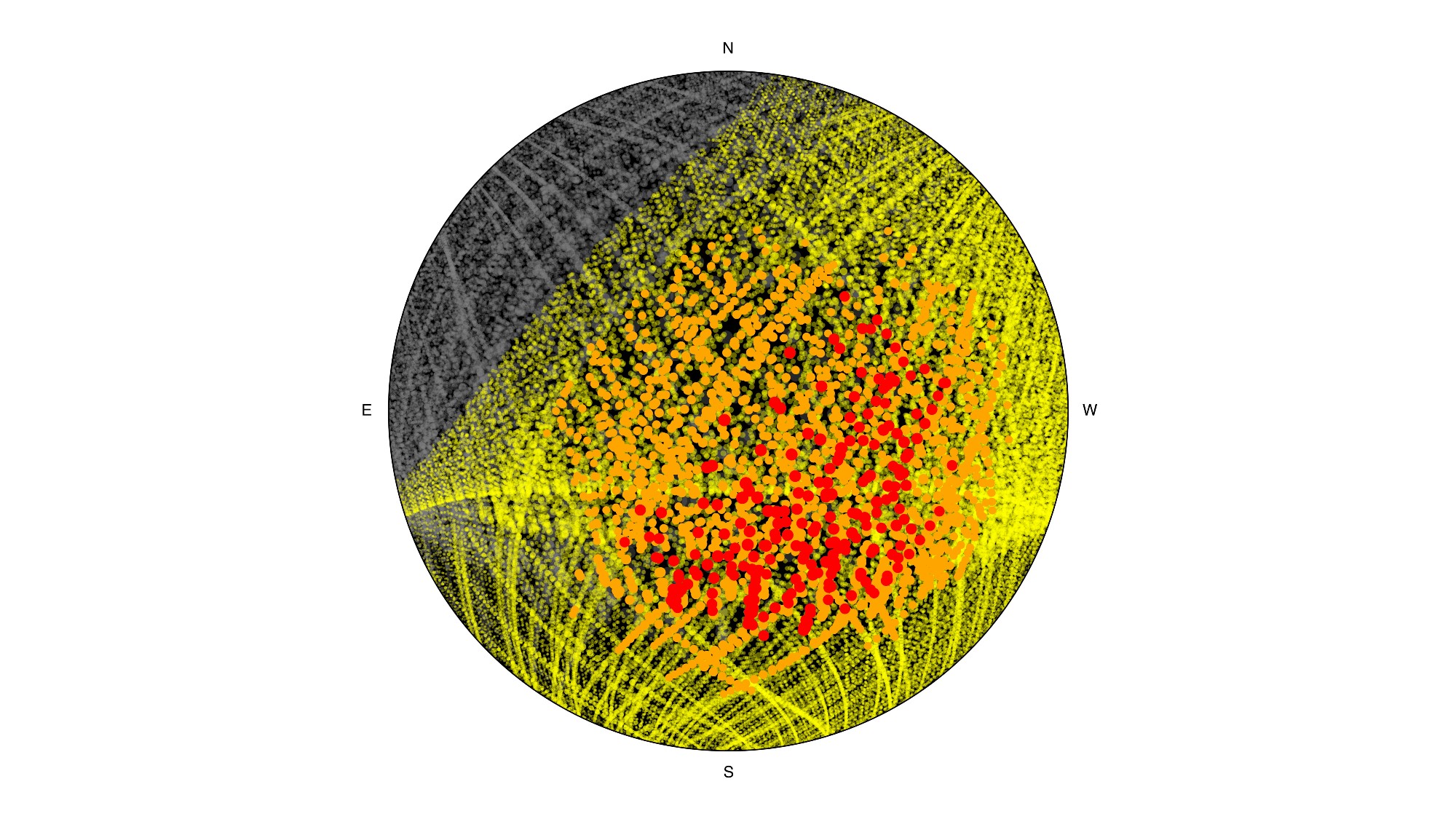
Hainaut used computer modelling to understand the effect of varying numbers of satellites of different brightness levels on astronomical observations. The modelling showed that if 100,000 satellites were to orbit the planet and all were barely visible to the naked eye, astronomy could cope. If those satellites were brighter, however, around magnitude 7 or below in astronomical terms, astronomical research would become more difficult and costly.
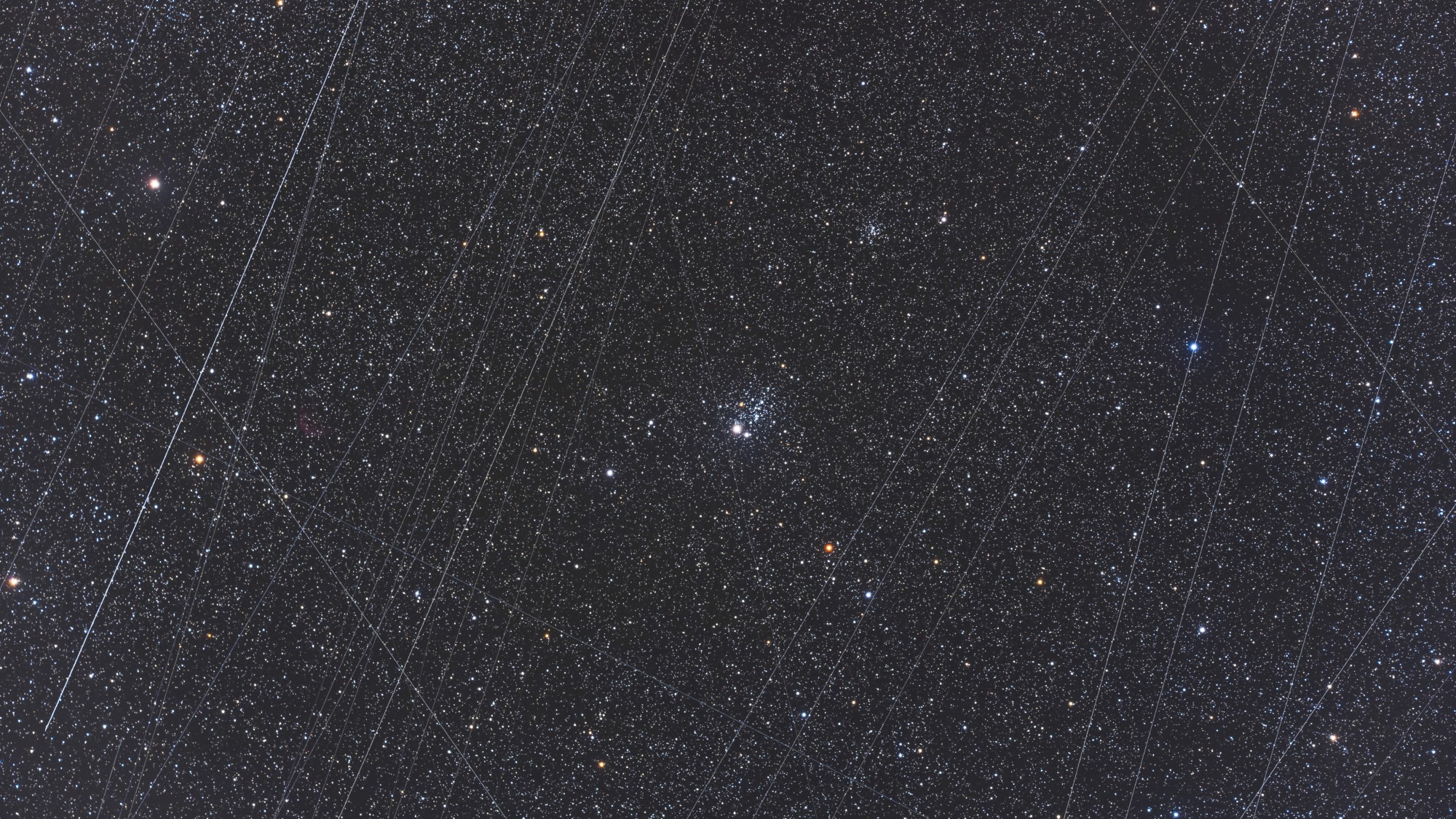
Satellites affect the sky in two ways. Firstly, the sunlight they reflect increases the overall brightness of the sky, creating light pollution. Second, brighter satellites also create streaks in telescope images that mar observations.
"If you increase the light pollution, it means that you will see fewer natural stars and you will see more of these satellites," said Hainaut . "For telescopes that means increasing exposure times. If you have a 10 percent increase in light pollution, you have to increase all the exposure times by 10 percent. It scales directly. For a 100 percent increase in light pollution, you have to increase all the exposures by 100 percent."
The exposure time increases mean that less science gets done and every observation becomes more expensive. The International Astronomical Union says that an increase in light pollution by more than 10 percent compared to natural dark sky conditions is an astronomy killer.
As light pollution has spread with urban development over the past two centuries, astronomers have increasingly been retreating into ever more remote locations. Many of the world's most expensive telescopes, including the Vera C. Rubin Observatory and the ESO's Very Large Telescope and Extremely Large Telescope, are located in Chile's Atacama Desert where the night sky is still nearly perfectly dark.
But while it is possible to retreat from the city lights, there will be no escape from satellite light pollution, Hainaut warns. You may be visiting a tiny village in Africa, camping in the Australian outback, or on an expedition to Antarctica or the Amazon rain forest, and your sky would still be brightened by the satellites.
"What they propose would make our observations close to impossible"
What is worse, if plans to launch thousands of sun-reflecting mirrors, as proposed by the U.S. company Reflect Orbital, were to come to fruition, the sky would transform completely.
Headquartered in Hawthorne, California, Reflect Orbital's vision is to deliver light on demand to solar power plants at night and to illuminate warzones and areas struck by natural disasters. The company has applied to the Federal Communications Commission (FCC) to launch a demonstration space mirror into orbit later this year.
The satellite, called Eärendil-1, is 59 by 59 feet (18 by 18 meters) in size, and should be the first in a constellation of 50,000, if things were to go according to Reflect Orbital's plan. "Reflect Orbital is really bad," said Hainaut.
"What they propose would make our observations close to impossible. These are super bright satellites."
Astronomers have calculated that each Reflect Orbital space mirror would be brighter than the full moon if observed from the area where its beam is aiming. But the satellites would be visible regardless of where their beams are aiming to everybody around the world.
"Even outside the beam, the satellite will appear brighter than the planet Venus, which is the brightest object in the night sky after the moon," said Hainaut. "If they were to launch 50,000 of these space mirrors, there would be many hundred or even a few thousand of these super bright objects visible to observers anywhere on Earth."
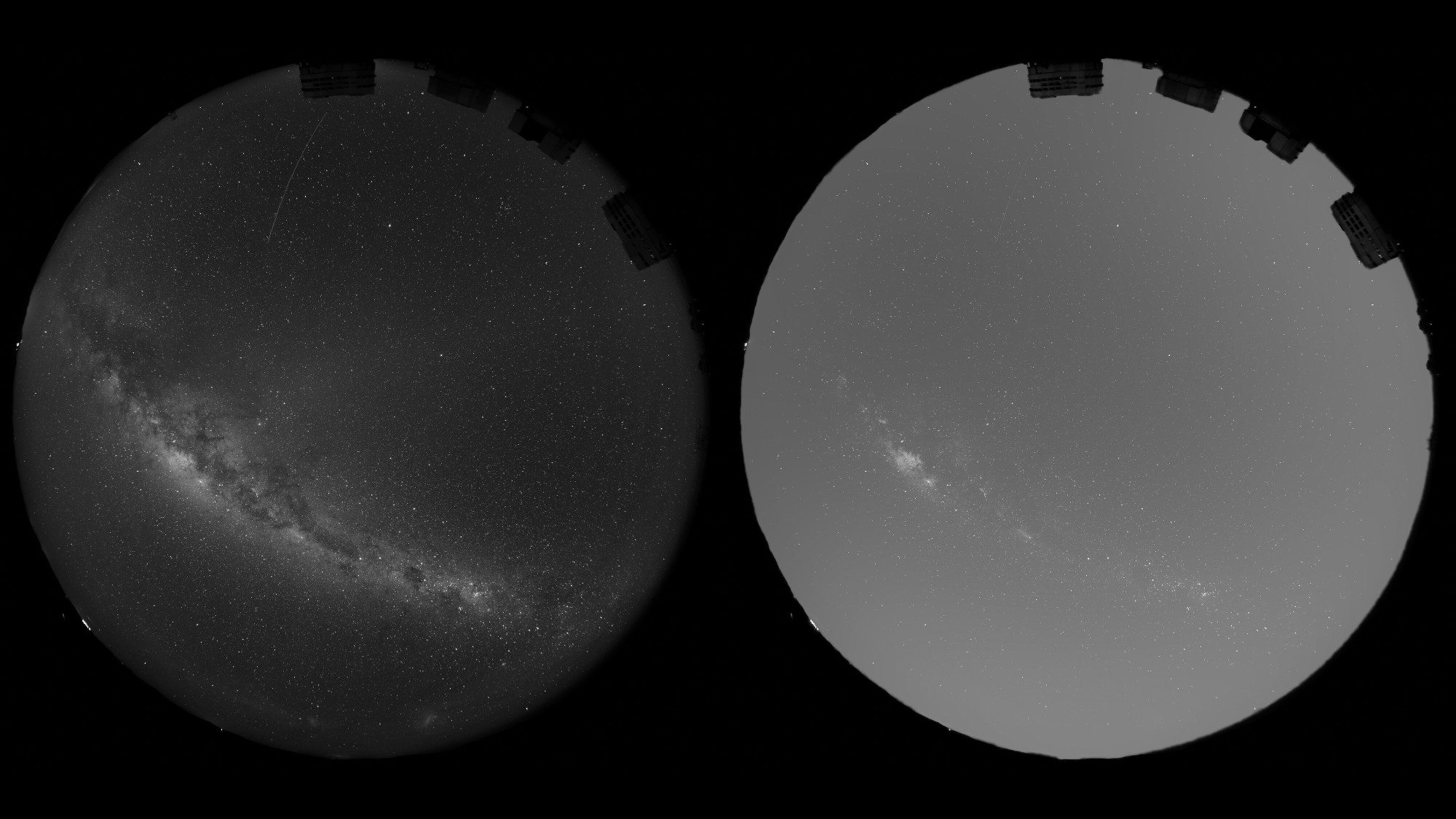
Today, in areas with relatively low levels of light pollution, one can only see a few hundred bright stars in the sky. That means there would be more satellites than stars visible in the sky anywhere in the world with the full Reflect Orbital constellation in orbit. The constellation would also brighten the night sky by up to 300 percent, Hanuit calculated.
"If you increase the light pollution, it means that you will see fewer natural stars," said Hainaut. "And you will see more of these satellites."
Hainaut said that SpaceX's planned orbital data centers, despite the fact that they feature 230-foot-wide (70 m) solar panels, would be much dimmer and about as visible as Starlink satellites.
"From the available information, we see that these satellites have been optimized to minimize the impact as seen from the ground," Hainaut said. "The reflective surfaces are tilted away from Earth and the satellite itself is very narrow, pointing to Earth with its small end."
Still, overall, satellites operated by all operators around the world should remain below 100,000 satellites combined if astronomy is not to suffer, scientists caution. SpaceX is currently awaiting FCC's decision on its application to launch one million orbital data centers.
Currently, some 14,000 satellites orbit the planet.
"For astronomy, this would obviously be catastrophic."
Robert Massey, the Deputy Executive Director of the Royal Astronomical Society, said Hainaut's findings were "not hugely surprising."
"For astronomy, this would obviously be catastrophic," Massey told Space.com. "It's very difficult to imagine how you could mitigate that on this scale. But I am also concerned about the public impact. The public has not signed up for having an entirely transformed sky."
Massey pointed out that based on the international law governing space activities, it is perfectly legal for a U.S. organization to be single-handedly deciding on something that would impact the entire world.
"If it's agreed by the FCC, this will be deeply regrettable," Massey said. "This will say that we are in a world where large corporations can determine the view of the sky above our heads, just as they can transform the environment on Earth. But the transformation of the environment on Earth is subject to pretty tight regulations."
The Trump administration has been taking steps to reduce the burden for satellite operators to prove their projects will have no negative environmental impacts. Currently, no environmental review has to be undertaken by the FCC or private companies before satellite applications go for approval.
Betty Kioko, an institutional affairs adviser at ESO, said the United Nations Outer Space Treaty, signed in 1967, states that the responsibility for space launches is with the nation states where those space objects are registered. She, however, added that the Treaty requires states to use space "for the common good of humankind."
"We now have to wait for the FCC to decide, because ultimately, the Outer Space Treaty was written at a time before we envisioned access to space by private entities."
ESO is among hundreds of organizations from around the world that have filed objections to the SpaceX and Reflect Orbital applications.
The study has been published in the journal Astronomy & Astrophysics.




 Bengali (Bangladesh) ·
  English (United States) ·