
 1 month ago
41
1 month ago
41 
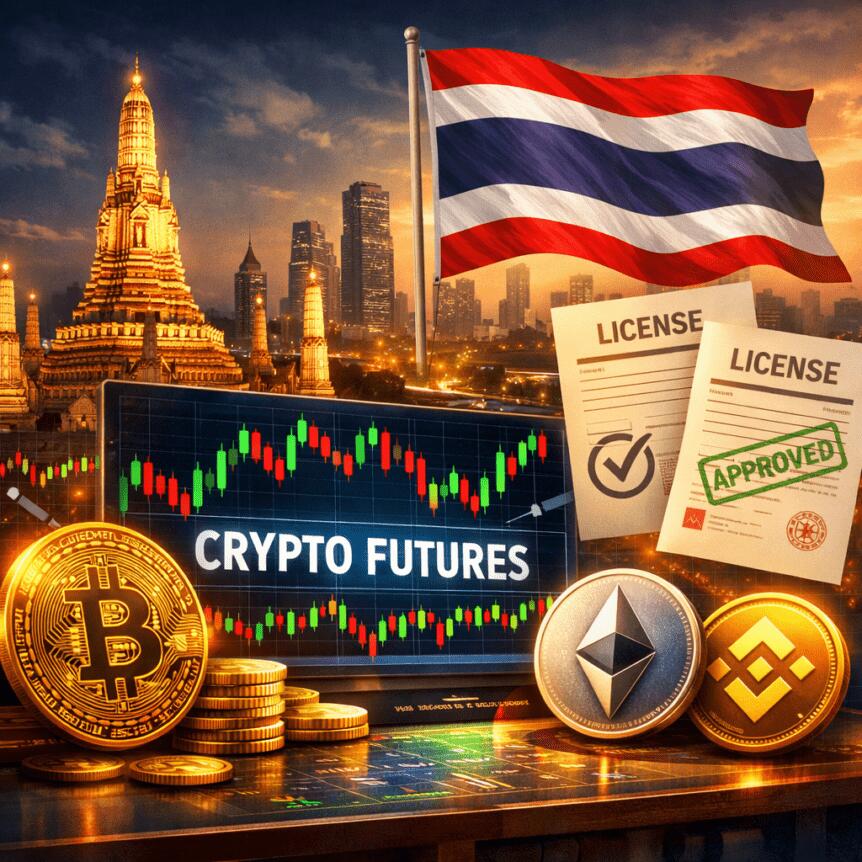
The Thai Securities and Exchange Commission (SEC) has opened a public consultation on proposed rule changes aimed at letting licensed digital asset businesses apply directly for derivatives licenses. The move would remove the current requirement to establish separate entities for derivatives activities and would extend the use of digital assets as eligible underlying assets for futures contracts. The proposed framework also introduces more stringent measures to manage conflicts of interest and bolster supervisory oversight. Public feedback is welcome through May 20, 2026, and will shape the final rule set.
According to the Thailand SEC, the revisions are designed to broaden access to the country’s derivatives market while safeguarding investors. By enabling existing license-holders to extend into derivatives within their current corporate structures, regulators hope to lower entry barriers for crypto firms seeking to offer hedging tools and other risk-management products. The changes also aim to elevate standards for derivatives exchanges and clearing houses in line with international practice, creating a more coherent and resilient market infrastructure.
Key takeaways
Thailand proposes direct derivatives licensing for licensed crypto firms, eliminating the need for standalone entities. Digital assets would be recognized as eligible underlying assets for futures, expanding the scope of Thailand’s derivatives market. New rules emphasize conflict-of-interest controls and stronger regulatory oversight of exchanges and clearing houses. Public comment runs through May 20, 2026, with decisions likely to influence regional standards and market access.Thailand’s plan to streamline crypto derivatives licensing
At the heart of the proposal is a practical shift in how crypto firms can participate in the derivatives segment. Instead of having to spin up a separate corporate vehicle solely to handle derivatives activities, licensed digital asset businesses could apply to offer derivatives services within their existing entities. The SEC frames this as a way to reduce bureaucratic friction while keeping activities under tighter regulatory scrutiny, rather than loosening controls.
The proposed regime would also codify the use of digital assets as underlying assets for futures contracts, a step that regulators argue will modernize the financial toolkit available to Thai investors. By broadening the instrument base, the SEC intends to improve hedging options for portfolios and provide more robust risk-management tools for both retail and institutional participants. Still, the draft rules introduce enhanced safeguards—such as stronger conflict-of-interest provisions and clearer delineation of responsibilities among exchanges, clearing houses, and market participants—to preserve market integrity as activity migrates into the derivatives space.
The Thai move aligns with a broader trend in Asia toward formalizing crypto derivatives under conventional financial-market standards. Regulators in several jurisdictions have pursued a balance between enabling sophisticated products and maintaining guardrails to mitigate systemic risk, particularly given the volatility inherent in digital assets. In Thailand’s case, the next milestone is the public consultation window, which will solicit input from market participants, lawyers, and other stakeholders before a final framework is published.
Global derivatives expansion: what the US could unlock
The Thai proposal arrives as the global derivatives landscape around crypto continues to evolve. In a parallel development, perpetual futures—positions that can be held around the clock—are gaining traction across major platforms as firms prepare for potential regulatory approvals in the United States. Blockchain.com, for example, recently launched perpetual futures trading within its self-custody wallet, enabling users to open leveraged BTC-denominated positions without transferring funds to an exchange. The feature, built on Hyperliquid’s execution layer, provides access to more than 190 markets with up to 40x leverage.
Other major exchanges have pursued similar offerings for non-US clients, expanding 24/7, multi-asset trading access. Kraken and Coinbase each introduced perpetual futures tied to equities for non-US users in earlier waves of product development. While these products remain largely inaccessible to U.S. residents for now, the regulatory outlook in Washington could shift the landscape. In March, comments from CFTC Chair Rostin Behn suggested the agency is actively considering crypto perpetual futures, indicating a potential move to enable such products within the coming months. If realized, the change could unlock a new cadre of venues and liquidity for U.S. traders seeking non-traditional hedges and speculative tools beyond spot markets.
The market has already seen strategic moves that hint at anticipated regulatory alignment. Payward, the parent company of Kraken, agreed to acquire Bitnomial, a U.S.-regulated derivatives venue, a deal framed as expanding access to regulated crypto derivatives for U.S. clients. The consolidation signals a broader industry push to anchor crypto derivatives in compliant, well-governed venues, which could appeal to institutional participants wary of regulatory risk and counterparty risk in less-regulated trading environments.
Taken together, the Thai consultation and the broader push in the United States underscore a shared objective: to mature crypto derivatives into reliable, capital-efficient tools for hedging, risk management, and yield generation. Regulators appear to be calibrating the balance between broad market access and robust oversight, with a clearer emphasis on standardized governance for exchanges and clearing environments worldwide.
Industry implications and what to watch next
For investors and builders, Thailand’s proposed changes could reduce the friction for legitimate crypto firms to offer derivative products within a familiar corporate structure, potentially accelerating the regional adoption of hedging strategies and complex financial products tied to digital assets. If implemented with rigorous oversight, the framework could also reassure institutional players seeking compliant venues and clear risk frameworks, contributing to a more resilient regional market.
From a global angle, the emergence of perpetual futures and regulatory-adjacent activity in major markets raises questions about the pace of U.S. approvals and the boundaries of permissible products. Regulators are balancing the desire to protect investors with the benefits of more transparent, regulated marketplaces that can deliver access to mainstream participants. As the U.S. debate advances, exchanges and liquidity providers will likely continue expanding offerings for non-U.S. customers while preparing for potential U.S. entry points.
Market participants will be keenly watching several milestones: the final shape of Thailand’s derivatives licensing rules after the May 20 consultation; any formal guidance on the treatment of digital assets as underlying assets in Thai futures markets; and the timing and scope of any U.S. regulatory green lights for crypto perpetual futures. Together, these developments could influence where liquidity flows, how risk is managed, and which platforms gain prominence as the global crypto derivatives ecosystem evolves.
For readers tracking regulatory trajectories and product innovation, the Thai process offers a concrete example of how a jurisdiction can ease access to advanced financial instruments while preserving rigorous governance standards. The convergence of regional reform and global product experimentation suggests a maturation phase for the crypto derivatives arena, one that could redefine hedging options and capital efficiency for years to come.
The public consultation in Thailand runs through May 20, 2026. As industry participants prepare feedback, observers should monitor how the final framework handles cross-border activity, conflicts of interest, licensing eligibility, and the interplay with existing securities and futures regimes. The outcome could both unlock new pathways for Thai crypto firms and accelerate the global shift toward regulated, investor-protective derivatives infrastructure.
This article was originally published as Thailand broadens crypto futures reach amid licensing overhaul on Crypto Breaking News – your trusted source for crypto news, Bitcoin news, and blockchain updates.




 Bengali (Bangladesh) ·
  English (United States) ·