

Corn sweat (noun, “KORN SWET”)
Corn sweat is moisture released by cornfields during summer heat, particularly in the central United States. The scientific term for corn sweat is evapotranspiration. This process combines evaporation and transpiration. Those are both ways that water moves from the land into the air during Earth’s water cycle.
Evaporation happens when liquid water turns into water vapor and rises into the air. In the case of corn sweat, water evaporates from the surface of the soil in farm fields.
Transpiration is the movement of water from a plant’s roots to its surfaces. There, water vapor escapes through tiny holes on the stems and leaves. These tiny holes are known as stomata. Releasing water vapor through transpiration is an essential function for plants.
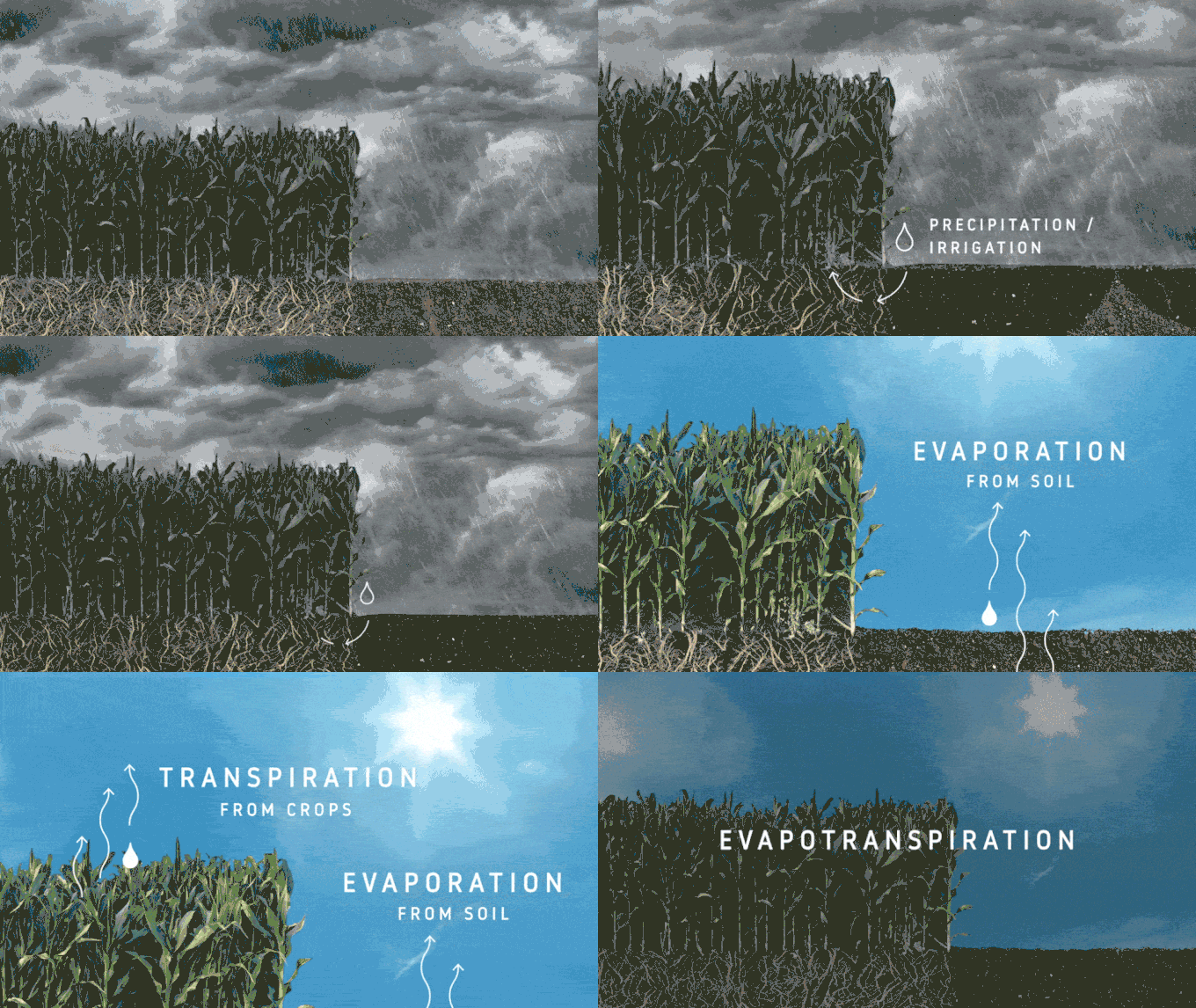 This animation shows how water is released into the atmosphere two ways. One is evaporation from soil. The other is transpiration from plants. Together, these two processes make up evapotranspiration. Mike Brophy/NASA
The amount of water that plants add to the atmosphere varies. But in places with lots of cornfields, corn sweat can cause a spike in local humidity. The U.S. Department of Agriculture estimates that corn sweat releases about 13,000 to 19,000 liters (3,500 to 5,000 gallons) of water per acre per day. That’s about a quarter of the water held in most swimming pools.
Corn sweat is often blamed for muggy summer weather. But the water released by crops during heat waves is only an estimated 2 to 5 percent of the total humidity.
In a sentence
Humidity from crops is often attributed to corn sweat, but soybeans transpire too.



 Bengali (Bangladesh) ·
  English (United States) ·