
 1 hour ago
3
1 hour ago
3 
TLDR
Brent crude fell as much as 2% to near $97 a barrel after Iran signaled openness to talks if the US lifts its blockade Trump extended the Iran ceasefire indefinitely but kept the naval blockade in place The Strait of Hormuz remains closed, affecting roughly 20% of global oil supply US crude inventories shrank 4.4 million barrels last week, far more than expected Peace talks stalled after both the US and Iran declined to send delegates to PakistanOil prices dropped on Wednesday after Iran said it received “some sign” that the US may be willing to end its naval blockade of the Strait of Hormuz. The development came as markets tried to make sense of mixed signals from both Washington and Tehran.
JUST IN: 
 Iranian diplomat says Tehran has received signs the U.S. is ready to end the blockade – BBC. pic.twitter.com/OtYHhk5Ce4
— Whale Insider (@WhaleInsider) April 21, 2026
Brent crude fell as much as 2% to near $97 a barrel. West Texas Intermediate dropped around 1.2% to $84.95. Both benchmarks had gained almost 9% in the two previous sessions.
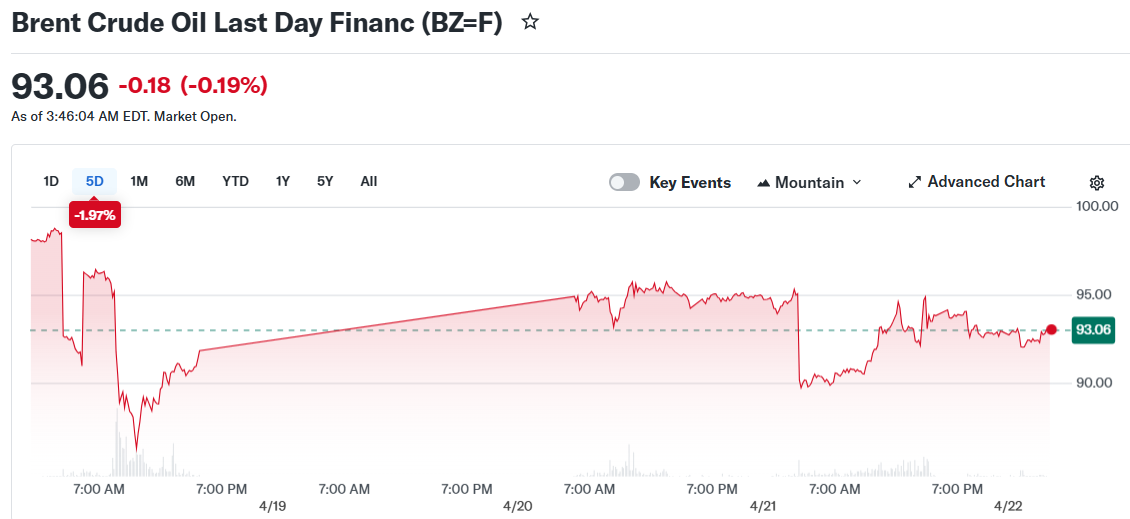 Brent Crude Oil Last Day Financ (BZ=F)
Iran’s ambassador to the United Nations, Amir-Saeid Iravani, told reporters that if the blockade is lifted, the next round of negotiations could take place in Islamabad. He said Iran would be “ready” to sit at the table and find a political solution.
Trump extended the ceasefire with Iran on Tuesday, calling it indefinite. But he kept the naval blockade firmly in place, saying the US would hold off on fresh attacks while discussions continue “one way or the other.”
Trump later posted on Truth Social that lifting the blockade without a deal would mean there “can never be a Deal with Iran,” suggesting force might be the only remaining option.
Why the Strait of Hormuz Matters
The Strait of Hormuz normally carries about one-fifth of global crude oil. Since Iran effectively blocked the crossing in late February, oil prices have surged. US gasoline prices have jumped roughly 40% since the conflict began.
Oil market volatility has hit its highest level since 2020, when the Covid pandemic hit demand. Traders have been reacting to each new headline, but physical supply remains constrained.
“Headlines are coming at 100 miles an hour, but the barrels are still stuck in neutral,” said Rebecca Babin, a senior energy trader at CIBC Private Wealth Group.
Iran has said it will not reopen the strait while the US Navy continues to intercept ships. The US said it boarded a sanctioned oil tanker on Tuesday and has turned around a total of 28 vessels since the blockade began.
At least two fully loaded Iranian tankers did manage to sail past US warships this week, delivering roughly 9 million barrels of oil to market.
Peace Talks Stall
Planned negotiations in Pakistan fell apart this week after both sides declined to send delegates. US Vice President JD Vance canceled a planned trip to Islamabad, and Iranian media reported that Tehran told Washington it would not attend the talks.
Treasury Secretary Scott Bessent said the US will keep applying “maximum pressure” on Iran, including targeting its ability to export oil through Kharg Island, the country’s main crude export terminal.
Iran sends most of its oil to independent refiners in China, which are less exposed to international sanctions. Beijing has opposed the US sanctions.
US crude inventories fell 4.4 million barrels in the week ending April 17, according to American Petroleum Institute data, well above the expected draw of 1 million barrels.
The post Oil Prices Fall After Iran Says US Showed Signs of Ending Naval Blockade appeared first on CoinCentral.




 Bengali (Bangladesh) ·
  English (United States) ·