

Luno is a beginner-friendly cryptocurrency exchange that allows you to buy, sell, store, and manage digital assets with a simple and secure platform.
The top features of Luno exchange are spot trading, crypto staking, price alerts, fiat deposits and withdrawals, a mobile trading app, and basic API access, but it has limited coin support and lacks advanced tools like futures trading, leverage, and copy trading compared to top global exchanges.
In this Luno review, we will cover its features, fees, supported countries, and security in detail so you can understand how the platform works. We will also compare it with exchanges like Binance, MEXC, and Bitget to help you decide whether Luno is the right choice for you.
Take your trading global with Binance — Sign up now for exclusive benefits!
More coins, lower fees, bigger opportunities — Join MEXC today!
What is Luno?
Luno is a centralized cryptocurrency exchange founded in 2013, and it currently operates as a subsidiary of the Digital Currency Group (DCG). The company started as BitX in Singapore and eventually rebranded to Luno to make crypto more accessible to the general public.
You can use the platform to buy, sell, and store a handpicked selection of digital assets through a web browser or a mobile app. The team behind the platform consists of over 400 employees spread across offices in London, Cape Town, and Singapore.
Luno is currently registered as a financial services provider in South Africa and also complies with securities rules in Malaysia, and the company says it operates in 40+ countries worldwide. Plus, at the same time, Luno deliberately limits its asset listings to well‑known tokens only and avoids futures or leveraged products. So, this makes it more of a beginner‑friendly platform than a professional trading hub.

Luno Restricted Countries and Regions
The Luno exchange is unavailable in several countries because of local laws or sanctions. Today, Luno blocks accounts in places like Algeria, Bangladesh, China, Cuba, Egypt, Iran, Iraq, Morocco, Nepal, North Korea, Qatar, Russia, Saudi Arabia, Syria, Tunisia, and Ukraine. The platform has also halted services in France and the United States, which we’ll explain in the next section. Basically, if you try to log in from one of the restricted regions, you won’t be able to buy, sell, or withdraw crypto.
Now, you can fully access all features if you are a resident of South Africa, Malaysia, Nigeria, Indonesia, or Australia. The exchange also supports many countries in the European Union and the United Kingdom, but the features might be slightly different there.
Is Luno Available in the USA?
Luno is not available for customers in the United States, and the platform does not accept any US-based identity documents for verification. You know, the regulatory environment in the USA is too complex, and Luno has chosen to focus on emerging markets instead. You cannot use a VPN to get around this because the KYC process requires a real address and a local phone number. It is just a firm boundary that the company has set for now.
Actually, if you live in the USA, you have to look for alternatives that have specific US licenses, like Coinbase and Kraken. Luno prefers to grow in regions like Southeast Asia and Africa, where they have already established a very dominant market share.
Luno Supported Cryptocurrencies and Assets
Luno currently supports around 25 cryptocurrencies, and they only add new assets after a very long and careful internal review process. You can trade Bitcoin (BTC), Ethereum (ETH), Solana (SOL), Cardano (ADA), and XRP on the platform. The platform also includes stablecoins like USDC and USDT for people who want to avoid the daily price swings.
Basically, the total asset count is very low compared to the 3,000+ coins you find on MEXC. The exchange chooses assets based on their liquidity, security, and use case. You see, this is a double-edged sword for you because you won’t get scammed by a “rug pull” coin, but you also won’t find the next small project before it explodes. Right now, the listing process is very slow, and they only add about 2-3 coins per year.
Luno Trading Pairs Explained
The Luno platform offers spot pairs between its listed cryptocurrencies and major fiat currencies like EUR, ZAR, MYR, and NGN. So, for example, you can trade BTC/ETH and ETH/USDC on the exchange.
Plus, some fiat pairs are only available in specific countries; users in South Africa have BTC/ZAR and ETH/ZAR, while European customers get BTC/EUR and ETH/EUR. Also, because Luno doesn’t offer derivatives or margin, there are no leveraged pairs or perpetual contracts.

Luno Exchange Review: Advantages and Disadvantages
Pros of Luno Exchange
Strong security measures: Luno stores about 95% of customer funds in deep‑freeze cold storage, and the private keys of those are split across multiple locations and held in multisignature wallets. The company also uses SSL encryption and supports two‑factor authentication for user accounts. Regulation and compliance: Luno holds licences in South Africa and Malaysia and works with regulators in each operating country. It publishes proof‑of‑reserves reports and follows know‑your‑customer rules. User‑friendly interface: The platform’s website and mobile app are clean and intuitive. So, beginners can easily buy crypto with a few clicks, while more experienced traders can switch to the “exchange” view for an order book and price chart. Staking and earning: Luno offers staking on select coins and pays up to 11% annual returns. So, you can earn passive income on holdings like ETH or ADA. Price alerts and market data: The app provides real‑time market data and lets you set price alerts for your favourite coins. Hence, when your asset hits the chosen price, you are going to receive a push notification or email.Cons of Luno Exchange
Limited available assets: The coin selection is very small, with only 25 assets available for trading. Well, it trails far behind competitors like Binance and Bitget, which list hundreds or thousands of tokens. You won’t find small‑cap or emerging projects here. No futures or margin trading: The platform only offers spot trading with 1:1 leverage. So, advanced traders looking for derivatives, options, or leveraged exposure must go to exchanges like Binance or Bybit. Geographic restrictions: Luno serves users in over 40 countries, but excludes the United States and many jurisdictions across Asia and Africa. High fees: The Instant Buy fees can be as high as 2%, and that is very expensive compared to other platforms.Luno Alternatives: Best Crypto Exchange To Compare
The best Luno alternatives are Binance, MEXC, and Bitget. Here is a quick comparison:
| Criteria | Luno | Binance | MEXC | Bitget |
| Launched Date | 2013 | 2017 | 2018 | 2018 |
| Top Features | Spot trading, staking, simple UI, fiat support | Spot, futures, staking, NFT marketplace, launchpad | Spot, futures, copy trading, launchpad | Spot, futures, copy trading, trading bots |
| Supported Coins | ~20 coins | 400+ coins | 3,000+ coins | 1,000+ coins |
| Trading Fees | 0.35% maker, 0.6% taker | ~0.1% (lower with discounts) | 0% maker, ~0.05% taker | ~0.1% (discounts available) |
| Maximum Leverage | – | Up to 125x | Up to 200x | Up to 125x |
| Fiat Support | Yes (strong focus) | Yes | Limited | Yes |
| KYC Mandatory | Yes | Yes | No | Yes |
| Open Account | Open Luno Account | Open Binance Account | Open MEXC Account | Open Bitget Account |
Luno vs. Binance
Binance is clearly better than Luno in almost every area. You get way more coins, advanced tools, and much lower trading fees. Binance supports 400+ cryptocurrencies and includes futures, staking, an NFT marketplace, and even passive income tools. Luno, on the other hand, keeps things simple and only focuses on basic spot trading and a few assets.
Look, if you just want to buy Bitcoin or Ethereum and hold, Luno may be good. But the moment you want to explore altcoins or try leverage trading, you will feel stuck. Binance gives you that freedom. You can use our Binance referral code to sign up and get some bonuses and fee discounts, which makes it even more cost-effective compared to Luno.
What is Better, Luno or Binance?
Binance is better than Luno for most users because it offers more coins, advanced trading features, and higher earning opportunities, while Luno is mainly suited for simple and beginner-friendly investing.
Trade bigger, move faster, win smarter with Binance — Unlock exclusive rewards today!
Luno vs. MEXC
MEXC is on a completely different level when it comes to coin variety and trading flexibility. It supports over 3000 cryptocurrencies and even offers early access to new tokens, which is something Luno does not even try to compete with. Plus, fees are also extremely low, starting from 0% maker and around 0.05% taker.
Luno feels more like a beginner app, while MEXC feels like a full trading platform. You get futures trading, staking, launchpads, and copy trading on MEXC, which makes it suitable for both beginners and advanced users. You can even trade on MEXC without KYC verification. Yes, best for privacy-focused users.
Discover more markets while paying less on MEXC — Claim exclusive rewards now!
Luno vs. Bitget
Bitget stands out mainly because of its derivatives and copy trading features. It offers high leverage (up to 125x) and lets you copy professional traders, which is something Luno completely lacks. Bitget also supports a much larger number of coins and has strong liquidity for futures markets.
Alright, if you are a beginner who wants safety and simplicity, Luno is okay. But if you want to actually grow your portfolio faster or try advanced strategies, Bitget makes more sense.
Tap into global trading strategies on Bitget — Unlock exclusive bonuses today!
Luno Review: Best Features and Advanced Trading Tools
The best features and trading tools on Luno are spot trading, crypto staking and earning, price alerts on the mobile app, and basic APIs for automated trading.
Luno Spot Trading
Luno Spot Trading allows you to buy the actual cryptocurrency and hold it in your personal wallet on the platform. This is the most basic form of trading, where you own the asset directly. The exchange uses a central limit order book that matches buyers and sellers from all over the world. Basically, if you place a limit order, you are providing liquidity to the market, and Luno rewards you with lower fees.
Actually, for high trading volume users and some trading pairs, the maker fee is 0%. This means you can trade for free if you are patient enough to wait for your order to get hit. Well, you should stop using the “Instant Buy” button and start using the Exchange view instead for low fees.
Luno Earning and Staking
Luno Earn is a feature that lets you earn a passive yield on your crypto by moving your coins into a separate “Earn Wallet”. The platform lends your assets to institutional borrowers, and they pay you a portion of the interest every month.
You can earn around 2% to 11% APY on assets like Bitcoin, Ethereum, and USDC. Now, the best part is that there are no “lock-up periods,” and you can withdraw your coins back to your main wallet whenever you want. Luno handles the technical part, and they take a small cut of the earnings as a fee. The staking fees can be as high as 35% of your rewards on coins like AVAX, SOL, and DOT.
Luno Price Alert Tool
Luno includes a very reliable price alert system that sends push notifications to your phone when a coin hits your target price. You can set multiple alerts for every coin on the platform, and you can even set alerts based on percentage changes.
You see, this tool is very important because crypto markets never stop, and you cannot watch the screen 24/7. So, exactly for this reason, the alerts help you buy the dip or sell the top while you are at work or sleeping. Actually, the alerts arrive almost instantly, and they are very easy to set up in the app settings. You just need to tap the bell icon on any coin page and type in your price.
Luno API Trading
Luno provides a public API that allows developers to connect their own software or trading bots to the exchange. The API supports all major functions like fetching ticker data, checking balances, and placing both limit and market orders. The API includes REST endpoints and a WebSocket feed for real‑time updates.
Basically, if you know how to code in Python or JavaScript, you can build a system that trades for you based on a specific advanced trading strategy. This is a great feature for people who want to automate their “DCA” (Dollar Cost Averaging) strategy.
Luno Fee Structure Review
Luno charges no deposit fee, network-dependent crypto withdrawal fees (gas fees), around 3.5% for instant card purchases, 2% for instant buy/sell transactions, and tiered exchange fees starting from 0.60% (taker) and 0.35% (maker).
Luno Trading Fees
Luno applies a flat fee when you buy or sell crypto directly from your portfolio screen. This fee can go up to 2% for both buying and selling. But remember, these fees apply only to instant transactions and not to trades made on the Luno Exchange, where fees are usually lower.
Luno trading fees on the exchange are based on your 30-day trading volume, and they are very competitive for small-time investors. The base rate generally starts around 0.35% maker and 0.6% taker (can change depending on region). Even maker fees can be as low as 0% for VIP users.

Now, Luno also offers crypto bundles, which come with their own fee structure.
You pay a 1% fee when you buy a bundle. Selling a bundle also costs 1%. There is a rebalancing fee of 2% per year, which is charged quarterly. Plus, if you decide to unbundle your assets, that also costs 1%.Luno Deposit and Withdrawal Fees
Luno does not charge any fees for depositing local currency via a standard bank transfer in most countries, such as South Africa or Malaysia. Crypto deposits are also free.
Also, Luno allows you to buy crypto instantly using your debit or credit card, but this convenience comes at a cost. You pay a 3.5% transaction fee on each card purchase. There are also limits in place, where you can buy up to €1,000 per transaction and up to €5,000 per month. Hence, this option only works best when you need quick access, but it is not ideal for large or frequent purchases due to the higher fee.
Luno charges a small fixed fee when you withdraw funds to your bank account. So, for EUR bank transfers, the fee is €0.30 per withdrawal. While this is not completely free, the amount is obviously quite low compared to many other platforms, so it usually does not feel like a burden unless you withdraw frequently. Now, for withdrawing crypto to another wallet, Luno calculates a “dynamic fee” based on how busy the blockchain is. Well, these network fees go to the miners and not to Luno.
Luno Security and Privacy
Luno offers industry-leading security measures to protect the assets of its 15 million customers. To be exact, the platform stores around 95% of all cryptocurrency in “Deep Freeze” cold storage crypto wallets, and these also require multiple human authorizations to access.
You also have several layers of personal security that you can turn on. You must use Two-Factor Authentication (2FA) via an app like Google Authenticator or Authy. Luno also has a Withdrawal Whitelist feature, and that means you can set it so coins can only be sent to addresses you have already approved.
Next, all traffic between your browser/app and Luno’s servers is encrypted. The company also uses PGP to secure email communications. Luno even publishes attestations (PoR data) that all customer assets are fully backed.
How Safe is Luno Exchange?
Luno is one of the safest crypto exchanges in the world, and they have a clean record with zero major hacks in over 13 years. They are also very transparent about their Proof of Reserves. Its deep‑freeze custody and multi‑sign wallets align with industry best practices.
Well, you have to remember that “safe” does not mean “zero risk”. You should still enable 2FA, use strong passwords, and avoid storing large sums on any exchange. But compared to the “wild west” style of many other cryptocurrency exchanges, Luno is a very professional and stable crypto app.
How To Open a New Luno Account and Start Trading?
Step 1: Create your account
You should visit Luno’s official website or download the mobile app. Now, tap “Sign Up” and enter your email and a strong password. Check your inbox for a verification email from Luno, and then click the link to confirm your address.

Step 2: Complete KYC
You should log in and navigate to “Settings”, select “Verification”, and upload a government‑issued ID, a selfie, and proof of address.

Step 3: Deposit on Luno
You can choose “Deposit” and select a payment method. Here, options include bank transfer, card deposit, Interbank GIRO (Malaysia), FPX instant transfer, Paystack (Nigeria), Flutterwave, PayID (Australia), or crypto transfer.
Step 4: Buy or sell crypto
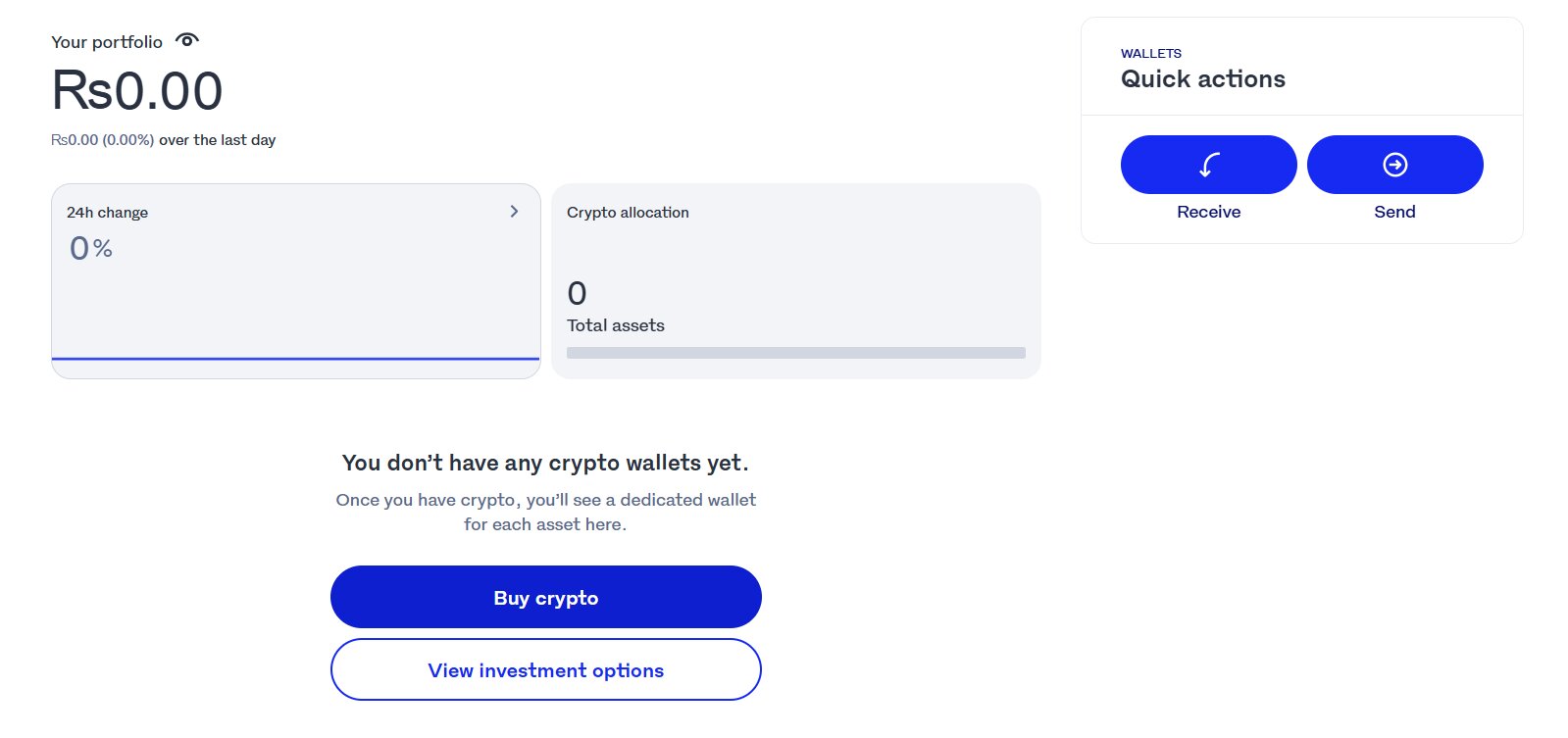
Finally, to start crypto trading, you can navigate to the “Exchange” section, pick the cryptocurrency you want, enter the amount, and confirm the trade. To sell, select the crypto asset in your Luno wallet, specify the amount, and confirm. You can set up recurring buys if you plan to dollar‑cost average.

Can I Withdraw Money From Luno?
You can withdraw money from Luno at any time, and the funds will be sent directly to your verified bank account (if available in your region). The process is very simple, and you just go to your local currency wallet and hit the “Withdraw” button. The money typically shows up in your bank account within one business day, though some banks might take up to two days.
Now, to withdraw crypto, you need to open the relevant coin wallet, click “Send”, enter the recipient address, and confirm. Luno enforces a cooling‑off period after enabling the send feature, which can delay your first withdrawal by up to a week.
Luno Customer Support
Luno customer support is primarily managed through an extensive Help Center and a digital ticketing system. The platform does not offer live phone support, and that can be a bit annoying if you are in a rush. However, the articles in the help center are very detailed, and they solve about 90% of common problems like lost passwords or deposit delays. But again, if you need a human, you can submit a ticket, and you will get an email response.
By the way, if you are a high-volume trader, you might get access to a dedicated account manager who can help you faster. But, for the average user, the ticket system is slow, but it eventually gets the job done.
Luno Mobile App Review and User Experience
The Luno app is available on both Android and iOS. Currently, on Google Play, it has over 10 million downloads and a 3.3‑star rating. The app is designed to be lightweight, and it does not drain your battery as the Binance app does (due to fewer advanced features). You can do everything from the palm of your hand: from checking your portfolio to earning interest and buying new coins.
Actually, the app feels very snappy, and there is no lag when switching between screens. You can also use biometric login (FaceID or Fingerprint) to make it both fast and secure. Well, if you are a hardcore chart reader, you might find the mobile charts a bit small. But for most of you, the app is a perfect 10/10 for daily crypto management.
Who is Luno Cryptocurrency Exchange Best For?
Luno crypto exchange is best for:
First-Time Buyers: Luno provides a very simple interface that takes away the confusion of more complex global exchanges. It acts as a perfect entry point for you to buy your very first piece of Bitcoin without feeling overwhelmed. Long-Term Investors: You can easily set up a “set and forget” strategy where you just hold your assets for several years. The platform is designed for people who value a stable and regulated place to store their wealth safely. Local Residents: People living in South Africa or Malaysia benefit the most from the deep integration with local banking systems. You can move your local fiat currency in and out of the app with almost zero effort or high bank fees. Passive Earners: Well, investors looking to grow their balance without active trading can use the Luno Earn feature to get a steady yield.Final Verdict: Is Luno Safe and Legit?
To sum up the Luno exchange review, it is 100% safe and legit, and it stands as one of the most trustworthy companies. The exchange is fully licensed, it has a massive parent company, and it follows the law in every country where it operates.
Anyway, you should always keep an eye on the fees and the coin selection. Basically, if you want to trade a hundred different coins or if you want to use advanced tools, you will eventually outgrow Luno. When that happens, you can move your funds to Binance, MEXC, or Bitget. These exchanges are best for users looking for advanced tools like leverage trading, options contracts, a massive selection of altcoins, and high liquidity.
Unlock 3,000+ coins and low trading fees on MEXC — Sign up today and claim exclusive rewards!
Follow top traders across global markets on Bitget — Unlock exclusive perks!
The post Luno Review 2026: Is This Exchange Legit and Trustworthy? appeared first on CryptoNinjas.




 Bengali (Bangladesh) ·
  English (United States) ·