
 6 hours ago
3
6 hours ago
3 
When my friend and I planned to have a child together via IVF, we jokingly called her a baby fish, a salmon fry. A Fry is a stage in the salmon life cycle, after alevin but before parr, when the fish must begin to feed itself and swim free. This is a stage where they are most vulnerable to predators, birds, and larger fish, including larger salmon of the same species. While calling our future-kid a fish began as a joke, the vulnerability and brutality of fish-life seemed to me like a perfect metaphor for trying to have a kid when the only salmon we could afford was farmed, a process that I knew brought ecological destruction to wild fish populations. When the IVF process suddenly fell apart and I was left, again, with a childless future, my could-have-been child appeared to me as a fish; she was not a metaphor, she lived alongside me, she spoke to me, we went swimming in the Rockaways, I kept a tank of salt water by my bed.
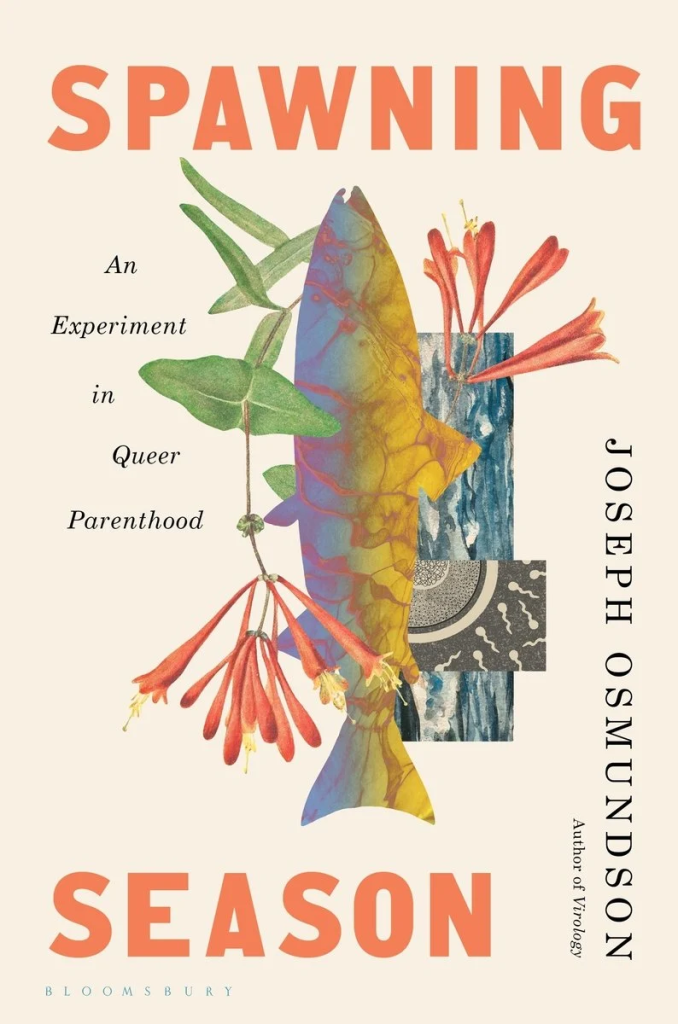
As a queer writer, grief came out in my book Spawning Season as an animal. Perhaps this should not have been a surprise given the books I’d been reading, the queer novels and essays and memoirs, all otherwise realist texts, in which animals become more than metaphor. They speak, they are guides, they are demons, they carry the souls of those we lost, those we never had, they allow us, even within large cities, to commune with nature. In these books by queer writers, animals play an essential, mythical role, inextricable from the narrator or the story. Queer writers, I think, often confound the bounds of realism—in literary fiction and nonfiction—in stunning and surprising ways. In these books, that surprise came in the form of the animal.
Edinburgh by Alexander Chee
In Alexander Chee’s gut-punch of a first novel, Edinburgh, we follow Fee, a young Korean-American kid who finds transcendence through music and his voice. When this site of freedom turns rotten with abuse, Fee is bowled over by the complexities of grief. In the prologue, we see the image of the fox, a trickster, the bringer of good and bad luck. The fox in this novel is protection, evasion, a required outlet for a selfhood broken by abuse. The novel itself, Chee writes, is a “fox story.”
“Years later on streets in New York,” Chee writes, “women bustle by me, in fox coats. I want to ask these women, do you ever, in that coat, think you can fly? Do you ever feel, wearing that coat, the thrum of a leg about to let fly?” To this day, when in need of protection, I can feel the fox fur on my arm. A new edition of Edinburgh, with a fox on the cover, is due out in October from Mariner Classics.
This Is the Only Kingdom by Jaquira Díaz
A red-tailed hawk glides, watching, on the cover of Jaquira Diaz’s novel This Is the Only Kingdom. The title itself comes from the poem “Elegy” in the collection Kingdom Animalia by Aracelis Girmay. The novel is a story of whether escape—of our circumstances, our hometowns, our families—is possible, and the guaraguao (a red-tailed hawk) returns again and again in the book’s critical moments, as if called out by every gun shot. The guaraguao witnesses, watches, and follows; because the bird can take to the sky, its movement is not limited by our small human condition. As the book’s mystery and violence unfold in tightly lyrical prose, the reader becomes the guaraguao, present but seemingly unable to change the book’s inevitable course. “In the sky, some kind of bird, a hawk or vulture. Floating, tilting sideways, its body swinging this way, that way. Un guaraguao. The women were singing now, the bird dancing in the sky, swaying to the rhythm of their song.” The human and animal, dancing together, each in their own realm.
Why Fish Don’t Exist by Lulu Miller
So many queer writers look at an old category—fish for example—with fresh eyes and force readers to reassess their pre-conceived notions. Lulu Miller, a co-host of Radiolab, does just this in her uncategorizable book Why Fish Don’t Exist. Besides an unexpected true crime murder mystery, Miller takes apart why the term “fish” is biologically meaningless. The book shines, though, in moments where the desire, the need, for the coherence of the biology of fish stands in for Miller’s own loss and grief. Ultimately, through Miller and the scientists she profiles, fish represent both our need for control and our absolute lack thereof. Only through fish, it seems, can Miller tell her own story, and see how these underwater animals can actually be perfect, beautiful, in their incoherence. On a swim, “[a] school of silver beings came rushing toward me,” she writes, “barreling beneath me like a catchable train. I dove down into it. It parted and let me in. Hundreds of silver souls enveloping me.” Only underwater could Miller’s grief, and joy, breathe.
Forest Euphoria by Patricia Ononiwu Kaishian
Patricia Ononiwu Kaishian is a scientist by training and vocation. Maybe it’s my own bias as a scientist and writer, but the two fields seem like vastly different approaches to one fundamental desire: to look closely at the world, at living things, and to understand. Working scientists and writers both know, however, that the best and most profound answers only open new questions, and writing, like science, like life, simply iterates. Kaishian brings this sensibility of searching to her incredible memoir-in-essays, where she weaves together her childhood and path toward science as a profession with a stark discussion of how different types of knowledge become, or are withheld from, scientific inquiry. Throughout, plants and animals (and fungi and bacteria) speak their own stories—mushrooms, snakes, turtles, frogs, and crows. “Like corvids, humans are generalists,” Kaishian writes, “All around the world, this has led to creation stories and cosmologies in which corvids are centered as teachers, offering wisdom and instruction to humans who are struggling to adjust.”
Voice of the Fish by Lars Horn
Lars Horn’s essay collection, Voice of the Fish, considers the body as a site of memory, and aquatic bodies become essential to his understanding of his own. Fish can live for hundreds of years, a living history text; in the 1800s, a fish was caught with a religious scroll preserved in its belly. From his childhood, when Horn’s mother took photoshoots of him in a bathtub full of squid, to his adulthood, where swimming became a site of refuge, fish became a source of knowledge and of confounding mystery at the same time. “Past a certain age,” Horn writes, “my own reflection became increasingly difficult to look at. So, I didn’t. I looked out. Around. At others. Animals. Trees.” This impulse to see the humanity of other things, and the animal in the human experience, makes Horn’s book a meditation on a messy life, the only kind of life possible.
Mostly Dead Things by Kristen Arnett
Reeling from the suicide of her father, Jessa struggles to keep her family’s taxidermy business alive. The scenes of Jessa working with dead animals take on an almost meditative, religious meaning as she struggles with the senselessness that keeps creeping into her life. The animals—alligators, peacocks, badgers and rabbits—provide the tension between life and death, between blood and guts, the mess of a life, and struggling to “make sure the floor stayed clean.” Although many of the animals in the book are indeed dead, it is their breath that pulses through the narrative. “I just wanted [an animal] that I could hold,” Arnett writes, “something that would move and breathe and reciprocate my affection.” Queerness can make affection so tense, so complicated, that only an animal might be able to offer a safe embrace.
Hemlock by Melissa Faliveno
In this novel by Melissa Faliveno, Sam returns to a family cabin in Northern Wisconsin where, even in spring, “the light left early and the dark stayed long.” The cabin itself is falling apart, and so too is Sam, newly sober but infected, perhaps, by a dark inheritance. Questions of rot, of family, of light and dark and without and within swirl in this seductive novel. As Sam becomes isolated, the residents of the woods speak up. “When the deer first spoke to her, she was sure she was hallucinating,” Faliveno writes. In a novel with so much human isolation, the doe becomes a main character as Sam struggles with and within herself. When Sam reprimands the doe for telling her what to do—to dump out a beer and attempt sobriety again, the deer responds: “Your mother is gone. And she couldn’t tell you what to do either. She didn’t even know what to do herself.” If Sam will make it out of these woods, the doe may well be her guide, a voice coming from a part of herself made external, other, and animal.
Moby Dick by Herman Melville
A Taxonomy of Gay Animals
A flash fiction debut by Christopher Hyun
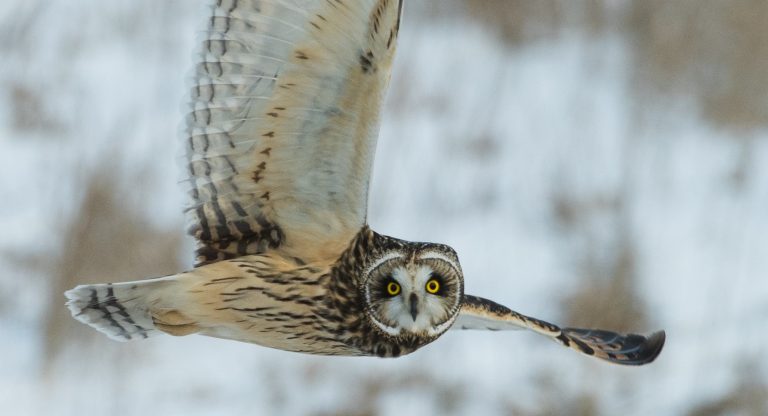
I only read Moby Dick recently, as a middle-aged bisexual man, and, wow, it’s the gayest book I’ve ever read. I’m glad I didn’t attempt it as a pre-queer high school kid, as so much of the queerness of the text—not the subtext, the text itself—might not have landed for me. I don’t know how to write a list about queer animal books without including Moby Dick, in which Melville details the ill-fated search for Ahab’s white whale, famously a fish. From the opening scene of Ishmael sharing a bed with Queequeg and waking as “his wife” to the orgasmic definitely-not-sex the whalers share as they extract spermaceti from the head of a sperm whale by sperm squeezing, not only does the white whale represent the hubris of man against nature, but the all-male ship becomes a space wherein the desire for touch becomes not just allowed but a part of the labor:
“Squeeze! Squeeze! Squeeze! All the morning long; I squeezed that sperm till I myself almost melted into it; I squeezed the sperm till a strange sort of insanity came over me; and I found myself unwittingly squeezing my co-laborers’ hands in it, mistaking their hands for the gentle globules.”
There are two wolves inside me, and they are both gay, and their names are Ishmael and Queequeg.
How Far the Light Reaches by Sabrina Imbler
Ever curious and endlessly probing, Sabrina Imbler’s How Far the Light Reaches is a memoir told through close examination of sea creatures: gold fish, octopus, sturgeon, bobbitt worm. Through telling these stories of the natural world, Imbler is able to narrate their childhood, their life, the forces that invariably shape us, so many of which are out of our control. Imbler’s writing about animal life is tender, intimate. “Imagine you are something like a snail . . . You are not a fast swimmer, but you make do, bobbing around the blue and sealing off your body in spiraled chambers that buoy you up and down the water column.” I can feel myself move with the water. In a recent interview for Orion Magazine, Imbler explained, “I found it far easier to find empathy and tenderness for animals like fish than I did with former versions of myself.” This reaching outward, toward animals, to find love for our own queer selves, given a world that constructs disgust around our touch and identities, undergirds all these books. Given how cruel humans can be, indeed are, to queer and trans people, it is no wonder we give voice and witness to other creatures—a fox, a fish—that we yearn for their protection.
The post In These Queer Books, Animals Take on a Mythical Importance appeared first on Electric Literature.




 Bengali (Bangladesh) ·
  English (United States) ·