
 2 hours ago
5
2 hours ago
5 
TLDR
Spot gold rose 0.9% to $4,345.72 per ounce on Tuesday, extending Monday’s 2% jump A U.S.-Iran interim peace deal has pushed oil prices lower, reducing inflation fears Lower inflation expectations have eased bets on Fed rate hikes by December, from 70% to 58% The U.S. dollar softened slightly, giving gold additional support The Bank of Japan raised rates to 1.0%, its highest in 31 years; Australia held rates steadyGold prices moved higher on Tuesday, building on a sharp rally from the day before. Spot gold gained 0.9% to $4,345.72 per ounce by mid-morning, while gold futures rose 0.3% to $4,366.25 per ounce.
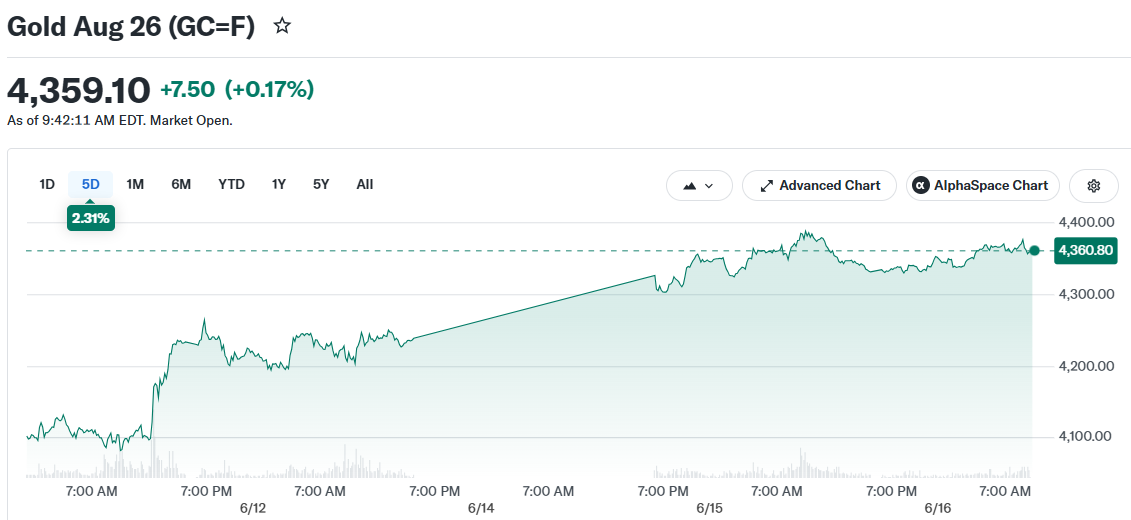 Gold Aug 26 (GC=F)
The move follows a more than 2% jump on Monday after the United States and Iran announced a preliminary peace agreement. The deal aims to end hostilities between the two countries and reopen the Strait of Hormuz, a key route for global oil shipments.
The prospect of oil flowing again through the strait pushed crude prices lower. That drop in oil prices helped calm fears that rising energy costs could fuel inflation and force central banks to raise interest rates.
Gold does not pay interest, so it tends to underperform when rates are high. Lower rate expectations generally make gold more attractive to investors.
Rate Hike Bets Pull Back
Markets have started to price in fewer Federal Reserve rate hikes for this year. Expectations for a December hike have dropped to 58%, down from around 70% before the deal was announced, according to CME’s FedWatch Tool.
All eyes are now on the Fed’s policy decision on Wednesday. The central bank is widely expected to hold rates steady.
Investors will pay close attention to new Fed Chair Kevin Warsh’s first press conference after the meeting. His comments could give clues about where interest rates are headed.
Analysts at ING noted that despite the oil selloff, the dollar’s core support remains in place. They said markets are shifting focus away from crude prices and back toward central bank policy.
Dollar Softens but Remains Supported
The U.S. dollar index, which tracks the dollar against a basket of currencies, traded slightly lower on Tuesday.
During the Middle East conflict, the dollar had strengthened as a safe-haven asset. The U.S. was also seen as less exposed to an oil shock because it is a major energy exporter.
ING analysts said the dollar still looks structurally stronger than it did a few weeks ago. Nearly all of the weekend’s losses in the dollar had already been reversed by Tuesday, despite the drop in oil.
Central Banks in Focus Globally
The Bank of Japan raised its short-term rate by 25 basis points to 1.0% on Tuesday. That is the highest level in 31 years, as Japan continues its effort to control inflation and normalize policy.
The Reserve Bank of Australia kept its rate unchanged at 4.35%, following three straight hikes.
Both decisions added to a busy week for global central bank watchers.
Gold’s next move may depend heavily on what the Fed says Wednesday and whether the U.S.-Iran deal holds.
The post Gold Rises as U.S.-Iran Deal Eases Oil Prices and Rate Hike Fears appeared first on CoinCentral.





 Bengali (Bangladesh) ·
  English (United States) ·