The first year of the second Trump administration has been defined by an economic and foreign policy that treats the movement of people and goods around the globe as not merely suspect but actively harmful to Americans' well-being.
In January, Commerce Secretary Howard Lutnick set the bar for demonstrating how bizarre—and wrong—that logic is. While addressing the World Economic Forum's annual gathering in Davos, Switzerland, Lutnick declared that the decades-long project of economic liberalism had been, in fact, a terrible mistake.
"The Trump administration and I are here to make a very clear point: Globalization has failed the West and the United States of America," Lutnick said. "It has left America behind."
Has it? It's difficult to square that conclusion with Lutnick's own life. His grandfather ran a dry cleaning business in the Bronx. His father was a history professor. Lutnick became the CEO of a New York–based investment bank, Cantor Fitzgerald, in 1990 and is now a billionaire (and a senior official in the federal government to boot). If that's a trajectory that suggests failure, we should all hope to be so unlucky.
The idea that globalization has failed America is equally incompatible with the facts. The most blunt way to measure a country's prosperity is by looking at gross domestic product per capita, which measures economic output per person. In 1990, when Lutnick took over at Cantor Fitzgerald, America's GDP per capita was about $40,000 (in inflation-adjusted terms). Last year, after three and a half decades largely defined by the globalization that Lutnick now derides, the U.S tallied a per capita GDP of more than $70,000. In real terms, America is far wealthier today.
But workers aren't paid with increasing GDP stats, as the illiberal right likes to point out. The good news, however, is that wages have also climbed considerably. Average hourly wages have increased from about $20 to over $36 in the past 20 years. The number of households earning over $100,000 annually (adjusted for inflation) has tripled in the past 50 years, while the number of those earning less than $35,000 has declined.
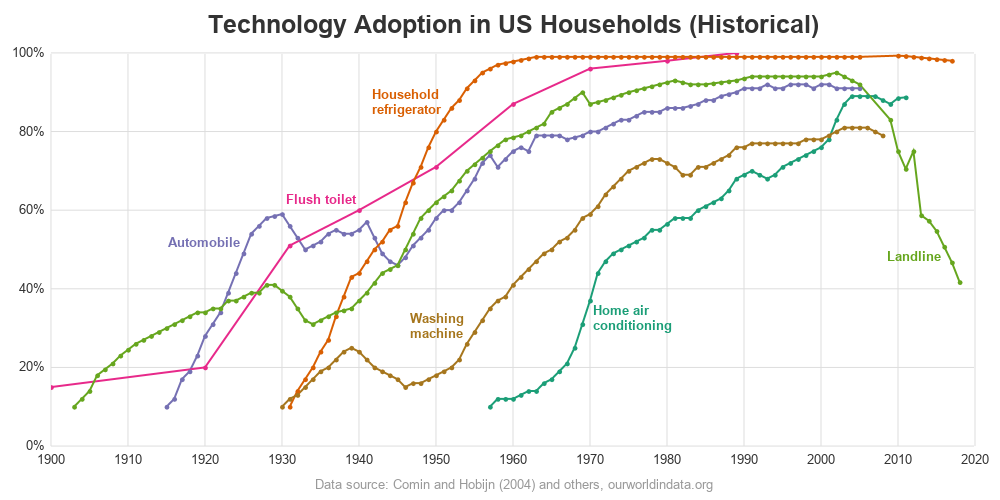
The best way to measure prosperity isn't with wages or national economic data—it is with the standard of living. Compared with decades past, Americans today have access to better technology, more advanced medical care, and more readily available air conditioning, among other luxuries. The average American works fewer hours (despite earning more), travels more, eats better, and lives longer than the average Joe of the past.
The extent to which those developments are attributable to globalization varies, of course, but none of this sounds like a society that has been "left behind."
To be sure, economic problems still exist even in one of the wealthiest societies in human history. Inflation, housing costs, and medical bills are serious burdens for many Americans—and often caused or worsened by government policy.
Lutnick and the rest of the populists in the Trump administration ought to focus on solving those issues, not spreading obvious falsehoods to advance grievance politics.
The post Globalization Made Howard Lutnick a Billionaire. Now He's Railing Against It as Trump's Commerce Chief. appeared first on Reason.com.





 Bengali (Bangladesh) ·
  English (United States) ·