
 1 month ago
33
1 month ago
33 
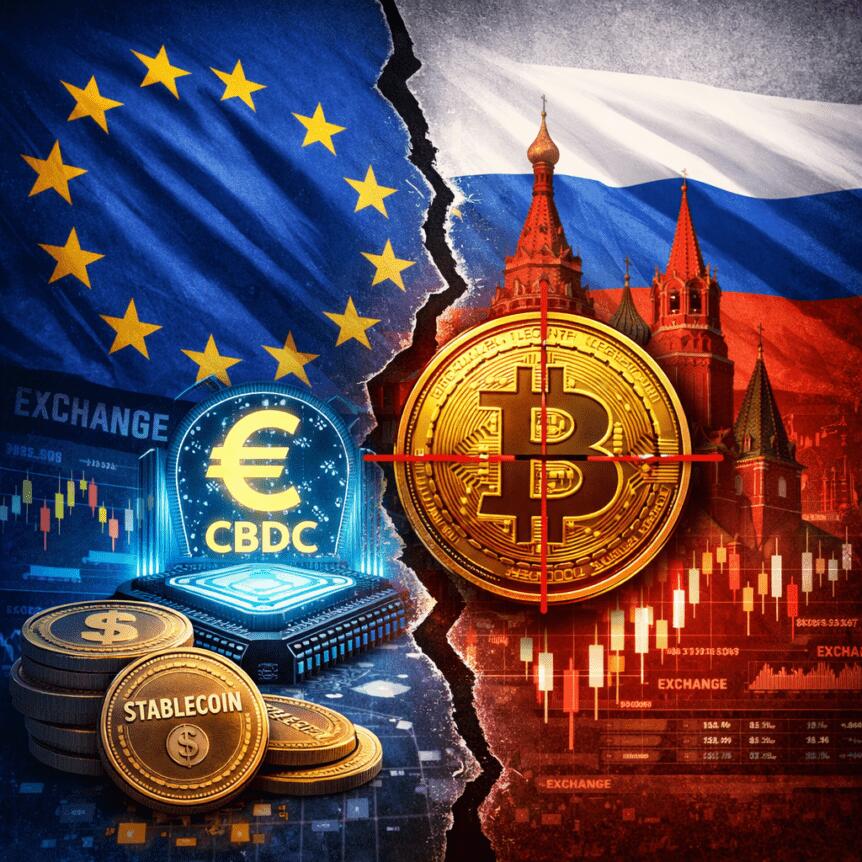
The European Commission on Thursday unveiled the 20th package of sanctions against Russia, expanding a broad set of measures aimed at limiting Moscow’s ability to finance its war in Ukraine. The bloc’s new rules tighten crypto-related restrictions and reinforce existing financial controls as Brussels seeks to curb Russia’s cross-border activity through digital assets.
Among the most consequential elements, the commission announced a total sectoral ban on exchanges with any Russian crypto asset service provider and on decentralized platforms enabling crypto trading that could be used to bypass sanctions. In addition, the bloc prohibited the use of stablecoins pegged to the Russian ruble and the central bank digital currency (CBDC) that is under development by the Russian central bank.
The commission framed the move as part of a broader push to press Russia to enter negotiations on terms acceptable to Ukraine, stressing that each additional day of Russian attacks translates into further Ukrainian civilian suffering. The package was issued following a meeting between European Commission President Ursula von der Leyen and Ukrainian President Volodymyr Zelenskyy to review ongoing support for Kyiv amid Moscow’s military campaign.
The European Commission has argued that Russia has become increasingly reliant on cryptocurrencies for international transactions as traditional channels come under sanctions. The bloc cited cases where crypto channels are used to bypass restrictions, referencing stablecoins tied to the ruble market and crypto operators linked to Belarus as examples of where enforcement efforts may be directed.
Related: Russia introduces bill to criminalize unregistered crypto services
Key takeaways
The European Commission’s 20th sanctions package imposes a comprehensive ban on exchanges with Russian crypto asset service providers and on decentralized platforms that could enable evasion of sanctions. Stablecoins pegged to the ruble and a Russian CBDC under development are banned from use within the EU’s financial system. Brussels frames crypto restrictions as a tool to pressure Russia toward negotiations and to curb crypto-facilitated sanctions evasion. Officials point to Russia’s growing reliance on digital assets for international transactions, with references to stablecoins such as those pegged to the ruble and to Belarus-linked crypto operators. The move follows high-level discussions between EU leadership and Ukraine’s president, underscoring continuing EU commitment to Ukraine’s security and economic resilience.EU sanctions and the crypto frontier
The 20th sanctions package broadens a long-running strategy to isolate Russia financially and operationally. By barring interaction with any Russian crypto asset service provider and blocking decentralized platforms that could facilitate crypto trading for sanctioned entities, the European Commission aims to close loopholes that might allow Moscow to move value across borders despite traditional restrictions.
The ban on ruble-pegged stablecoins and on the CBDC under development signals Brussels’ concern that digital-native instruments could be weaponized to bypass controls. While stablecoins anchored to stable assets are often marketed as governance-neutral payment rails, the EU’s position suggests a preference for preserving the integrity of sanction regimes over permitting cross-border crypto liquidity that could undermine those regimes.
In remarks accompanying the package, the commission emphasized the broader political objective: to keep pressure on Russia to engage in negotiations that align with Ukrainian interests. The EU’s stance also aligns with a transferral of attention toward the enforcement front, where regulators are increasingly tasked with tracking crypto flows that cross borders and evade traditional supervision.
The commission’s narrative also alludes to Russia’s reported pivot toward crypto in response to sanctions. While the EU did not quantify the shift, officials described scenarios where digital assets are used to settle cross-border trades that would otherwise be restricted by conventional financial channels. In several instances, the discussion pointed to stablecoins and crypto firms that operate in or near Russia’s orbit, including entities connected to Belarus, as areas of heightened focus for enforcement action.
Crosswinds beyond Europe: Iran, crypto and enforcement scrutiny
As Western powers monitor potential sanctions evasion via digital assets, the United States has witnessed renewed scrutiny around Iran and crypto. Lawmakers have questioned whether Iran could be leveraging cryptocurrencies to circumvent restrictions amid broader regional tensions and ongoing sanctions. In recent coverage, Reuters and other outlets have reported that U.S. investigators have looked into the possibility of crypto channels supporting Iranian entities in sanctioned activities.
Within the crypto industry, there have been notable tensions around enforcement and compliance. A separate report highlighted internal personnel shifts at a major exchange amid questions about how the platform communicates with and informs executives about sanctioned transactions involving Iran. These developments underscore the pressure on crypto firms to balance rapid growth with rigorous sanctions compliance and risk controls.
Related: U.S. DOJ probes Binance over alleged Iran sanctions evasion
What this signals for investors and builders
The EU’s latest package reinforces a clear expectation: crypto markets and service providers operating in or with Russia must adhere to traditional sanction disciplines, even as the crypto ecosystem grows more integrated with cross-border finance. For traders and institutions, the move could tighten liquidity channels that previously bridged gaps created by Western sanctions, potentially increasing the cost and friction of sanctioned-entity transactions.
For builders, the emphasis on preventing circumvention highlights the importance of robust sanctions screening, transparent provenance of funds, and on-chain analytics that can distinguish legitimate activity from attempts to mask sanctionable flows. As policymakers worldwide sharpen their tools, the line between legitimate innovation and regulatory risk will continue to shape product design, governance models, and compliance tooling in the sector.
Finally, the evolving discourse around Iran and crypto underscores a broader regulatory convergence. As the U.S. and European authorities intensify scrutiny of digital assets in sanction regimes, exchanges, wallets, and infrastructure providers are likely to face increasing demands for real-time compliance data and auditable controls. Investors should watch how enforcement patterns evolve in the coming months, and how regional differences in sanctions policy interact with evolving crypto technologies.
The story remains dynamic. Readers should monitor forthcoming regulatory updates from Brussels and other capitals, as well as performance indicators from cross-border crypto markets, to gauge how sanction-driven constraints intersect with the broader push toward regulated digital finance.
This article was originally published as EU Targets Russian Crypto Exchanges, CBDC, and Stablecoins on Crypto Breaking News – your trusted source for crypto news, Bitcoin news, and blockchain updates.





 Bengali (Bangladesh) ·
  English (United States) ·