
 3 hours ago
5
3 hours ago
5 
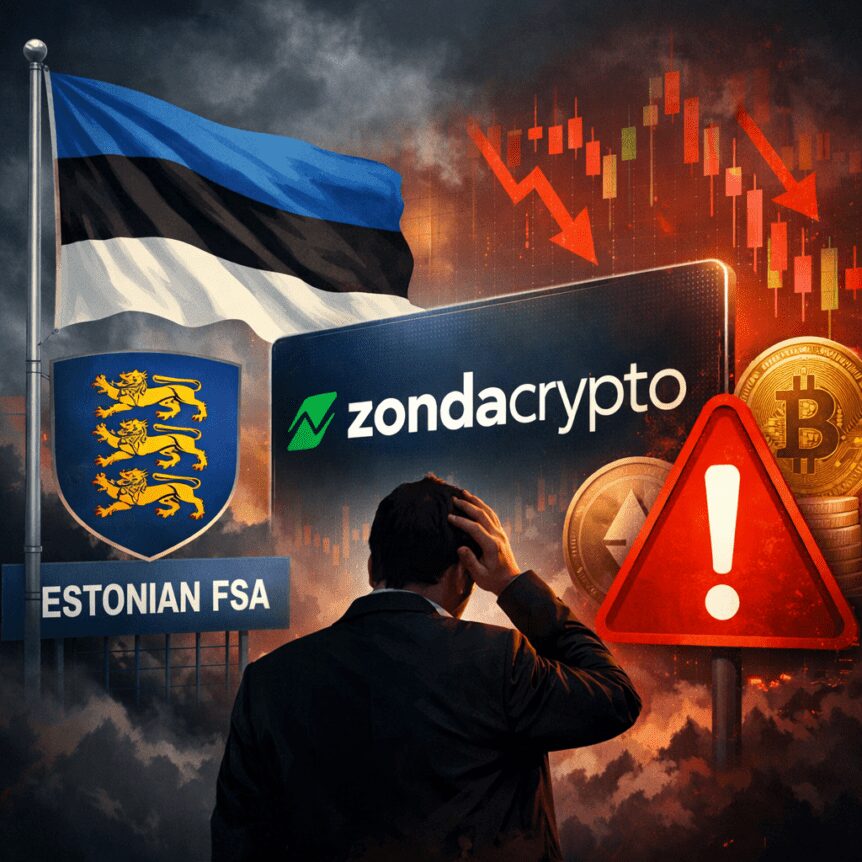
Estonia’s financial regulator has issued an investor warning against BB Trade Estonia OÜ, the operator of the Zondacrypto digital asset exchange, for listing the TeamPL token without a published white paper.
The Financial Supervisory and Resolution Authority (FSA) said the company did not have a white paper listed on its website for the TeamPL token, a requirement under the European Union’s Markets in Crypto-Assets (MiCA) framework. According to the FSA, this constitutes a breach of MiCA’s stipulations that crypto-asset white papers remain accessible on the website of the offeror or of those seeking admission to trading as long as the assets are held by the public.
“This action violates Article 9, Section 1 of [MiCA], according to which crypto-asset white papers shall remain available on the website of the offerors or persons seeking admission trading for as long as the crypto-assets are held by the public.”
The investor warning, issued against Zondacrypto and its parent company, was noted by the FSA in documents published this week. Cointelegraph reached out to Zondacrypto for comment but did not receive a response by publication time.
The alert from Estonia arrives amid broader scrutiny of Zondacrypto, the platform at the center of withdrawal frictions reported by users and an ongoing Polish law-enforcement investigation. In April, Zonda’s chief executive, Przemysław Kral, publicly said the exchange did not have access to a cold wallet holding approximately 4,500 Bitcoin (BTC), which at that time valued the stash at about $360 million.
Kral contended that the wallet’s private keys had never been handed over by Sylwester Suszek, the founder and former chief executive who has been missing since 2022. He also rejected rumors of insolvency, insisting the company would meet all customer obligations.
Kral’s assertions followed a wave of withdrawal-related concerns that prompted Polish authorities to open a probe into the company in April. Since then, Kral has been largely silent on social media, with his last post on X dated April 16, 2026. Local media outlets have reported that he traveled to Israel, where he holds citizenship, amid the investigation.
In a February interview, Kral told Cointelegraph that Zondacrypto operates outside of Poland because, in his view, the country has not aligned its crypto regulations with the EU’s MiCA framework. He described the Polish roots of the business as “the largest player in the crypto industry on the Polish market,” but noted that the company had operated from abroad for years.
The regulatory action in Estonia and the unfolding investigations in Poland highlight the intensified regulatory environment that MiCA is introducing for smaller exchanges across Europe. While MiCA aims to standardize disclosure, governance, and consumer protections, its application to non-EU or cross-border operators remains a focal point of ongoing enforcement and policy discussions. For investors and users, the developments underscore the importance of verifying that token projects have credible, publicly accessible documentation and of remaining cautious in periods of operational uncertainty at exchanges.
Related reporting over the past months has shown that MiCA’s regime continues to place pressure on smaller crypto firms, prompting some operators to reassess structures, domicile choices, and disclosure practices as they navigate additional regulatory requirements across the EU.
Key takeaways
The Estonian FSA issued an investor warning to BB Trade Estonia OÜ for listing the TeamPL token without a publicly available white paper, citing MiCA Article 9, Section 1. The move follows withdrawal problems at Zondacrypto and a Polish probe, with Zonda’s CEO signaling a significant loss of access to a multi-hundred-million-dollar BTC wallet tied to the exchange. CEO Przemysław Kral has claimed the wallet’s private keys were not handed over by the founder, Sylwester Suszek, who has been missing since 2022, and he denied insolvency concerns. Kral’s communications have halted since mid-April 2026, with reports that he traveled to Israel amid the investigation; the company says it remains committed to customer obligations. The episodes illustrate MiCA’s growing influence on smaller exchanges and the broader regulatory risk landscape facing EU crypto firms operating across borders.Regulatory pressure and cross-border implications
Estonia’s warning is part of a broader pattern as regulators begin to enforce MiCA’s disclosure standards more aggressively, particularly for assets that have been publicly traded on exchanges. The emphasis on keeping white papers accessible aligns with a wider push to improve transparency and investor protections in a market where tokenized offerings can outpace traditional disclosures. For investors and users, this means greater scrutiny of project documentation and the reputational risk that accompanies non-compliant listings.
Meanwhile, the Polish investigation into Zondacrypto adds a practical dimension to the regulatory framework. When authorities probe the flow of assets, access to private keys, and the movement of executives during periods of distress, it underscores the operational fragility that can accompany rapid growth in the crypto sector. As Zondacrypto navigates these tensions, observers will be watching to see how the company addresses customer obligations and whether any regulatory actions at the EU level translate into concrete safeguards for users.
For market participants, the episodes offer a reminder of the realities facing smaller exchanges as MiCA matures: compliance costs rise, disclosures must be robust, and cross-border enforcement becomes a daily consideration. The pressure is not only on liquidity and custody practices but also on corporate governance and the credibility of project documentation that underpins token offerings.
What remains unclear is how Zondacrypto will resolve the immediate investor concerns and whether the Estonian authorities will extend scrutiny to additional tokens or offerings listed on the platform. As regulators across Europe continue to map MiCA’s practical implications, observers will be eager to see whether other platforms facing similar warning signs take corrective steps or pause certain listings to align with longer-term regulatory expectations.
Readers should monitor forthcoming updates from the FSA and any official statements from Zondacrypto or its legal representatives. The evolving picture will help gauge not only the immediate risk to Zondacrypto customers but also the pace and direction of MiCA’s enforcement for smaller market participants.
This article was originally published as Estonian FSA Flags Zondacrypto Risk to Crypto Investors on Crypto Breaking News – your trusted source for crypto news, Bitcoin news, and blockchain updates.




 Bengali (Bangladesh) ·
  English (United States) ·