
 1 month ago
22
1 month ago
22 
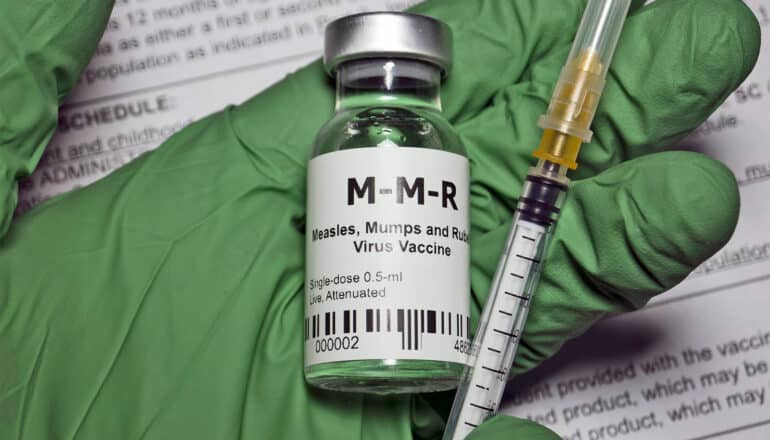
Measles vaccine gaps persist among ER patients, according to a new study.
Measles remains one of the most contagious infectious diseases, spread through coughing and sneezing, with even small declines in vaccination coverage leading to outbreaks.
As of 2026, California has reported its highest annual measles case count in seven years.
In response to this growing concern, researchers have begun examining gaps in measles-related knowledge and vaccination coverage.
A University of California, Riverside-led study has found critical gaps in knowledge, vaccination status, and acceptance of the measles, mumps, and rubella (MMR) vaccine among patients visiting emergency departments across the United States.
Published in the American Journal of Emergency Medicine, the study examines how misinformation and access barriers may contribute to declining vaccination rates, raising concerns amid ongoing measles outbreaks.
“We found that a substantial portion of emergency department patients lack accurate knowledge about measles and the MMR vaccine,” says medical student Alexandra Eftimie, the paper’s co-lead author.
“Many participants were either unsure of their vaccination status or reported not receiving the vaccine at all. Additionally, vaccine hesitancy, driven by misconceptions about safety and necessity, remains a persistent issue.”
Using survey data (April–December 2024) from 2,459 adult patients across ten U.S. emergency departments, the study evaluated MMR vaccination status, knowledge, and willingness to receive the vaccine among a diverse population.
“We identified key disparities in under-vaccination associated with factors such as race, language, insurance status, and access to primary care,” says Sahithi Malireddy, an undergraduate student in neuroscience and the paper’s co-lead author.
“These disparities specifically emphasized how systemic barriers shape both access to vaccines and health literacy among diverse populations.”
The researchers stress that their findings demonstrate how emergency departments can serve as critical “safety net” points of care for underserved populations who may not be able to access vaccines/healthcare in traditional formats.
“This really offers health care systems an opportunity to leverage emergency departments not only for emergent care, but also as spaces to deliver accessible, evidence-based public health interventions and improve vaccine equity,” Malireddy says.
“By leveraging emergency departments as points of intervention, health care systems may be able to reach individuals who would otherwise fall through the cracks of preventive care.”
The researchers were surprised by how often patients lacked access to clear, reliable information.
“Many gaps stem from systemic barriers like limited literacy tools, language differences, insurance issues, and stigma,” Malireddy says.
“They show how culture and access shape responses to symptoms, shifting focus from individual misunderstanding to structural inequities—and underscoring our responsibility to make healthcare knowledge accessible and actionable for marginalized communities.”
Senior author Robert Rodriguez, a professor of medicine in the UCR School of Medicine, outlined practical, low-burden steps emergency departments can take to boost MMR vaccination rates.
“While most emergency departments may not be able to administer MMR vaccines, they can still serve as high-impact sites for screening and education—especially for underserved populations,” he says.
“They can inform patients about the importance of the MMR vaccine and direct them to accessible options, such as clinics and pharmacies, where they can receive it.”
Additional researchers from UC San Francisco, UCLA, Rush University Medical Center, Wayne State University, Thomas Jefferson University Hospital, and Duke University School of Medicine contributed to the work.
Source: UC Riverside
The post ER patients highlight measles vaccine gaps appeared first on Futurity.



 Bengali (Bangladesh) ·
  English (United States) ·