
 1 hour ago
3
1 hour ago
3 
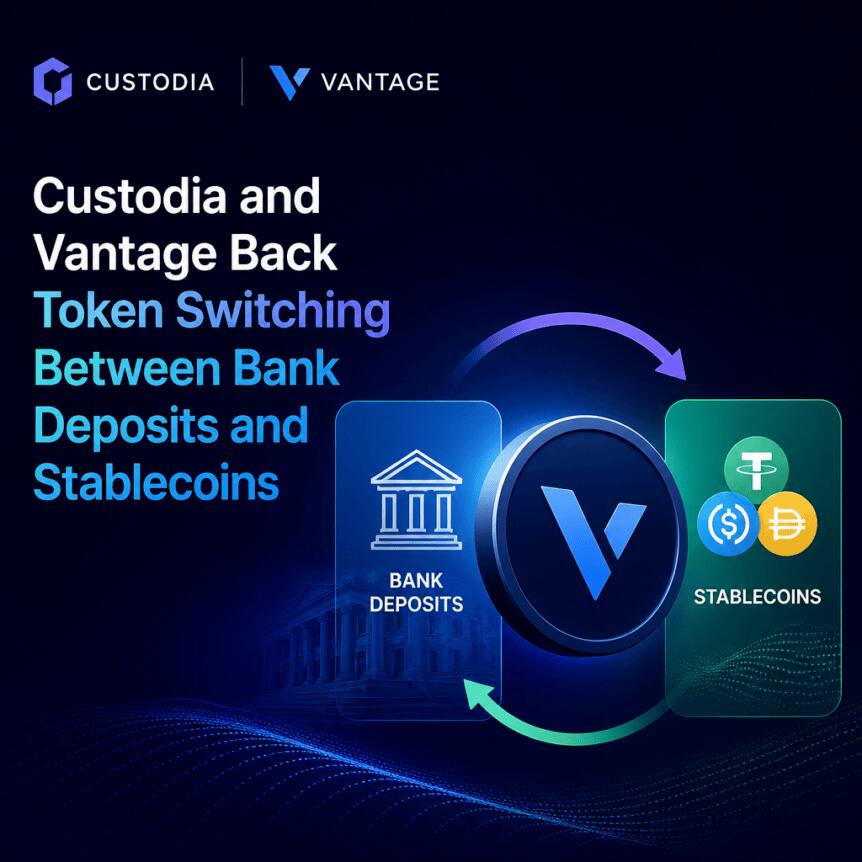
Custodia Bank and Vantage Bank have outlined a new mechanism they say could help traditional lenders experiment with tokenized payments without giving up control of customer deposits. In a white paper shared with Cointelegraph, the firms describe a “switching” token that behaves like a bank deposit within a banking consortium, but converts into a cash-and-Treasury backed stablecoin when transferred to users outside that network.
The proposal is designed to work through what the companies call the Hazel network. According to the paper, the system has been running on Ethereum since March, with participating banks testing the infrastructure and preparing for a wider rollout later this year.
Key takeaways
The Hazel network token is intended to function as a bank deposit on-network, then as a stablecoin when moved to external users. Custodia and Vantage say the platform can run alongside banks’ existing core systems rather than replacing them. The companies report the system has been operating on Ethereum since March and is being tested by consortium participants. They expect broader availability to banks and their customers in the fourth quarter of 2026. The initiative comes as banks explore blockchain payment tooling while resisting risks they associate with stablecoin competition.A token that changes role across networks
The central idea in the Hazel proposal is a token that adjusts its backing depending on where it is held and how it is transferred. Per the white paper, when the token sits within the participating-banking consortium, it operates as a deposit issued by a bank in that network. When it leaves the Hazel environment and reaches external parties, it would instead act as a stablecoin backed by cash and short-term U.S. Treasuries.
Custodia and Vantage also frame the architecture as a practical bridge between conventional banking records and blockchain settlement. Rather than forcing banks to migrate their entire ledger systems, the firms say the platform can operate alongside current core banking and payment infrastructure.
That “dual-mode” design is meant to address an industry tension that has been growing alongside stablecoin adoption: banks want the benefits of blockchain-based payments, but they are wary of losing deposits to stablecoin issuers or of taking on regulatory and competitive risks they believe could follow from stablecoin-linked products.
How Hazel could fit into banks’ day-to-day operations
According to the companies, participating institutions would not need to replace existing core banking systems. Instead, the Hazel network would integrate with current ledgers and payment channels, enabling banks and credit unions of different sizes—including community banks—to participate in tokenized payments.
The firms say their goal is to allow institutions to use tokenized transfers while keeping customer deposits inside the banking system. If implemented as described, that would reduce one of the biggest barriers to bank involvement in stablecoin-adjacent workflows: the concern that customer funds move away from traditional balance sheets when token settlement becomes the default.
The white paper also states that the platform’s testing is already underway. Custodia and Vantage said the system has been running on Ethereum since March, and participating banks are now testing the solution ahead of a broader rollout planned for later this year.
Stablecoins, deposits, and the search for alternatives
The Hazel proposal lands in a moment when mainstream banking is actively seeking alternatives to stablecoin rails without abandoning blockchain tooling. Earlier this month, The Wall Street Journal reported that The Clearing House—a payments and clearing industry organization whose owners include major U.S. banks such as JPMorgan Chase, Bank of America, and Citigroup—plans to launch a tokenized deposit network in the first half of 2027. That system, as reported by the publication, is intended to let banks settle payments using blockchain-based representations of customer deposits.
These developments highlight a common pattern: banks are pursuing tokenization, but increasingly want it to keep deposits within their control rather than tying settlement to stablecoins issued by non-bank entities.
Regulatory and legislative friction also remains a key backdrop. JPMorgan CEO Jamie Dimon has previously argued that banks should continue opposing provisions in the CLARITY Act—a U.S. crypto market structure bill—on the grounds that such rules could allow crypto firms to compete for deposits without obtaining bank charters. The bill advanced out of the Senate Banking Committee in May and still requires approval from both chambers of Congress, according to earlier reporting summarized in the source text.
At the same time, stablecoins continue to scale. DefiLlama data cited in the source indicates the total stablecoin market capitalization is roughly $315 billion, up from about $251 billion a year earlier. That growth underscores why banks face mounting competitive pressure—and why they may see tokenized deposit approaches like Hazel as a way to participate in blockchain settlement while defending deposit-based revenue streams.
Timeline expectations and what to watch next
Custodia and Vantage say they expect the Hazel network to become broadly available to banks and their customers in the fourth quarter of 2026. They also indicate that participating banks are testing the system now, with a broader rollout planned later this year.
For investors and builders, the most important open questions are practical: whether Hazel can deliver seamless settlement across consortium and external counterparties, and how the “deposit-to-stablecoin” switching model operates under real-world compliance and risk controls. The companies’ emphasis on running alongside existing banking systems suggests they view integration risk as manageable—but outcomes will depend on how quickly banks can operationalize the testing results.
Market participants should also watch whether Hazel’s concept gains traction alongside other bank-led tokenized deposit initiatives. If tokenized deposits become a mainstream alternative to external stablecoin usage, the competitive landscape for settlement could shift—potentially changing how institutions weigh stablecoin exposure versus on-balance-sheet or consortium-backed models.
As Hazel moves from Ethereum-based testing toward broader deployment, the key signals to follow are whether participating banks expand beyond early pilots, how the switching mechanism performs in live transfers, and whether regulators and lawmakers clarify how these tokenized deposits should be treated across on-network and off-network use cases.
This article was originally published as Custodia and Vantage Back Token Switching Between Bank Deposits and Stablecoins on Crypto Breaking News – your trusted source for crypto news, Bitcoin news, and blockchain updates.





 Bengali (Bangladesh) ·
  English (United States) ·