

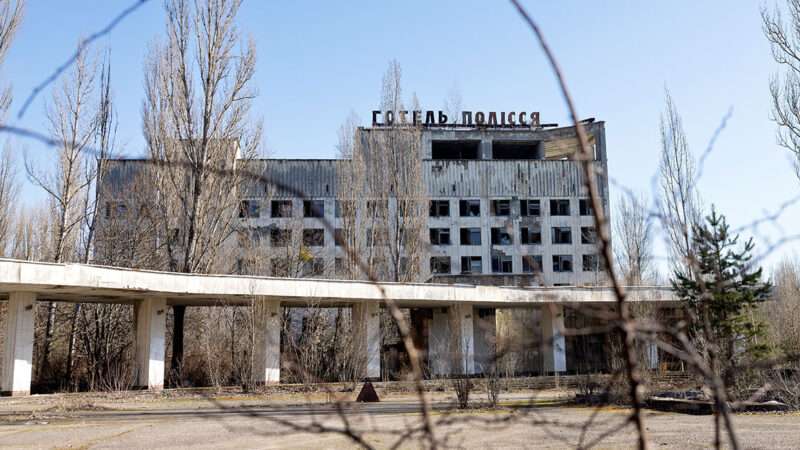
The world's worst nuclear disaster began 40 years ago at 1:23 a.m. on April 26, 1986, when Unit 4 at the Chernobyl nuclear power generation facility experienced an explosion and meltdown. Ironically, the explosion was caused by a botched safety test.
The point of the test had been to see what would happen if the power plant lost its main electrical supply: Could spinning turbines generate enough power to run the coolant pumps until emergency backup diesel generators could kick in? The experiment had failed three times previously, but never as catastrophically as it did that night.
Before the meltdown, Soviet officials had bragged regularly about the safety of their nuclear power plants and disparaged those in the West. In 1983, state-sponsored news agency Novosti reported that Soviet scientists had estimated the probability of a nuclear accident involving a radioactive discharge at one in 1 million. In 1984, Minister of Power and Electrification Petr Neporozhny called the country's nuclear plants "totally safe." Just two months before the disaster, the English-language propaganda magazine Soviet Life claimed: "Even if the incredible should happen, the automatic control and safety systems would shut down the reactor in a matter of seconds. The plant has emergency core cooling systems and many other technological safety designs and systems."
Soviet officials initially tried to hide the disaster, but it was detected in the West two days later when an employee's contaminated shoes triggered radiation alarms at Sweden's Forsmark Nuclear Power Plant. The Swedes at first feared that their own plant was leaking radiation, but they soon traced the issue back to Chernobyl by analyzing wind patterns and specific radioactive isotopes.
Chernobyl's radioactive plume spread over Belorussia, Ukraine, western Russia, and much of Europe. Two workers died from the initial explosion, and the 28 firefighters and emergency workers who doused most of the reactor's flames in the following three and a half hours died over the next three months from acute radiation poisoning. Their bodies were so radioactive that they were buried in lead coffins encased in concrete.
Anatomy of a Meltdown
The Chernobyl explosion is "the only accident in the history of commercial nuclear power to cause fatalities from radiation," as the Nuclear Energy Institute points out. "It was the product of a severely flawed Soviet-era reactor design, combined with human error."
Chernobyl's RBMK-1000 reactors—the initials stand for reaktor bolshoy moshchnosty kanalny, which means high-power channel reactor—used a combination of graphite and water as moderators to slow down fast neutrons. Slowing neutrons enables them to collide with fissile materials (uranium) to sustain a nuclear chain reaction, and that reaction produces heat that boils the water that turns the turbines that generate electricity. Chernobyl's reactors had a critical flaw known as a "positive void coefficient," in which coolant water's moderating effect on reactivity decreased when it was turned into steam, leading to uncontrollable power spikes.
Before the test was to begin, the reactor was supposed to be stabilized at the raw heat output of 700–1,000 megawatts thermal. But shortly after midnight, the power fell to just 30 megawatts thermal. Operator efforts to boost power back to the level originally planned for the test were stymied by increases in neutron-absorbing xenon and steam condensing into coolant water. To compensate, the operators withdrew neutron-absorbing boron carbide control rods to increase reactivity, raising reactor output to 200 megawatts thermal.
At 1:23 a.m., operators cut the regular steam supply. The coolant water supplied by pumps powered by the slowing turbines began to boil into steam. This led to a rapid feedback loop where rising reactivity produced more steam and burned off xenon, causing ever greater reactivity. The result was an overwhelming power surge, estimated to be 100 times the nominal power output.
Thirty-six seconds after the test began, someone tried to shut down the reactor by lowering the boron control rods. The operators apparently didn't realize that the control rods were tipped with graphite, which enhanced rather than reduced reactivity as they began their descent into the reactor.
Plant operators reported two explosions at 1:24 a.m. The first was caused by the extreme buildup in steam pressure, the second by hydrogen accumulation from zirconium-steam interactions. Together, they blew off the reactor's 2,000-ton cover plates and completely destroyed the reactor core. Since the reactor was not enclosed within a containment structure, these explosions spewed roughly 50 tons of radioactive substances into the atmosphere and across the landscape.
As Chernobyl disaster lead investigator Valery Legasov later observed, "The only way of stopping the nuclear reaction was for the reactor to rearrange itself: which it did."
Later that day, a memo from the Ministry of Energy to the Communist Party Central Committee reported that an explosion had occurred and that the resulting fire had been extinguished by 5 a.m., which was not true. The Ministry of Health decided that "the adoption of special measures, including evacuating the population from the city, is unnecessary."
As a consequence, Soviet officials delayed 36 hours before ordering the evacuation of the 45,000 residents of the nearby town of Pripyat. By May 14, about 116,000 people had been evacuated from a 19-mile radius of the reactor. Ultimately, around 220,000 people were resettled into less contaminated areas. The largely uninhabited Chernobyl exclusion zone today encompasses an area of around 1,600 square miles—larger than the state of Rhode Island.
Soviet military helicopters dropped 5,000 tons of boron, lead, sand, clay, and polyvinyl acetate glue onto the still-smoking reactor remains to seal it off. After 1,800 sorties over nine days, the reactor's graphite core fire was contained by May 4.
By November, the reactor remains were encased in a 300,000-ton structure of concrete and steel dubbed the "sarcophagus." This was meant as a temporary measure, but it wound up being more temporary than intended: Under the assault of rain and cold, the sarcophagus began rapidly deteriorating. To remedy this problem, international donors supplied over $2 billion to build the New Safe Confinement structure. Completed in 2019, it is the largest moveable land-based structure ever built and was designed to last 100 years. But in February 2025, a Russian drone punctured the structure's roof. Consequently, an International Atomic Energy Agency (IAEA) inspection in November 2025 found that the structure has "lost its primary safety functions, including the confinement capability."
How Central Planning Produced Defective Reactors
Behind the bad design and human error at Chernobyl, a deeper pair of problems was lurking: central planning and totalitarian secrecy.
The Soviet system put economic decisions in the hands of planners far removed from both the data people need to make decisions and the immediate consequences of their actions. Gosplan, the economic planning bureau, initially determined that nuclear power was unnecessary because the country had more than enough fossil fuels to produce electricity. When it became clear in the late 1960s that they had miscalculated, the energy planners rushed the development of nuclear power. In the process, they neglected to include the containment buildings used in the West, which are designed to prevent the escape of radioactive materials even during severe accidents.
Containment, you see, would have increased the costs of the plants by 25 percent to 30 percent. The "leaders of the Soviet energy sector faced a choice between disrupting the Party's five-year development plan if they built expensive nuclear facilities or abandoning the project altogether," a group of Russian researchers noted in 2025 (originally in Russian). "Priority was given to the solution that was safe for the officials, but which subsequently created a threat to people's lives." After the disaster, an IAEA engineer told the Los Angeles Times that if the Chernobyl reactor had been housed within a standard Western-style containment structure, "it probably would have made a huge difference." Even if an explosion breached a containment structure, most of the radioactive particles would nevertheless have been trapped.
The Soviet nuclear power industry was plagued by shoddy workmanship, bureaucratic infighting, and a shortage of trained personnel. The Canadian historian David Marples summed up some of the problems in his 1986 book Chernobyl and Nuclear Power in the USSR: "lack of quality control, an unskilled and dissatisfied workforce, supply problems, defective equipment, lagging construction, plans arriving late, design changes and cost overruns." More broadly, the pervasive fear of authority that the Soviet system fostered created a compliance-driven and blame-shifting operational culture.
In order to address the perennial problem of bureaucratic ass covering, the KGB—the secret police—embedded a network of spies at places like Chernobyl. These agents in the workforce observed the ongoing problems many times over the years. A 1973 confidential memo cited "serious inadequacies" with the concrete and steel reinforcement used in constructing the Chernobyl reactors. (It also noted that theft of materials from the site was rife.) In 1978, six months before the second reactor began operation, a secret report described "gross violations of technical construction standards, fire safety, and construction and assembly safety technique, which will lead to unfortunate situations." A 1982 report noted an area contaminated by accidental release of radioactive isotopes from Chernobyl's Unit 1 reactor was being handled by "burying them with earth and leaves." It added that the KGB was "performing operations to prevent the spread of panic, provocative rumors and other negative incidents in connection with this occurrence."
A May 1983 memo from a KGB lieutenant colonel concluded that Chernobyl's atomic energy stations "at the present time are the most dangerous with regards to their future use, which could have alarming consequences." (This text was underlined in the original document.) In 1984, a series of KGB reports detailed the dangerous technical flaws in Chernobyl's reactors, along with ongoing operational sloppiness by plant workers and their managers.
None of this secret reconnaissance prevented the disaster.
Even after the meltdown, the KGB kept trying to stop the flow of information. A July 1986 memo stamped as secret, among other things, information about the "true causes of the accident," the "quantities and content of the mixture [of radioactive particles] ejected at the time of the accident," and "mass poisoning and epidemic sickness rates connected to the accident."
This allergic reaction to the idea of transparency prevented people from getting important information on time. But it was standard operating procedure. The Soviets had already suffered several previous large radiation release accidents, including a 1957 nuclear waste explosion at a weapons production facility at Chelyabinsk that exposed 270,000 people to high levels of radiation. But these were kept secret. Indeed, Chernobyl's deputy chief engineer later testified that he had not been told of any of the previous accidents at similar reactors. Minister of Power and Electrification Anatoly Mayorets epitomized this approach when he decreed in 1985 that information regarding any adverse effects of the energy industry on employees, people, and the environment was not suitable for publication or broadcast.
"It has been said that experience is learning from mistakes; and bitter experience is learning from one's own mistakes," argued the Harvard nuclear physicists Alexander Shlyakhter and Richard Wilson in their 1992 account of the Chernobyl tragedy. "Secrecy then, is inimical to safety, for with secrecy about accidents, one can only learn from one's own mistakes and not from the mistakes of others….Excessive secrecy is characteristic of all totalitarian regimes and is one of their principal weaknesses."
Unsurprisingly, Soviet leader Mikhail Gorbachev waited weeks to deliver a televised speech acknowledging and addressing the Chernobyl crisis.
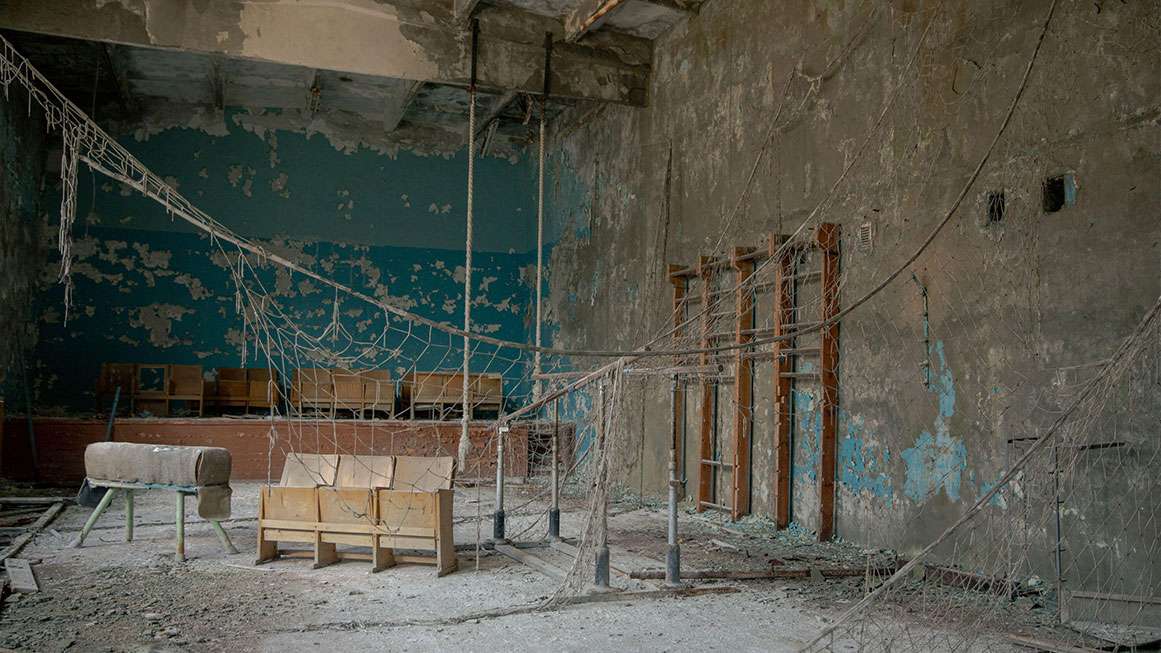 Photo: An abandoned school in the exclusion zone, 2026; Louis Lemaire-Sicre/Le Pictorium/Alamy
 The Health Effects
Chernobyl was a disaster, but it wasn't as disastrous as some antinuclear activists have claimed. To take one infamous example, a 2009 report initially organized and funded by Greenpeace claimed that Chernobyl led to about 985,000 deaths from April 1986 through the end of 2004. The report ominously added, "The number of Chernobyl victims will continue to grow in the next several generations."
More comprehensive reports have discredited Greenpeace's claims, finding that mortality rates associated with the Chernobyl disaster are, fortunately, lower by orders of magnitude. An analysis by researchers at the International Agency for Research on Cancer calculated that the radioactive fallout from Chernobyl would cause 16,000 cases of thyroid cancer and 25,000 cases of other cancers, resulting eventually in 16,000 deaths throughout Europe by 2065. A 2008 report by the United Nations Scientific Committee on the Effects of Atomic Radiation concluded that while "those exposed to radioiodine as children or adolescents and the emergency and recovery operation workers who received high doses are at increased risk of radiation-induced effects, the vast majority of the population need not live in fear of serious health consequences from the Chernobyl accident."
Similarly, the Israeli radiation researcher Yehoshua Socol concluded in 2015 that there "is little scientific evidence for carcinogenic, mutagenic or other detrimental health effects caused by the radiation in the Chernobyl-affected area, besides the acute effects and small number of thyroid cancers." A 2019 study of solid tumor trends in Ukraine 30 years after Chernobyl found "rates of solid organ malignancy in the five regions most affected by fallout did not substantially differ from national patterns."
One big initial concern was that the uptake of radioactive iodine released by the Chernobyl explosion would increase the rate of thyroid cancers. Iodine is essential to the creation of the thyroid hormones that regulate a body's energy use, and growing children and adolescents drinking fresh milk more readily absorb iodine. When radioactive iodine fell on pastures grazed by local milk cows, it got into Soviet food supplies. Given that radioactive iodine has a half-life of eight days, warning people to refrain from drinking fresh milk for a while would have protected children in the region from effects of Chernobyl contamination.
But Soviet secrecy again won out. According to Shlyakhter and Wilson, "appeals by private individuals in south-eastern Belorussia to children not to drink milk in the first weeks of May 1986 were stopped on the grounds that the appeals might cause panic." A 2024 analysis by two Polish researchers calculated that about a quarter of the 19,000 cases of thyroid cancer detected in Russians, Ukrainians, and Belarusians who were under age 18 at the time of the Chernobyl disaster can be traced to ingesting radioactive iodine spewed by the reactor.
Shlyakhter and Wilson worried the world would learn the wrong lessons from Chernobyl. They pointed out that the explosion of a fertilizer plant in Bhopal, India, in 1984 had a far greater effect on public health than the nuclear disaster did: It killed 22,000 people directly and exposed another 570,000 to high levels of toxic gas. Yet no one demanded an end to the fertilizer industry. "In our view, therefore, it would be erroneous and in the long term possibly even disastrous to conclude that the world should not have nuclear power," they argued. "This would badly reduce the world's options in coping with human poverty and other needs, and with reducing the global environmental changes that may arise from the excessive burning of fossil fuels."
They were right. Chernobyl supercharged the anti–nuclear power movement, especially in Europe and the United States. As a consequence, nuclear power plant construction stalled around the world, resulting in more deaths from air pollution than would otherwise have occurred—plus increased greenhouse gas emissions that contribute to rising average global temperatures.
Nuclear power wasn't the problem in Chernobyl. The problem was communism.
The post Chernobyl Wasn't a Nuclear Disaster—It Was a Communist Disaster appeared first on Reason.com.





 Bengali (Bangladesh) ·
  English (United States) ·